The operation will allow the recovery of a currently disused property and the generation of between 40 and 50 housing units, accompanied by community spaces of between 300 and 500 square meters, aimed at fostering coexistence and shared living. Both institutions are working on an agreement to launch the operation, with an estimated investment of between 6 and 8 million euros.
The Minister of Housing and Urban Agenda, Denis Itxaso, and the Mayor of Bilbao, Juan Mari Aburto, visited the building this Monday to assess on-site the intervention possibilities and the architectural proposals for the future project. The visit, part of the XXIV edition of the EuskalHiria congress 2026, also included Javier Benito, director of Telefónica in Euskadi, Navarra, and Cantabria; Duncan Lewis, the British architect based in Bordeaux responsible for developing the proposal; and Yolanda Díez, Bilbao City Council's Housing Councilor.
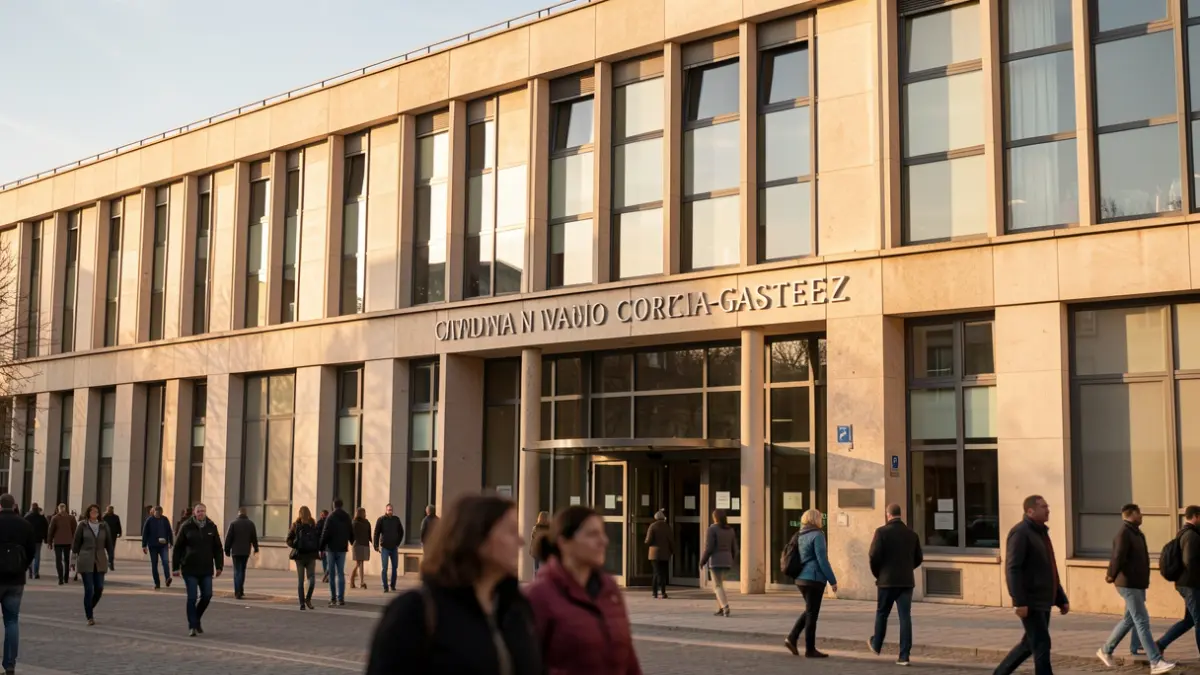
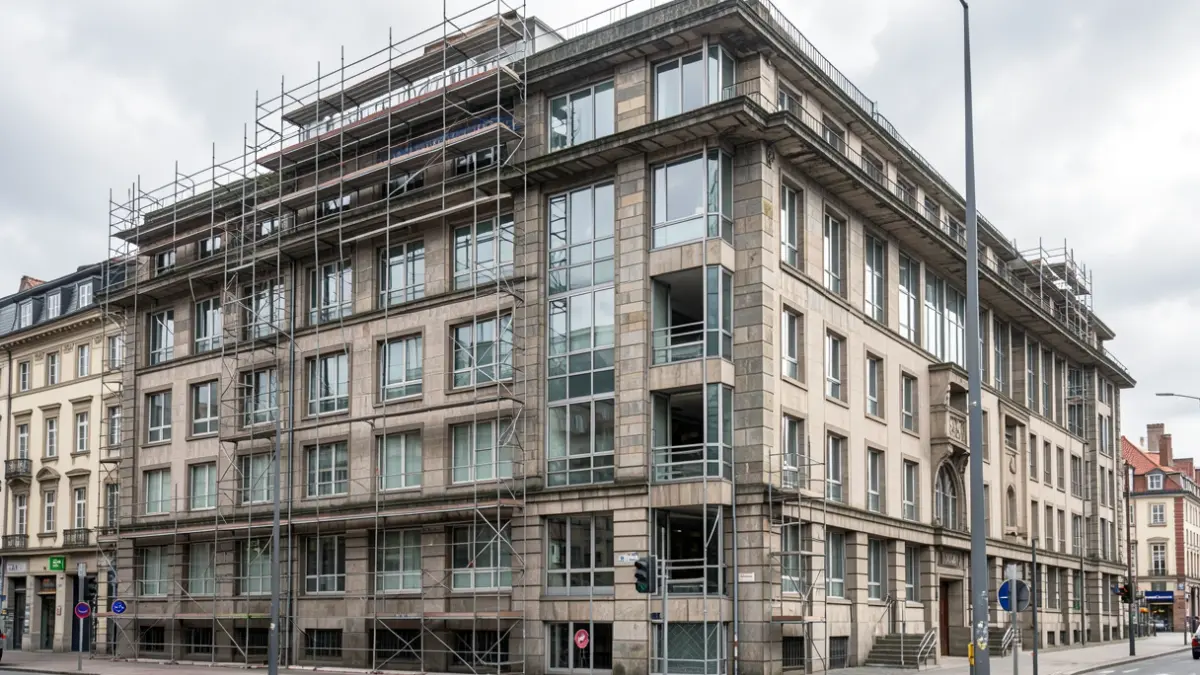
The property, designed by architect Emiliano Amann and located in the consolidated urban environment of the San Francisco neighborhood since 1972, has an approximate built area of 5,000 square meters and is distributed over a ground floor and three upper levels. The proposal includes its adaptation to house between 40 and 50 endowed apartments, along with common spaces that will incorporate a community dimension to the residential project.
The preliminary economic estimate places the necessary investment to develop the operation between 6 and 8 million euros, plus VAT. Currently, both institutions are finalizing the text of the collaboration agreement that will allow for the organization of the intervention and the start of its administrative processing, with the intention of initiating it before the end of the year.
Regarding the timeline, the most likely scenario includes a joint tender for the project and works during 2027, the drafting of the project throughout 2028, and the start of execution works between 2028 and 2029. This approach would shorten the development timelines of the action.
It is worth remembering that this Telefónica exchange on Cortes Street is part of Bilbao's telecommunications history. Originally conceived to house infrastructure associated with the traditional copper network, it also hosted Telefónica's Maritime Service for years, known internally as ‘la Costera’, which facilitated radio communications between ships and land and provided support for maritime safety services.
The progressive disuse of the building is a consequence of the profound technological transformation experienced by the telecommunications sector and the replacement of the old copper network by fiber optics. A single fiber exchange can serve the same number of accesses as four copper exchanges and, for equivalent data consumption, the new network reduces its environmental impact by up to 94%. This technological evolution has made it possible to dispense with facilities designed for previous systems and now opens the opportunity to give them a new function in the service of citizens.
Precisely, the planned operation on Cortes Street represents an opportunity to recover a building linked to Bilbao's industrial and technological history and transform it into a new residential resource. An infrastructure that for decades served communications will now give way to public apartments and community spaces that will contribute to meeting the current housing needs of the neighborhood.
The transformation of the former Telefónica building is part of an action line that seeks to leverage the residential potential of the already built city. The housing emergency demands an expansion of the affordable housing supply, but also the identification of new opportunities in the existing urban fabric, the recovery of buildings that have lost their original use, and the adaptation of the built heritage to current residential needs. In this regard, Minister Itxaso highlighted that “Euskadi is giving new life to buildings, in service of our main urgency, which is housing.” For his part, Mayor Aburto advocated for “the role of cities like Bilbao, willing to act and collaborate to lead the opportunities to offer housing to those who need it most.”
This strategy allows for the utilization of existing infrastructures and constructions, avoids new land consumption, and generates housing in consolidated locations, close to services, facilities, and transport networks. Endowed apartments are one of these formulas: publicly owned and managed accommodations offering affordable and flexible housing solutions, particularly aimed at facilitating the emancipation processes of young people, through five-year renewable stays.
This typology also allows for exploring new solutions for the elderly. Among them, the possibility of them transferring their owned home to the Bizigune public rental program in exchange for a more accessible and efficient endowed apartment. This model opens the door to intergenerational living experiences where young and old can share community spaces and establish new support and relationship networks.