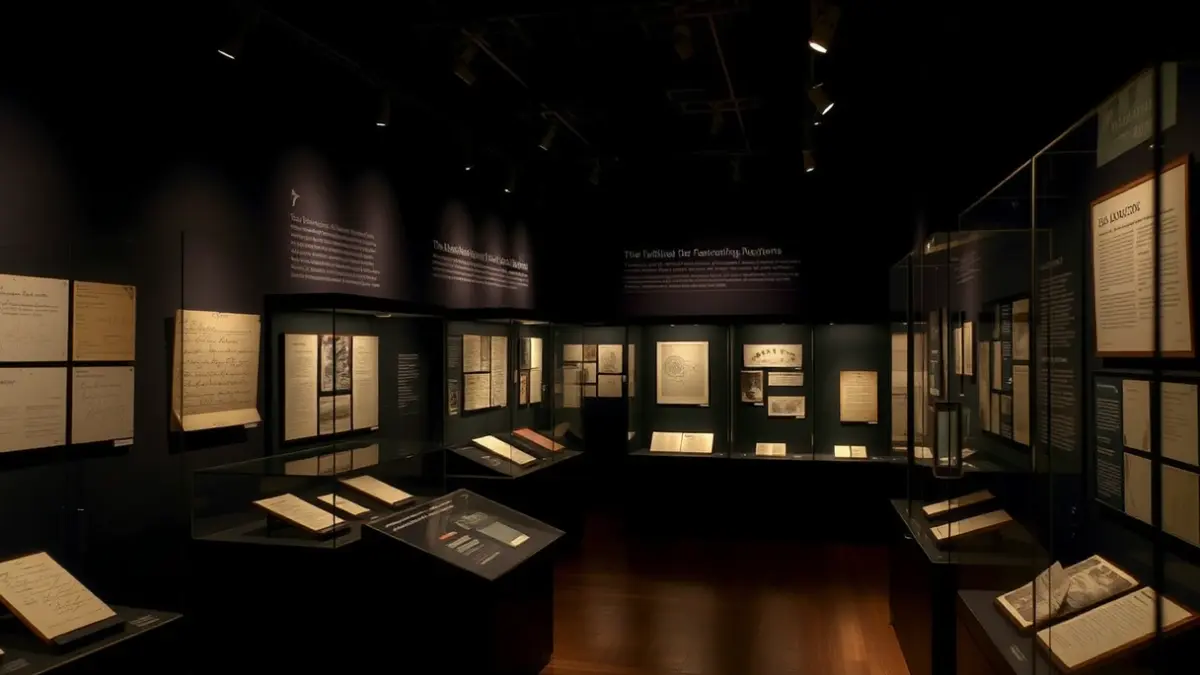
This exhibition analyzes the significant changes that occurred in the way information was transmitted during that period. The journey covers the transition from a society dominated by orality to the expansion of writing, the emergence of optical telegraphy, and subsequently, the incorporation of electricity and the first binary systems. These advancements are presented as precursors to contemporary communication models.
The exhibition is structured around three key elements: images, texts, and voice. The images are sourced from the museum's archive, while the texts combine historical documents with others created specifically for the occasion. The voice introduces the oral dimension of the project. These three components are presented in a complementary manner, requiring their interrelation for a comprehensive understanding of the whole.
The project's starting point lies in various documents preserved in the museum's archive, including coded and encrypted handwritten letters. From these materials, the artist has developed an itinerary that integrates different forms of communication, paying attention to both the systems used to transmit messages and those employed to conceal them. In this regard, the exhibition addresses issues such as literacy, different languages, the uses of language in various social contexts, control technologies, and secret messaging systems in conflict situations.
Among the exhibited materials are images, drawings, manuscripts, and bertso sheets, along with references to alphabets and communication technologies. Additionally, Lujanbio has created a set of specific verses for the exhibition, which are integrated into the tour. Some of these contents are presented through a sign system designed for the project itself.
The sound component reinforces the presence of orality. Throughout the exhibition, auditory elements that are part of the general narrative are incorporated. At the end of the itinerary, visitors can access a document that compiles the texts and verses present in the room, following the format of the so-called bertsopaperak, but adapted to the sign system created for the exhibition. The sound design features the participation of Xabi Erkizia.
'Artxibo praktikak' is an initiative launched by the museum in 2024 with the aim of opening its archive to artists from different disciplines. The program proposes new ways of interpreting documentary collections and generating alternative readings about the 19th century. The first participant was Pedro G. Romero, while Maialen Lujanbio is the second invited artist. Erkizia is expected to participate in the next edition.