Within Gipuzkoa's rich cultural and architectural heritage, the Sanctuary of Arantzazu holds a unique position, both for its religious significance and its importance in the history of contemporary architecture. Viajar magazine highlights it as an even more singular monument than other icons of Euskal Herria, such as the Mosque of Córdoba or the Monastery of Montserrat.
Built in the 1950s, the sanctuary was designed by architects Francisco Javier Sáenz de Oiza and Luis Laorga, who collaborated with a distinguished group of artists including Jorge Oteiza, Lucio Muñoz, Néstor Basterretxea, Eduardo Chillida, Xabier Egaña, and Fray Eulate. This collective created a structure that broke away from the traditional schemes of religious architecture of its era.
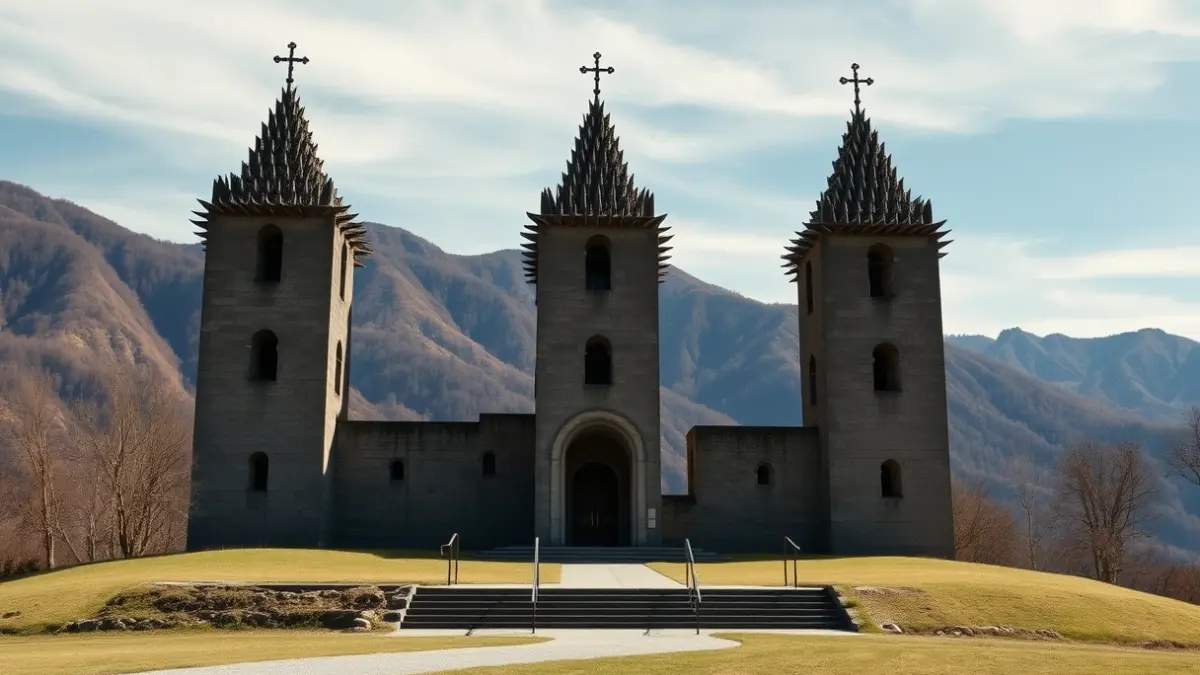
The Sanctuary of Arantzazu is considered one of the pioneers of brutalism in Spain, a style characterized by the use of concrete and forceful forms. Its towers, covered with spike-like elements, are among its most striking features, symbolizing a radical innovation compared to classical structures. This design references the popular legend of the Virgin of Arantzazu's appearance to a shepherd on a hawthorn bush.
“"It is one of the pioneers of brutalism in the country and has three very special towers: they are full of spikes."
Beyond its avant-garde aesthetics, the sanctuary also impresses with its dimensions, featuring a 36-meter-long portico, far exceeding the usual size for this type of construction, reinforcing its monumental character and visual impact.
However, the sanctuary's history was not without controversy. Its innovative nature initially led to rejection from the Vatican, primarily due to the design of some of its statues. This prohibition delayed the project's completion, though it was eventually lifted in 1969, allowing the sculptures to be installed on the facade.
Today, the Sanctuary of Arantzazu is one of Gipuzkoa's main heritage attractions, a unique place that merges art, history, and avant-garde, drawing both visitors and architectural experts. This monument reflects the territory's capacity for innovation without losing its cultural roots, serving as a symbol of identity and an example of how tradition can dialogue with modernity to create something truly exceptional.