The project is structured around four main pillars: community participation, collective involvement, achieving broad consensus, and employing innovative methodologies. Under the latter, the Aldahitz research, created by sociolinguist Peio Jauregi, has been implemented. This research hypothesizes that it is not essential to speak Basque fluently to initiate a conversation; understanding may be sufficient for the other person to start speaking Basque, provided the appropriate context is created.
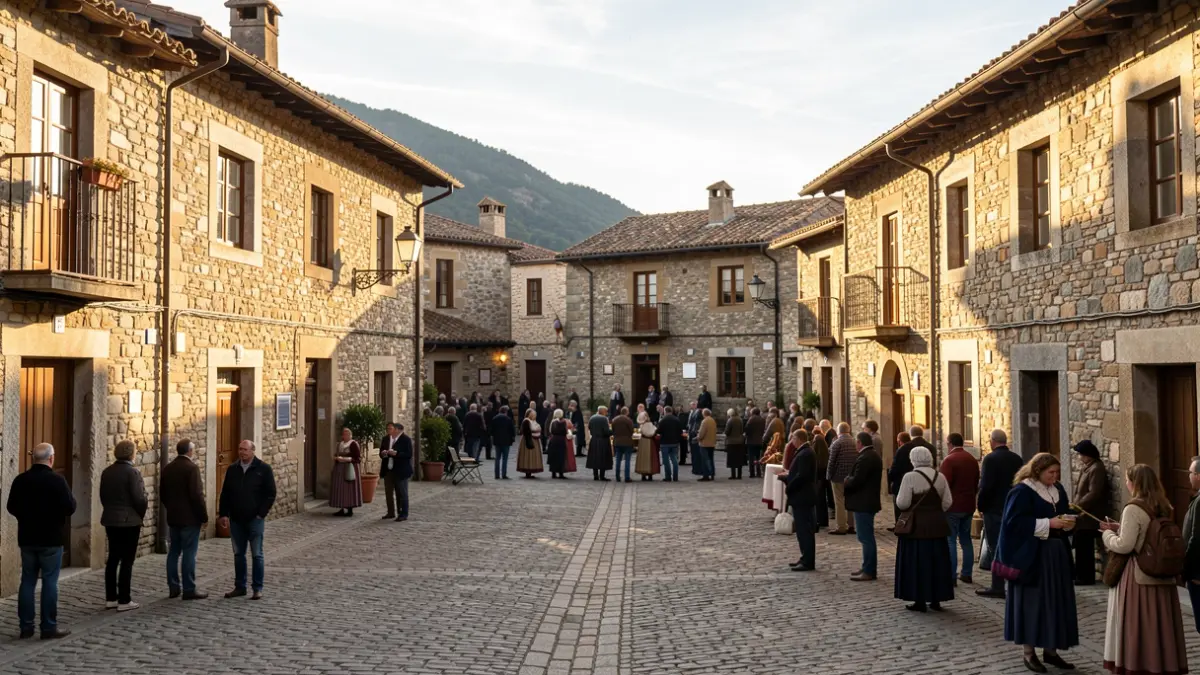
To achieve this, three methodologies are being used: Uler-saioak, which began testing last October and aim for comprehension (reaching a B1 comprehension level in 120 hours); Ulerrizketa, which promotes conversations between individuals with an intermediate level of Basque comprehension and those with a good level; and Eusle, designed to encourage commitment to using Basque. Although the project is in an experimental phase, three locations in Gipuzkoa have been chosen for these initial steps: the Añorga neighborhood in Donostia, Antzuola, and Aia. These areas were selected because they are “small towns or neighborhoods,” are located in different regions, and possess diverse characteristics.
The project's origins trace back to 2020, when the Gipuzkoa Provincial Council awarded the Anton Abadia prize to Jauregi for his theoretical work on linguistic habit changes underpinning Euskaraldia. During the award ceremony, Jauregi challenged the then general deputy, Markel Olano, with the question “When will Gipuzkoa become an arigune?”, which spurred the project's development. Following several investigations conducted by the Provincial Council in collaboration with the Soziolinguistika Klusterra, it was decided in 2022 to launch this project, with collaboration at its core, designing the proposal alongside Taupa Euskaltzaleen Mugimendua, the Soziolinguistika Klusterra, and Badalab to transform the territory into an arigune.
“"Historically, we have overlooked Spanish speakers in projects supporting Basque, and this project centrally aims to bring Spanish speakers closer to Basque as well."
A four-year experimentation phase was defined, for which the Provincial Council signed collaboration agreements with the Soziolinguistika Klusterra and the Taupa movement. In 2023, a joint office was opened by the four entities, and since then, all work streams of the project have been developed, including experimentation in the three aforementioned locations and the testing and homologation of the Uler-saioak methodology. According to the head of the Provincial Council's Language Strategy Service, the work carried out so far has been “fruitful and enriching”.
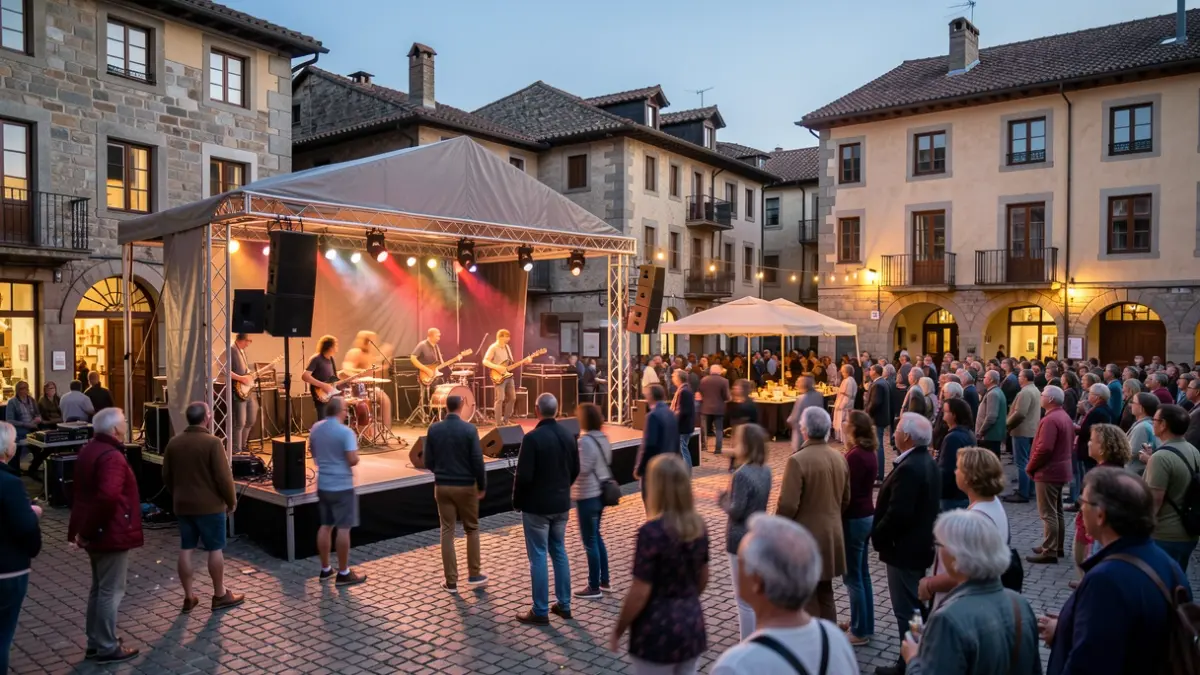
The Aia Arigune pilot test began early last year, accumulating over a year of progress. The main goal is to increase the frequency and amount of Basque spoken in the community, transforming towns into arigunes so that Basque speakers can speak Basque comfortably. Additionally, it seeks to activate people who support Basque, including Spanish speakers. In Aia, the Uler-saioak, based on the Aldahitz methodology (conversation, word-of-mouth, and active listening), were implemented from September to December last year. The project has been very well received in the town, with 37 people expressing interest in participating.
“"The project's goal is not to respond in Basque, but to get used to bilingual conversations."
Participants are very satisfied, which has attracted new profiles to Basque, starting from comprehension. Although the Gipuzkoa Arigune project is supported by several institutions, the driving force behind Aia Arigune are the citizens themselves, who form the organizing forum. In this forum, all initiatives to be launched are conceived and agreed upon. Representatives from the Aia City Council also participate in the forum, and from the outset, it was clear that the initiative should be citizen-led, without the city council taking the lead. There was a concern in the city council regarding Basque, and the project has also served to conduct a diagnosis, identifying the local context and areas where Spanish is spoken more frequently.
A resident of the Urdaneta neighborhood, part of the citizen forum, stated that efforts have been made to identify the strengths and weaknesses of Basque, as realities vary greatly depending on the neighborhood or area. The Uler-saioak began last October at the Kultur Etxea, under the guidance of an AEK euskaltegi teacher. The group of seventeen participants meets weekly, and the project's objective is not for participants to respond in Basque, but to get accustomed to bilingual conversations. This way, in the future, they will ask Basque speakers to speak to them in Basque, even if they may not be able to respond in Basque, thus not forcing those who know Basque to switch languages.
The Uler-saioak are structured into three blocks, the first two lasting 30 hours and the last one 60 hours. Audiovisual elements have been gradually reduced to promote active listening. Participants, despite having different levels, aim to get closer to Basque. Some participants, residents in Aia from Donostia, have expressed significant improvement in comprehension and greater confidence when speaking. Others, from Argentina and Colombia, face the challenge of learning Basque to better connect with local people and converse with the elderly. The Uler-saioak will conclude in June, and subsequently, accomplices will be sought to initiate the Ulerrizketas from September onwards.