
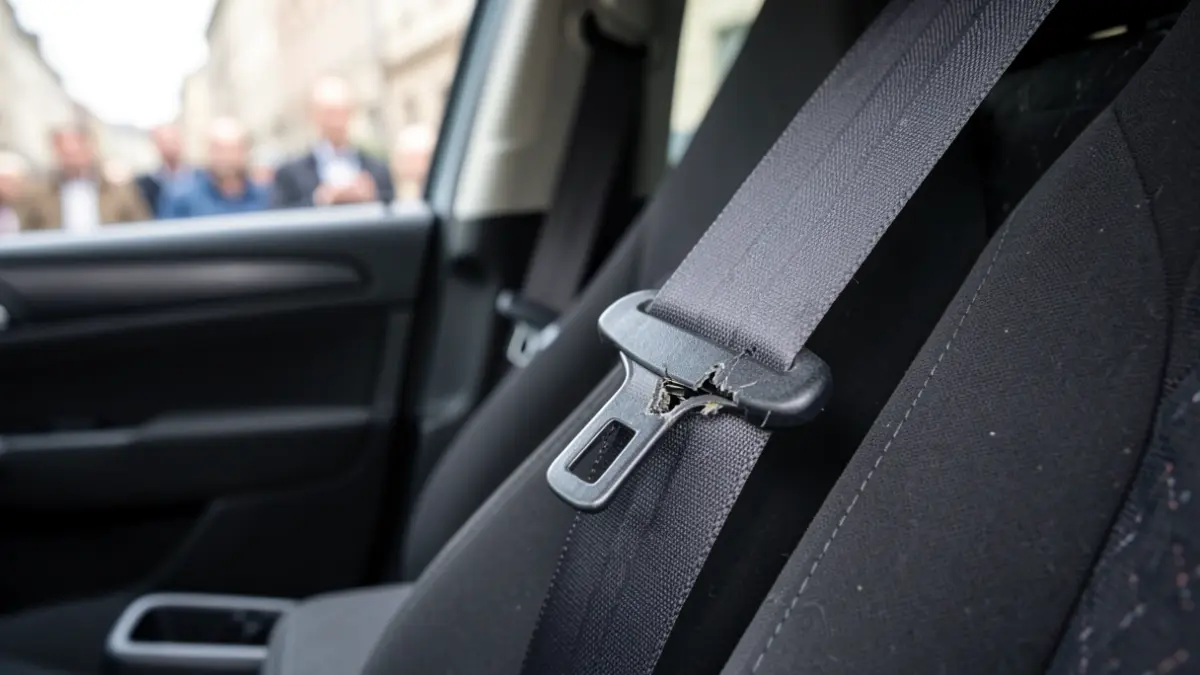
A court in Donostia has ordered the company Ambulancias Gipuzkoa to pay 40,000 euros in compensation to a CCOO Prevention delegate for "violating their fundamental rights to union freedom and the guarantee of indemnity". The company's management had deemed their action imprudent when immobilizing an ambulance due to the "serious deterioration of the driver's seatbelt" and sanctioned them with 20 days of employment and salary.
The Social Chamber of the Court of Instance of Donostia has established that the delegate's intervention "was correct and aimed at protecting the integrity of both the staff and the users of the service", CCOO reports in a statement. During the trial for these events, which occurred on September 2, 2025, the chief supervisor of the Urnieta ITV described the condition of the seatbelt as "a very serious fault that legally prevented the vehicle from circulating".
The judicial resolution has also taken into account "the cooperative's recidivism in actions contrary to union rights" because, as the sentence states, Ambulancias Gipuzkoa had already been previously convicted by the High Court of Justice of the Basque Country "for violating the rights of the same delegate", CCOO explains.
This union points out that this sentence represents "support for the work of union representation and the defense of occupational health and safety" and denounces that Ambulancia Gipuzkoa "used its disciplinary power as retaliation against a fully justified preventive action".
Furthermore, it demands "the assumption of responsibilities by the cooperative's management" and calls for "greater vigilance over the conditions under which an essential public service such as health transport is provided".