
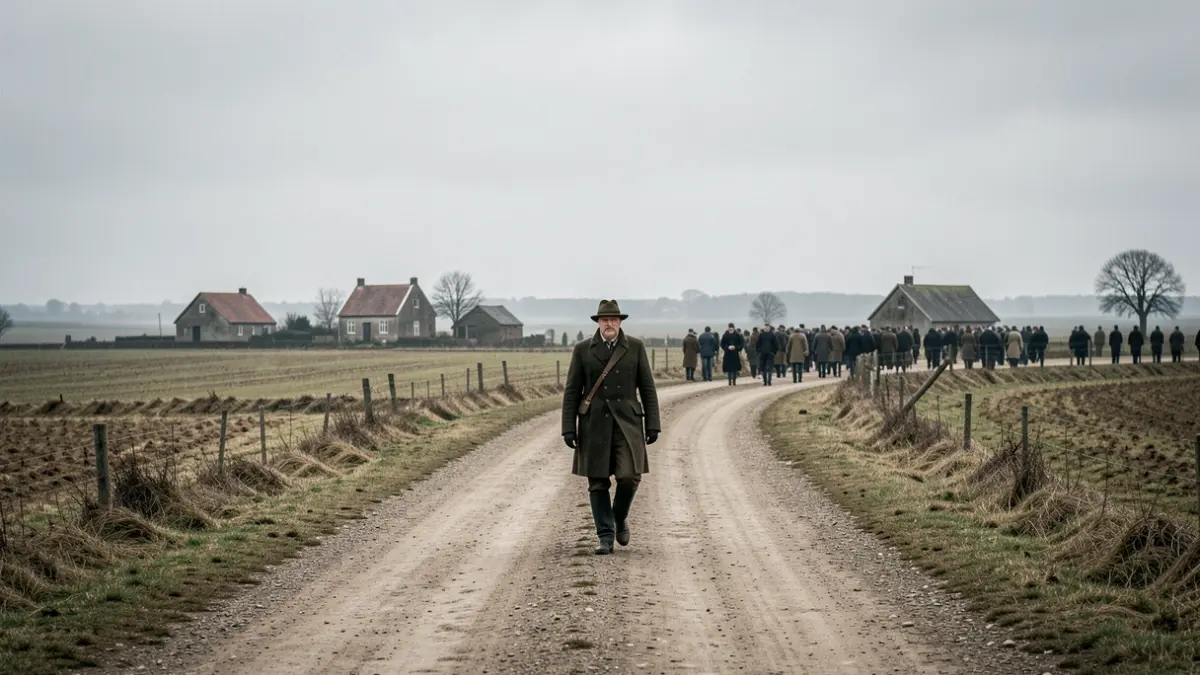
José María del Palacio Alonso (Aretxabaleta, 1948), author of the books 'Matando sueños, sembrando miedos. Morales de Toro 1936' and 'Secuelas de nuestras guerras y derrotas: de la República a la modélica Democracia', will narrate the brutal repression suffered in 1936 in his parents' hometown this Tuesday the 16th, at 18:30 in the Ibarraundi center.
In the talk organized by the memorialist association Memoria Bizia, Palacio will address the case of Morales de Toro (Zamora), a locality where, according to the authors, the fascist repression caused "a terror and pain that still persists today in the families of the victims and resulted in the violent and unpunished death of 31 people" at that time, when it had 2,238 inhabitants.
Palacio, a retired technician from the Arrasate cooperatives, defines himself as "the son of forced emigrants." His republican communist militancy led his parents to suffer imprisonment and exile. His latest book, 'Secuelas de nuestras guerras y derrotas: de la República a la modélica Democracia', is a choral biography of his family and 23 other families who endured war, defeat, and dictatorship.
The book 'Matando sueños, sembrando miedos. Morales de Toro 1936', co-authored by Palacio and Cándido Ruiz González (Toro, 1970), narrates the history of the Civil War, Francoist repression, and emigration. Morales experienced a vibrant social life between 1931 and 1933, but this "terrified the seigneurial, military, and ecclesiastical elite, leading them to decide to end the Republic through a fascist military coup."
By the end of 1936, 31 residents of Morales had been murdered. The war and repression caused the town to lose 65 of its sons. This harsh situation pushed, in the 1940s, the first peasants to leave their birthplace and family to seek a new future in the "northern" industry. The newcomers initially found help in Debagoiena, but they had to forge their integration into a new environment themselves, in a dictatorship that denied them their rights.
From Memoria Bizia, they emphasize that "a detail that can describe an unknown phenomenon that has not been analyzed is the component of political persecution or pressure among the various reasons for emigrating." The industrial towns of Euskal Herria "offered anonymity and the opportunity to start anew for people or families repressed by Francoism."