As part of the Bilbao City Council's Expodistrito 2026 program, a photographic exhibition has been organized to document the history of the neighborhood and its dwellings. Karmelo Anakabe, president of the neighborhood association Zabala Berri, discussed the project's history and current challenges on the program Lau Haizetara.
Anakabe explained that the neighborhood was created in response to the housing crisis at the beginning of the 20th century. At that time, many railway workers lived in poor conditions, and the General Association of Railway Employees and Workers sought to address this situation. The Northern Railway Company provided two plots of land for the project, and under the Affordable Housing Law, homes were built for 269 families, providing a decent residence for approximately 1,200 people.
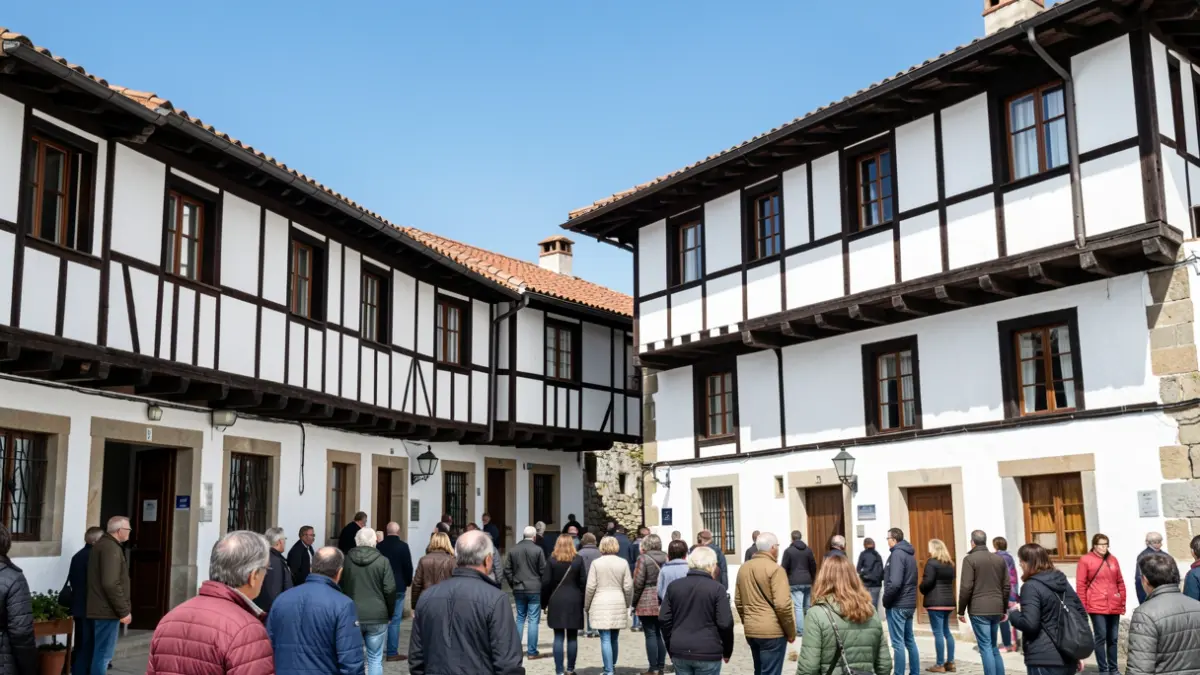
The neighborhood's design was created by architect Francisco Alonso Martos, blending influences from the Paris School of Fine Arts with elements of the “regionalismo montañés” style. Zabala Berri association is using the centenary to raise awareness of this architectural value. While the Bilbao City Council has already granted cultural protection to the neighborhood, the association seeks further recognition: the designation of the railway workers' houses as a monumental complex. This designation would open up opportunities for the conservation of the buildings and the improvement of the neighborhood's urban planning, according to Anakabe, particularly concerning accessibility issues and enhancements to the surrounding public spaces.
The railway workers' houses were inaugurated on December 19, 1926, with the attendance of the Spanish Prime Minister, Miguel Primo de Rivera. To commemorate the centenary, the photographic exhibition 'Railway Workers' Houses: Centenary (1926-2026)' has been organized. A significant portion of the exhibition's material consists of images from the Fotolux photography studio, recovered and digitized by Erik Ruano.
The exhibition will be on display at the San Francisco Municipal Center until September 29. Subsequently, it will move to the centers in Castaños (October 1-30), Errekalde (November 3 - December 4), and La Bolsa (December 9 - January 5, 2027). Additionally, a series of lectures has been organized around the centenary.