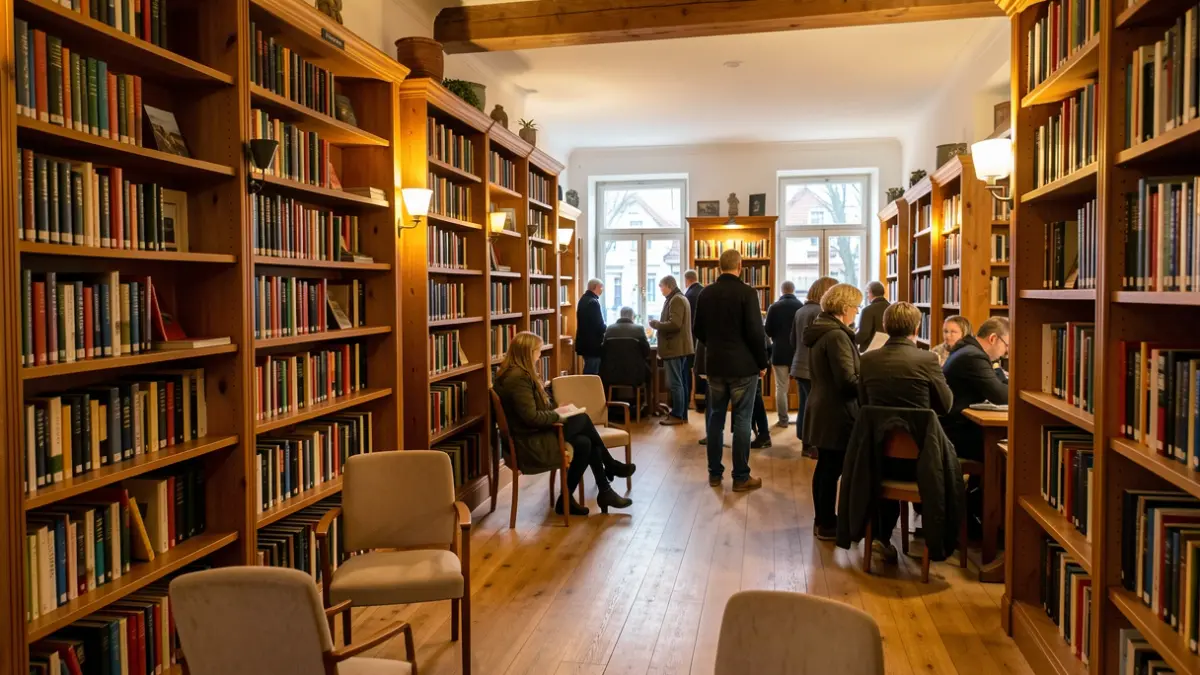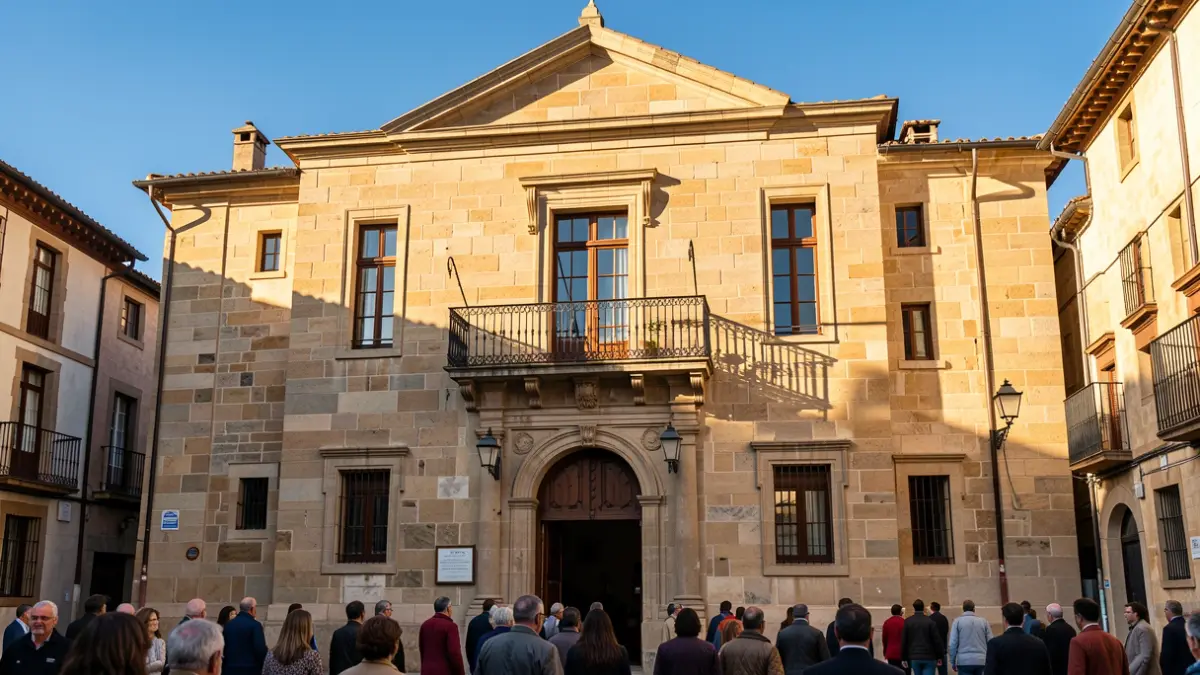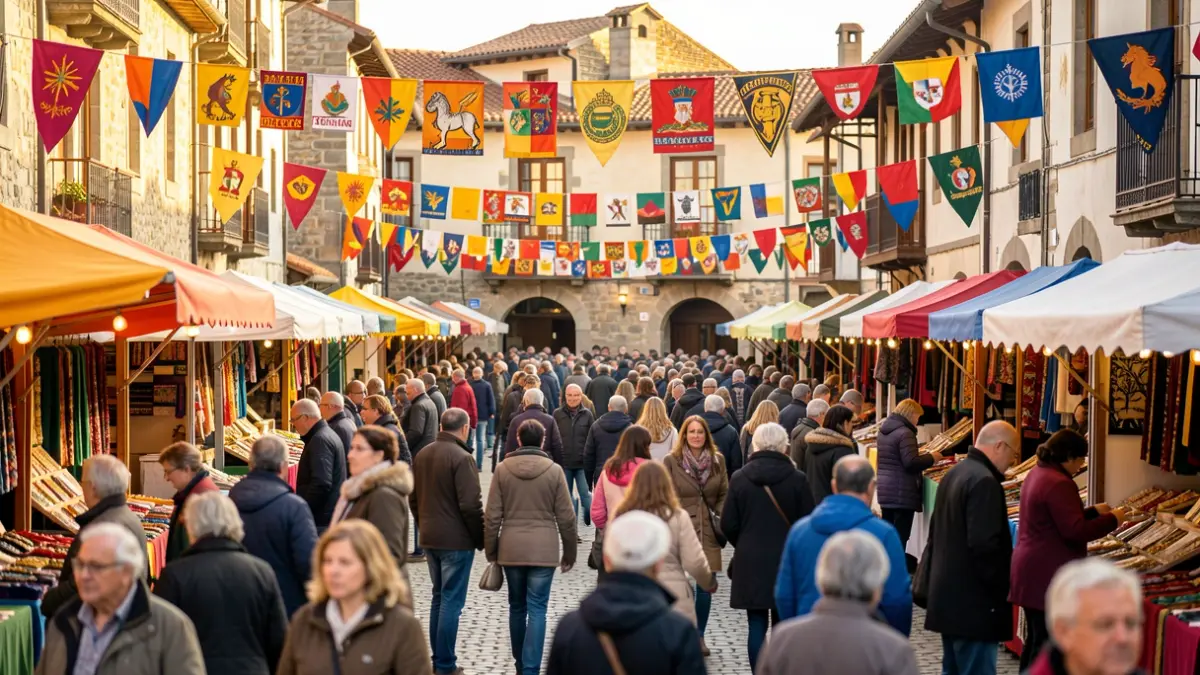
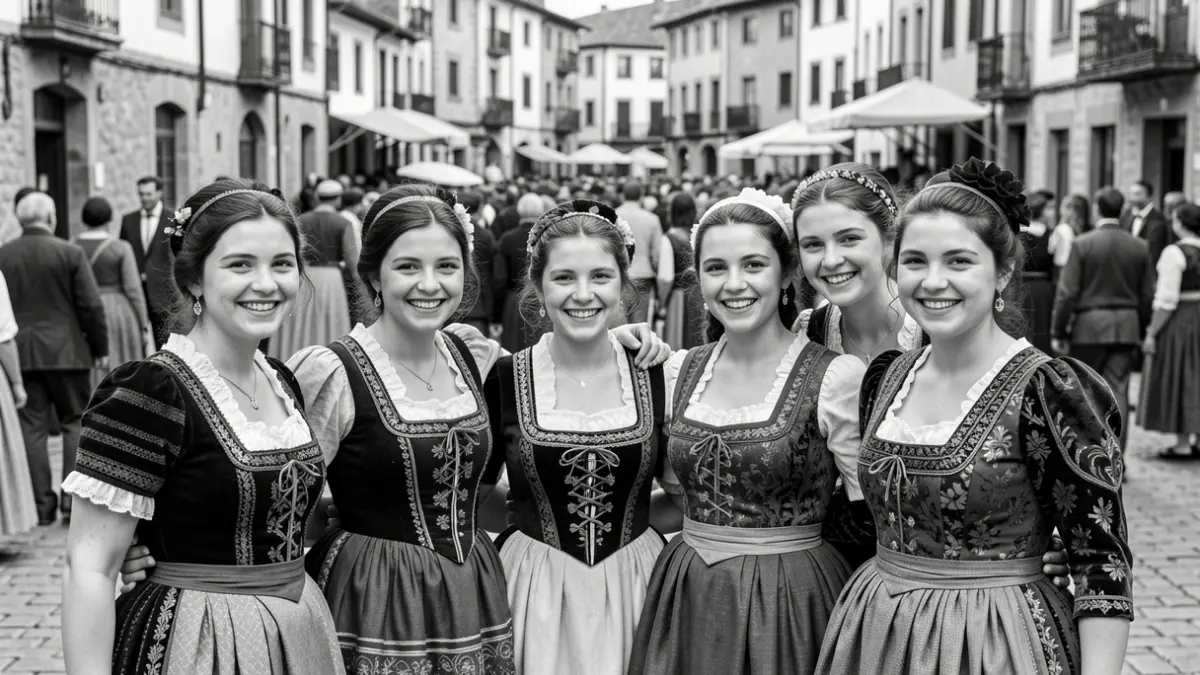
My father mentioned that he was compiling his work on the girls of Oñati and found this image among old photographs. It depicts the Magdalena festivities and other old town pictures. In the middle, smiling, are the paternal grandparents, captured in their youth, in a time we can never know.
Although photographs of male groups are more common, there is one where my grandmother appears in a large group of friends, looking beautiful, with her arm crossed over another woman's shoulder. It's curious how we don't imagine our elders differently until we recount or see it.
The photograph doesn't show the fatigue or worries that would later be perceived. The bodies are at ease in their black and white dresses and styled hair. It's hard to know who the women in the picture are, whether it was taken on a Sunday or during a festival, how old they might have been, or how often they would meet again.
“"Not just because I see my grandmother, but because I also sense the connection among those women."
Perhaps because of my appreciation for friendship, I believe that's why I spend so much time looking at this photograph. Not just because I see my grandmother, but because I also sense the connection among those women. There is something special in that image: warmth, camaraderie, complicity, a desire to act, strength.
Sometimes, it's as if they were looking, as if they wanted to convey a message; that's why I keep the wardrobe open and the photo in plain sight every day. It's as if they are inviting me to care for those I love. As Jaios says, you realize in life that sometimes many people look at you but don't see you, and there are people who truly see you, who, beyond seeing your appearance, are concerned with knowing and caring for your inner territory. Even if they are few, it's enough that such people exist. To be seen, and, occasionally, to be able to hold someone else's arm.