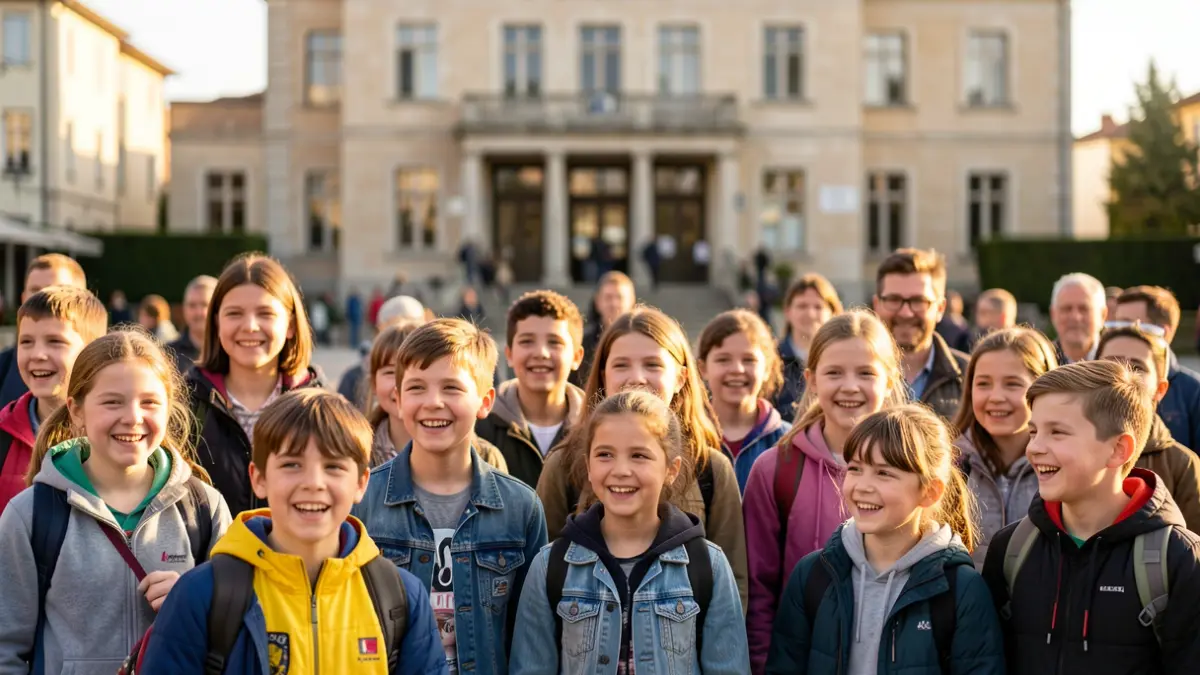
Last Friday, José Pedro Raposo silently listened to a song prepared for him by some 5th-grade primary students from Landako Eskola in Durango. Titled 'Pedro, ¿dónde andarás?' (Pedro, Where Will You Wander?), the piece, written and composed at the public school, traverses some of the landscapes, animals, and shared memories from the nearly five years the Portuguese man has spent at Basondo. As verses like 'from Alentejo to Euskadi, from Basondo to Portugal' played, the good friend could barely hide his emotion, in a moment that unexpectedly summarized the bond built over this time. The song was recorded in studios in Elorrio and Durango with the minors as protagonists.
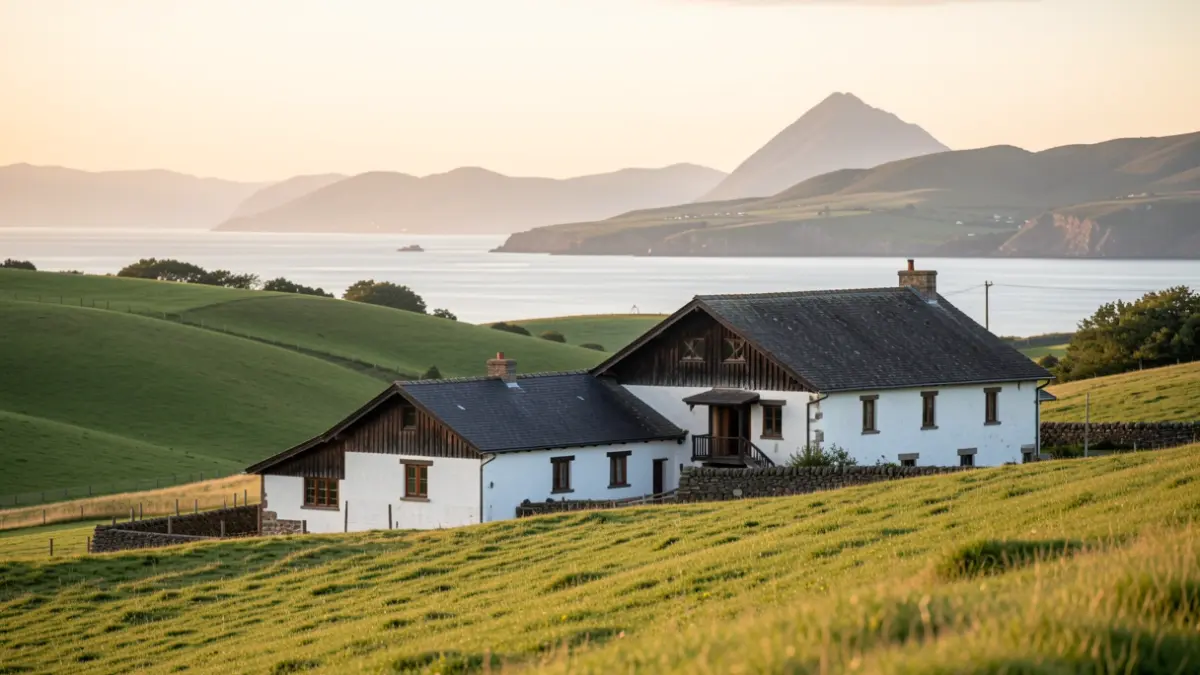
At 62 years old, this Portuguese man from Alentejo, a former basketball player standing 2.02 meters tall, is preparing to leave Basondo this week. Basondo is a 62,000-square-meter animal ecosystem in Kortezubi where he has worked for nearly five years. He avoids the word 'farewell' with the same firmness with which he has built his life story over these years, as it neither fits nor describes what he feels or has experienced. 'This is a celebration, this is not a farewell,' he says serenely, adding, 'it is a continuation always'.
His arrival at Basondo, near the cave of Santimamiñe and the Oma Forest, was not a planned destination. He was working at a riding school in Cantabria when he decided to change course after finding an advertisement for a 'farm school' in Bizkaia. He was attracted by the place, but also by the desire to get to know Euskal Herria and its culture, so he sent his resume without too many expectations. The first visit did not dispel all doubts, but it did leave a clear intuition. 'I was looking for a place where I could have a house, grow a garden, and live in the countryside,' he recalls. They offered him to return for a week and he accepted; upon his return, he already had a house set up for him. 'I saw it was a sign to stay,' he evokes.
Over time, his relationship with Basondo ceased to be purely professional and became something harder to define. 'Perhaps, in the end, Basondo has welcomed me,' he summarizes. His previous background helps to understand this perspective. In Portugal, he initiated a small community for shared living centered around nature, based on coexistence and working the land, and later experienced the kibbutz system in Israel, an experience that reinforced his interest in collective forms of organization and communal living. During this time, he has maintained active social involvement, participating in mobilizations defending the Urdaibai territory and in protests expressing his anti-Zionist critique of the situation in Palestine.
With a keen intellect, his work at Basondo has been linked to animal care, but also to a relationship based on observation and respect. From birds of prey like a peregrine falcon from Gorliz to a doe or a marten, each arrival meant considering its entire life there. 'When you take in an animal, you know it will live here forever. You think about how to arrange the enclosure so the animal is well, as naturalized as possible,' he explains. Over the years, the park evolved from a collection of species into something broader. 'More than individual animals, I feel the whole is a living system,' he summarizes, adding: 'If there were no trees, there would be no animals. The entire system is what functions'.
This way of understanding the environment is also reflected in the song dedicated to him by the schoolchildren. In it, besides traversing his landscape, it highlights a way of viewing nature and coexistence that he himself has tried to convey over the years. Verses like 'tell the curves we've reached that place where there are no cities, where the sea cradles us' or 'and let the wind blow and bring prosperity, and let hatred be silenced and let us know how to speak' function as a collective portrait of what his presence at Basondo has meant to those who have known him since school.
Among the many animals that have passed through his life at Basondo, there is a blind cat named Orri, who holds a special place in his heart. 'She is teaching me a lot,' he says simply. He also recalls difficult moments, such as the death of a mare he brought from Portugal to Cantabria, which was eventually returned to nature. 'Vultures came and ate her whole. It was marvelous, even though it sounds that way,' he recounts.
But if anything has particularly marked these years, it has been the encounters with schoolchildren, who on many occasions did not come to see the animals first, but him. In a particularly significant visit, an alpaca approached a child with autism who remained silent, and the entire group stopped. 'The alpaca put its head on his chest. And they stayed there. The others fell silent,' he remembers. 'It was something that gave me goosebumps.' In another activity, a child with special needs had a similar moment with a corn snake, and ended up establishing an unexpected bond with him during the visit. These are scenes that, as he explains, stay with him more than many other things.
His connection with the school environment has been so intense that he has also participated in sports and community activities, coaching a girls' basketball team at San Fidel Ikastola in Gernika-Lumo and being part of the group of families from Landako Eskola who called themselves Basondistak, a name coined by a child that eventually became a shared identity.
Now, with his departure imminent, a young friend who met him five years ago when he was 5 years old poses a question that encapsulates the entire relationship built: 'If you were my age, ten years old, how would you feel if a very good friend of yours left Basondo?'. Pedro swallows and answers from his own history, marked by separations during the Carnation Revolution in Portugal, when bonds were broken overnight. 'My friends suddenly disappeared,' he lamented. That experience led him to understand that distance does not always mean an end. That's why he insists that nothing truly ends. That things, when they have been lived this way, simply continue in another form. 'It is a continuation always,' he says, departing without saying goodbye.