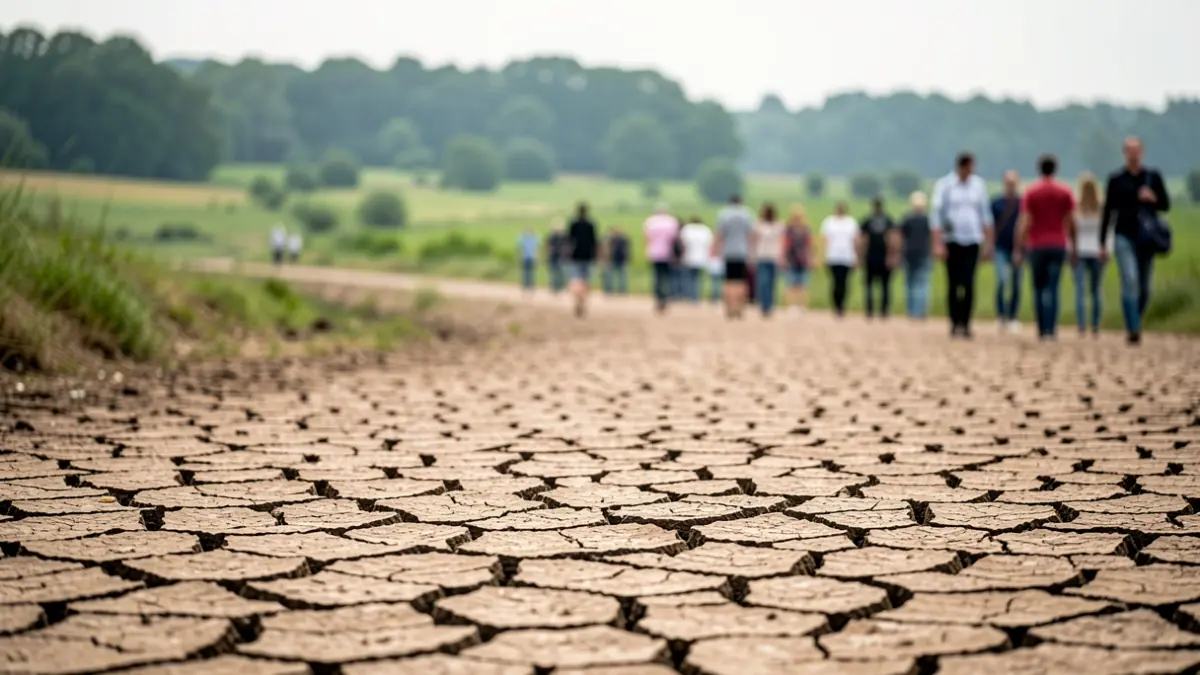
The water scarcity, caused by recent heatwaves and lack of rain, has led to consumption restrictions throughout the entire Northern Basque Country and along the coast of Bizkaia, specifically in the Busturialdea and Lea-Artibai regions. Measures include prohibiting the filling of private swimming pools and washing vehicles and private areas.
The Prefect of Pyrénées-Atlantiques and the Agglomeration Community of the Basque Country have declared a red alert in the Northern Basque Country. Consequently, water consumption has been limited to essential activities. The Errobi river is on reinforced alert, and the Urdazuri and Uhaitza rivers are in a critical situation. Watering or cleaning outdoor areas and filling private pools are prohibited between 08:00 and 20:00. Farmers may only irrigate when absolutely necessary.
In Bizkaia, the Bilbao Bizkaia Ur Consortium has implemented similar measures. It has stated that the watercourses supplying the Busturialdea and Lea-Artibai regions are in a "structural scarcity situation." Therefore, it has requested the municipalities of 21 towns in these regions, including Bermeo, Busturia, and Ondarroa, to adopt water consumption reduction measures.
The drought also has severe consequences for farmers. According to EHNE president Garikoitz Nazabal, pastures are "very dry," and they are already feeding animals with previously stored hay. He indicated this will lead to a shortage of fodder for the winter and next spring. He also denounced the increased cost and lower quality of feed, suggesting public purchases or subsidies.