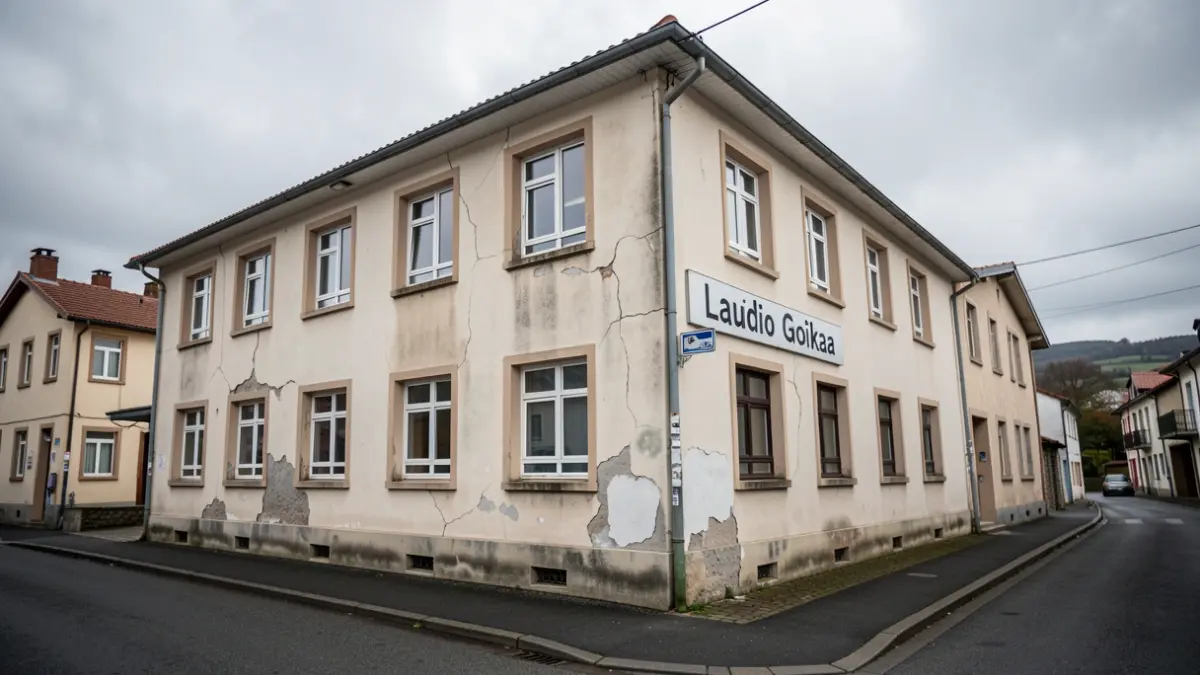
The Laudio Goikoa building, located at Isasi Bideko, number 3, will be temporarily closed from the next academic year. This facility houses the Task Learning Classroom (ZIG) and two Vocational Training cycles (hairdressing and aesthetics). Although the building is independent of the Laudio BHI institute, they are part of the same legal entity.
Last week, during a School Council meeting, Aintzane Arrese (representative of the Department of Education in Álava) announced the closure, citing a technical report indicating that the building requires 2 million euros in renovations to be usable. Instead of investing this sum, the decision has been made to close the center, creating an uncertain future for the students.
The educational community criticizes the timing of the announcement, made at the end of the school year when the community's influence wanes. Furthermore, they argue that the proposed solution fails to meet the needs: the ZIG classroom requires specific facilities that the Laudio Institute building cannot provide. Vocational Training students also need a space that guarantees minimum conditions for their studies.
This proposal would also lead to the installation of more temporary classrooms on the already crowded premises of the Laudio Institute, to the detriment of its students and teachers. This situation highlights the Department of Education's reluctance to invest in public education.
The educational community of the Laudio Institute firmly rejects this decision, opposing temporary classrooms and large consolidated centers. They demand a solution that considers the community's needs and a genuine investment.
They have stated that if the meeting tomorrow, May 28th, between the city council and the Education Delegation does not present viable solutions, they will continue their protest. They emphasize that what the Department of Education neglects must be defended in the streets by families and the entire school community.