The event, organized by the Saibigain 1937 Historical Memory Association, the Iron Belt Memorial Museum, and other memorialist associations, featured for the first time the presence of an official delegation from the Government of the Principality of Asturias, underscoring the historical significance of this event.
“"Saibigain is a place that symbolizes the harshness of war, as well as the brotherhood between the peoples who shared the trench. Asturians and Basques fought together against the fascist coup, defending freedom and democracy."
Zapico thanked the Basque Government for its work in Saibigain to locate the Asturian militiamen, describing it as “essential work to advance in the reparation of the victims of Francoism.” During the event, a walk was undertaken from the Urkiola Sanctuary to Mount Saibigain, attended by Lehendakari Iñigo Urkullu, Security Minister Bingen Zupiria, General Deputy of Bizkaia Elixabete Etxanobe, and President of the General Assemblies of Bizkaia Ana Otadui, as well as the mayors of Mañaria, Durango, Elorrio, and Garai. Representatives from the PNV, Podemos Euskadi, and the CNT Asturias trade union also participated.
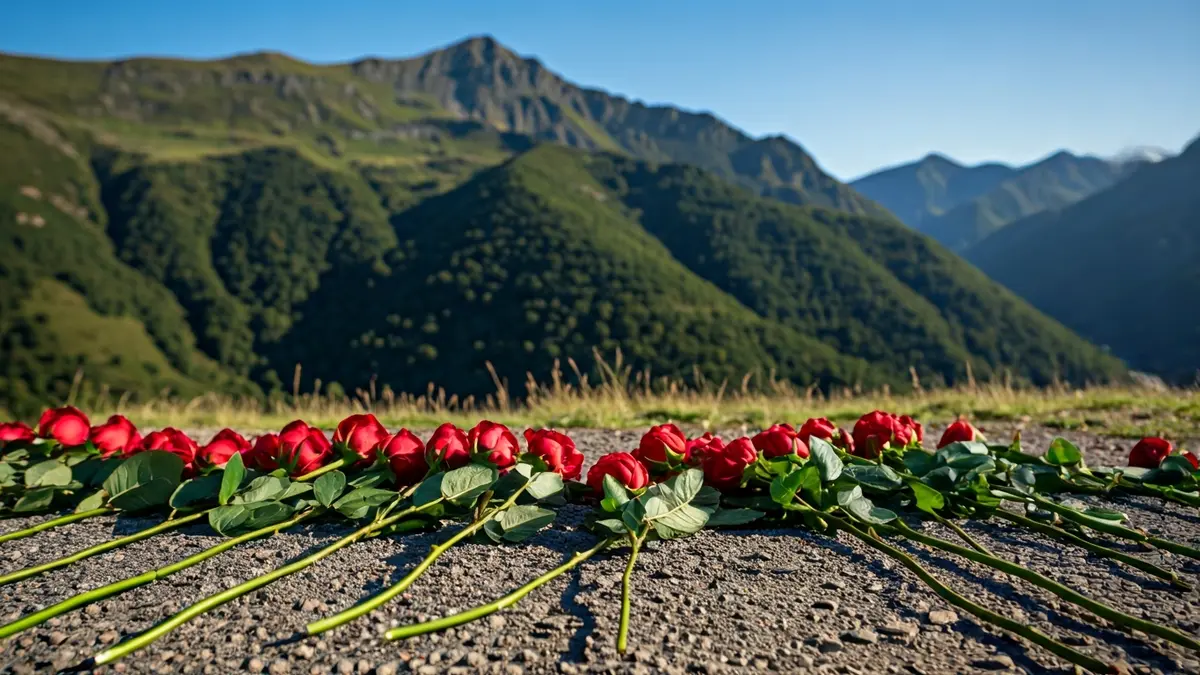
During the floral offering, the names of Basque gudaris and militiamen from the Meabe (PSOE), González Peña (UGT), and Arana Goiri (EAJ-PNV) battalions were mentioned. Also remembered were Salsamendi (PCE), Guillermo Torrijos (UGT), and other units of the Eusko Gudarostea, as well as Asturian militiamen from the Víctor (CNT) and Lenin-Taboada (PCE-Juventudes Socialistas Unificadas) battalions. A total of 117 roses were laid in memory of the 117 young people who disappeared around Mount Saibi. Relatives of the gudaris who disappeared in Saibigain traveled from Igorre, Dima, Getxo, and Bilbao, as well as from Asturias, the Catalan Countries, and Brussels, among other places.
“"Some families have been waiting for 89 years for a grief inherited from generation to generation. In my family, there was no grave. There was a painful question: Where is Felipe? That question does not fade. It passes from generation to generation."
The researcher and director of the Iron Belt Memorial Museum, Aitor Miñambres, recalled that during the Francoist army's offensive, Basque and Asturian battalions defended the Urkiola mountains for several days to “halt the enemy's advance.” According to Miñambres, “the most important events took place here, in Saibigain. Both sides fought with true fury for possession of the summit, in endless attacks and counterattacks.” Teresa Usaola, president of the Saibigain 1937 association, stated that they would continue the search for relatives, declaring: “We have not forgotten you. We continue to search for you, and no one and nothing will stop us.” Usaola also highlighted the presence of the official Asturian delegation.