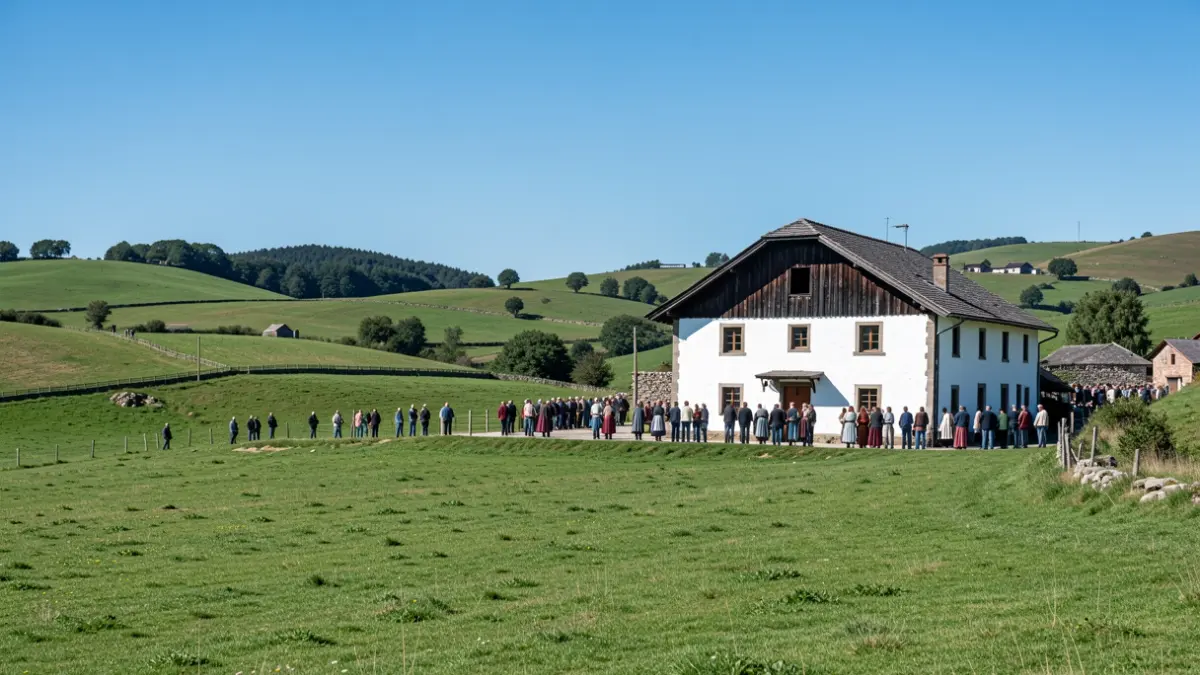
Limestone originates from the accumulation of biological debris from ancient seas, such as corals and shells, which compact and lithify over millions of years. Its key feature is its solubility in water, creating unique landscapes with sinkholes and caves. The Altxerri Cave serves as a prime example, where human art and water's action merge.
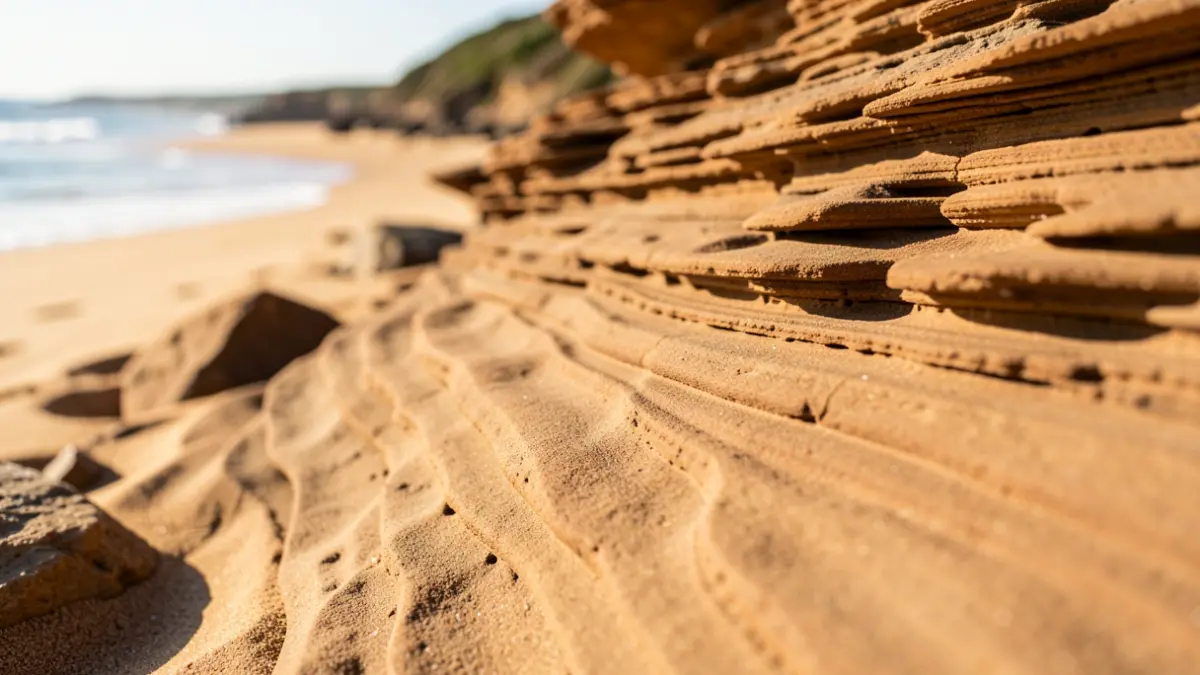
Sandstone, conversely, forms from the accumulation of sand grains resulting from the erosion of older rocks, transported by rivers, wind, or the sea. These grains are cemented together naturally over time. It has a granular texture and warm colors, visible around the Antillas beach and in building blocks in Goikolea. The San Nicolás church is built from sandstone, and its layers show marine traces in the form of ripple marks left by waves.
In essence, limestone acts as an ancient book of memory holding tales from past marine life, while sandstone is a practical logbook transitioning from the beach to household walls, designed for daily use.