
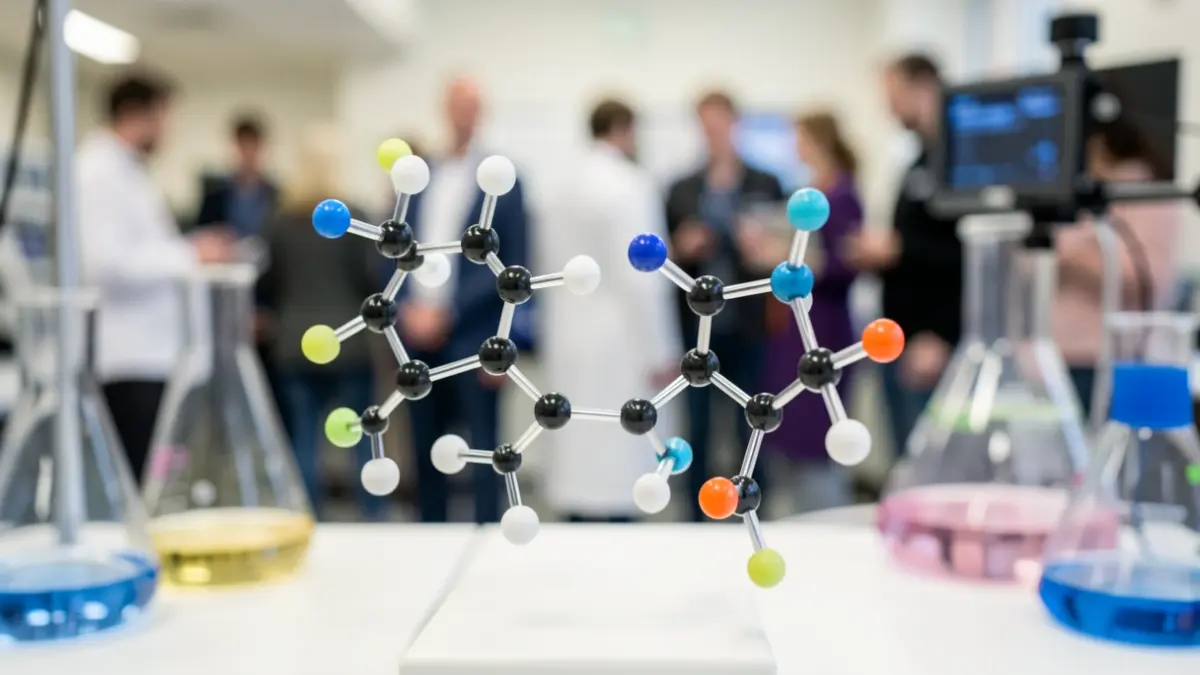
Some molecules exist in two forms, with one being the mirror image of the other. Molecules with two such forms are called chiral, and their mirror-image forms are known as enantiomers. Living organisms typically possess only one enantiomer of a chiral molecule.
“"They have succeeded in creating a single variant of molecules; precisely, as living beings do naturally"
However, in laboratory reactions, chemists consistently obtained both variants of the molecule of interest in equal proportions. These two variants do not yield the same results in certain reactions; for instance, during drug synthesis, it was observed that one variant could be therapeutic, while the other might cause unnecessary and sometimes harmful side effects.
Chemists Henri B. Kagan and Kenso Soai have now succeeded in creating a single variant of molecules, just as living organisms do.
“"Henri Kagan and Kenso Soai have provided a solution to a chemical mystery of over a century: how homochirality can emerge spontaneously. The chemical reactions they have developed are spectacular"
Henri B. Kagan aimed to produce the purest possible enantiomers, partly due to their significance in drug synthesis. In 1960, the drug thalidomide caused severe issues because both enantiomers of the molecule were used. One enantiomer had a calming effect, but the other led to malformations in fetuses.
Catalysts are used in molecule synthesis to aid chemical reactions. Chemists previously believed that the catalyst's chirality determined the product's chirality in a linear relationship. Henri B. Kagan disproved this by designing a method to enhance the creation of one enantiomer, termed asymmetric synthesis with a non-linear effect.
Chemist Kenso Soai set out to design a reaction where the catalyst would synthesize more catalyst, creating an autocatalytic process. In 2003, he achieved this with the Soai reaction, where the product itself acts as a catalyst, exponentially generating more product.
Henri Kagan and Kenso Soai have elucidated how homochirality can arise, enabling the production of single-enantiomer products. This knowledge is vital for industries such as pharmaceuticals, agricultural chemicals, and the development of new materials.