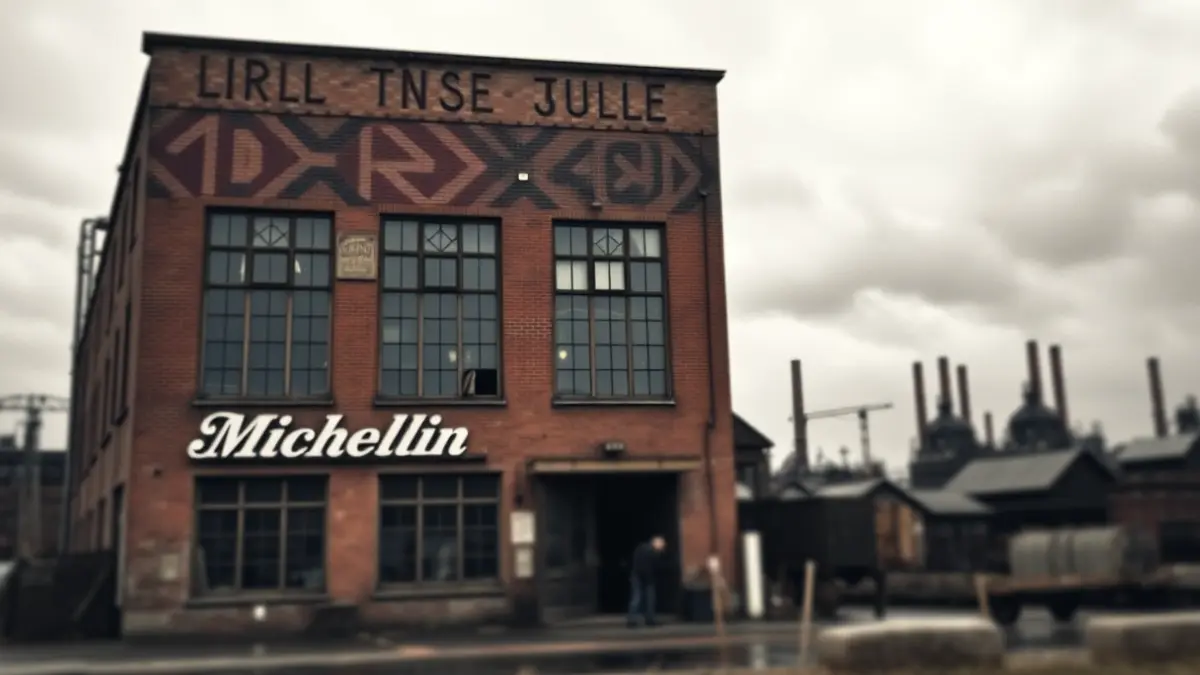
Half a century after one of the most prolonged labor conflicts of the late Francoist era, the memory of the historic Michelin strike in Lasarte-Oria is once again occupying public space. The “100 days of strike” initiative's promotional group has accepted an invitation from Lasarte-Oriako Gazte Asanblada (LOGA) to participate in a guided tour of some of the key sites that marked that episode.
The goal is to bring an experience that left its mark on the social history of the municipality closer to new generations. The event will take place on Saturday, April 25, starting at 11:00 AM. The tour will begin at the open-air fronton of Michelin and continue through various emblematic points linked to the strike: the dining hall, the cooperative, the barracks, and finally, the Zumaburu neighborhood. In case of adverse weather conditions, the activity will be moved to the Mercero Hall. The organization has made an explicit call to local youth to participate in this pedagogical and commemorative initiative.
The guided tour is not only conceived as an exercise in remembrance, but also as a tool to reflect on current working conditions and the rights achieved over time.
The Michelin strike in the mid-1970s occurred within a context of increasing labor unrest in the Spanish State, during the final years of the Francoist dictatorship. In that period, the labor movement began to organize with greater force, pushing for demands not only related to wages but also to working conditions, union rights, and political freedoms. In this scenario, the Michelin plant in Lasarte-Oria became one of the most significant centers of mobilization.
The stoppage, which lasted for nearly one hundred days, stood out for its duration and the degree of involvement of the workforce. The protest originated from a climate of accumulated discontent over issues such as wages, production rhythms, and the lack of effective representation channels for workers. Despite the restrictions imposed by the regime, which prohibited independent union activity, workers organized assemblies and informal structures that allowed the mobilization to be sustained for weeks.