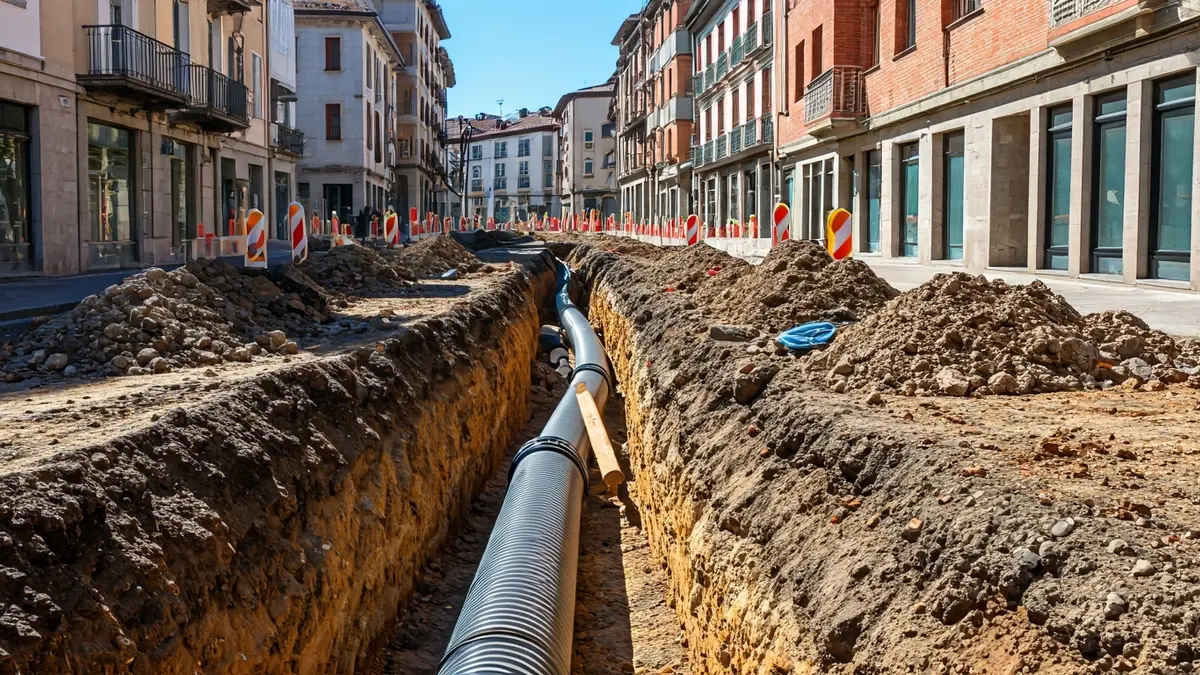
The project involves opening a trench and renovating the drainage system by installing two large-capacity pipes, approximately 600 millimeters in diameter. These are designed to optimize the evacuation of rainwater during intense rainfall episodes. Additionally, a large manhole will be constructed to regulate water flow and ensure proper connection with the existing network, thereby guaranteeing more efficient hydraulic operation.
These works seek to address problems identified at this point in the municipality, especially during heavy rainfall, when the current network has limitations in absorbing the flow.
During the estimated four-week execution period, access to Tomás Alba street will be closed to vehicular traffic. The City Council has established Galtzaur street as an alternative route for residents, while Pelotari street will remain open. The Council asks citizens to respect the provisional signage and established instructions to ensure safety and the proper development of the works.
In parallel, the works corresponding to the bidegorri section on Pelotari street are expected to conclude within the same timeframe, allowing for a comprehensive intervention in this urban area.
The City Council has acknowledged the inconvenience these actions may cause to residents' daily lives and has expressed gratitude for their patience and cooperation, emphasizing that this is a necessary investment to improve the municipality's resilience against adverse weather phenomena and ensure a more effective drainage system in the medium and long term.