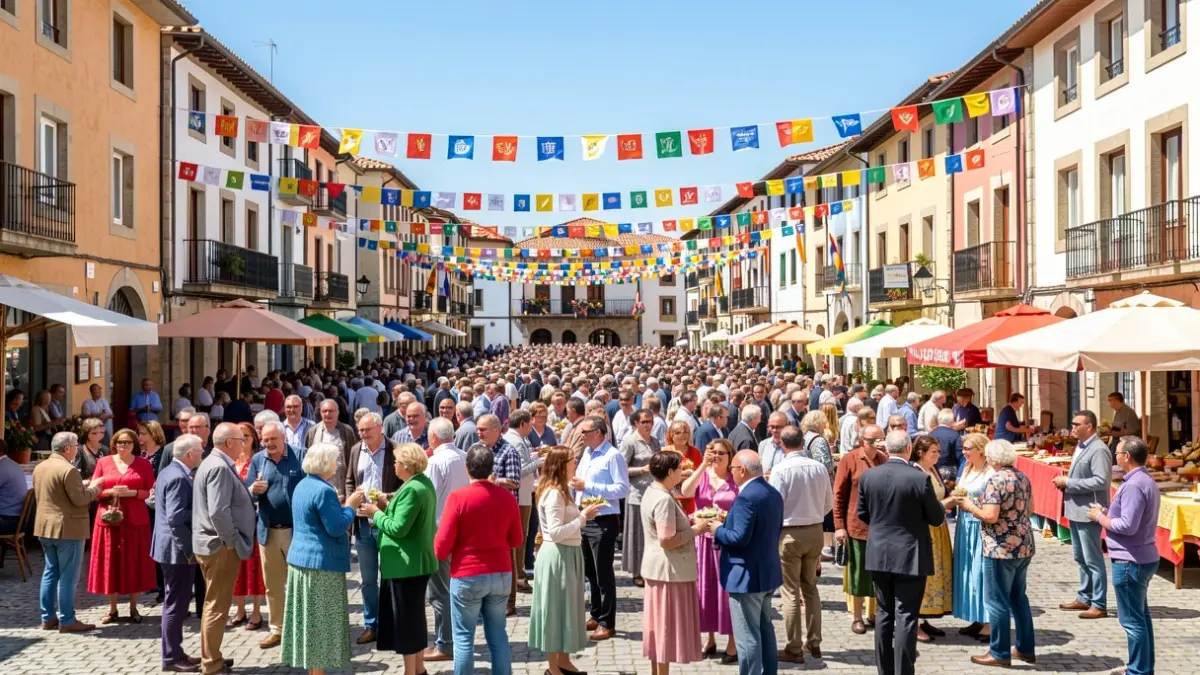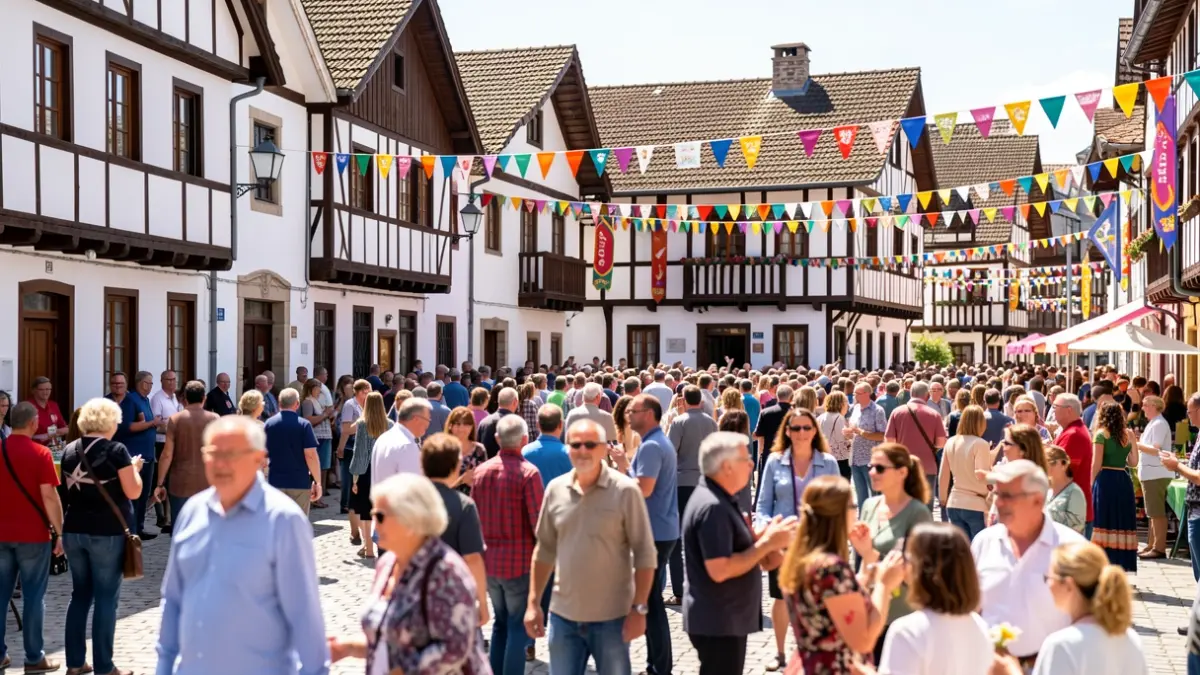
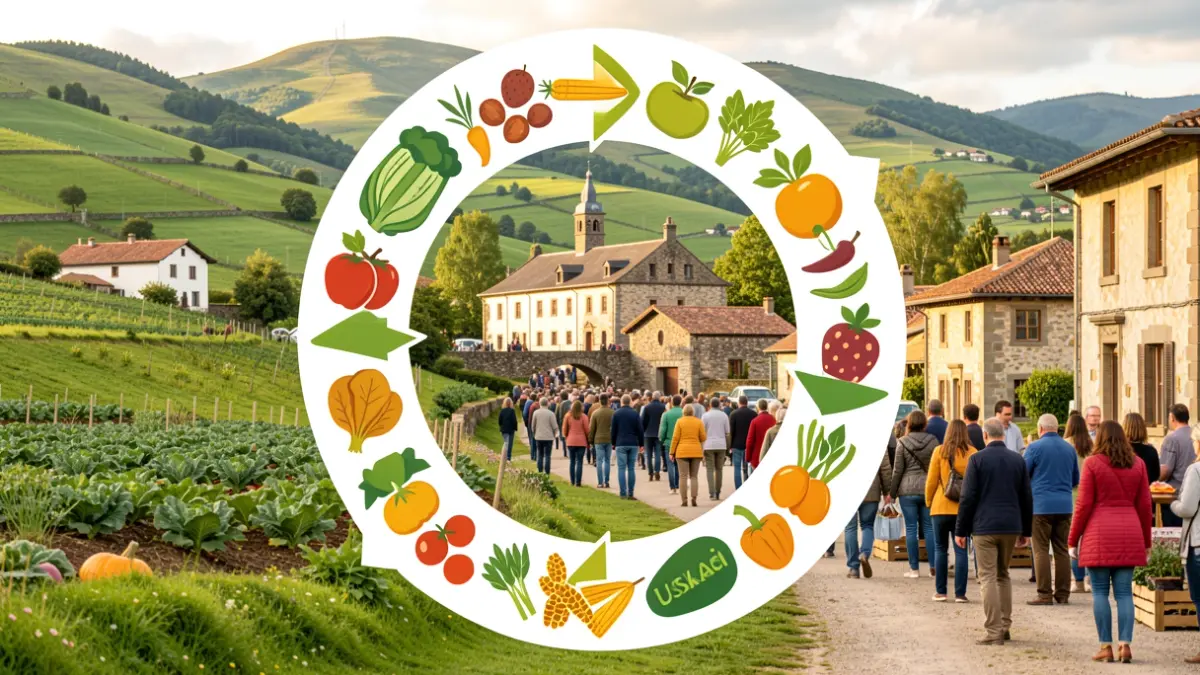
In Arrasate, 'Karanketan', the Arrasate Food Table project, was presented this afternoon. The event, held in the cloister of Kulturate, was attended by the stakeholders involved: the Arrasate City Council, Ereindajan Arrasate, the Deba Garaia Rural Development Association, and Biolur Gipuzkoa, the Tokixan initiative, Txatxilipurdi, and several local producers.
The project's main objective is to strengthen the local food chain, promoting a healthy and sustainable model based on agroecology. As explained by Jaime Bengoa, head of the Local Economy and Employment commission of the Arrasate City Council, "after receiving training from an external consultancy, activation sessions were held, and a working group was formed to define and stabilize the process".
The name 'Karanketan' is a nod to the local dialect and tradition of Arrasate. Jaime Bengoa explained that "to do karanketan means to sow, and it is a collective and traditional work around the table, where, in addition to harvesting, the best seeds are saved for future sowing." The circular imagery aims to represent mutual aid, community, and the food cycle.
Ereindajan Arrasate was the entity responsible for defining the process and strategy. According to Edurne Kortabarria, coordinator of Ereindajan Arrasate, the values of Karanketan are agroecology, supporting local producers, local focus, being an inclusive and feminist meeting point, and maintaining connections.
Throughout 2026, awareness activities have been organized for citizens, such as the educational courses 'From the Earth to the Table! Cooking with Producers!', primarily aimed at children and young people. Furthermore, planning for 2027 is currently underway.
Garikoitz Aiestaran, managing technician for Deba Garaia Landa Garapenerako, and Ane Gorosabel from Elkoro baserri, representing local producers, emphasized the need for such initiatives. "We want to show that there are opportunities in the primary sector," stated Gorosabel, adding that they plan to hold workshops in the future on topics like horticulture, livestock farming, and beekeeping.