The Basque Water Agency-URA, attached to the Basque Government's Department of Industry, Energy Transition and Sustainability, has completed a decisive step in the sanitation of the municipalities of Ermua and Mallabia with the commissioning of the Goitondo–Ermua collector. This new infrastructure now allows wastewater to be diverted to the general sanitation system and the Apraiz treatment plant (Elgoibar) for proper treatment before being returned to the environment.
This milestone significantly reduces the polluting pressure on the Ego river, a watercourse historically affected by urban and industrial discharges. Wastewater from both the Goitondo industrial park and the Arandoño neighborhood (Mallabia) is now collected and transported to the existing network in Ermua.
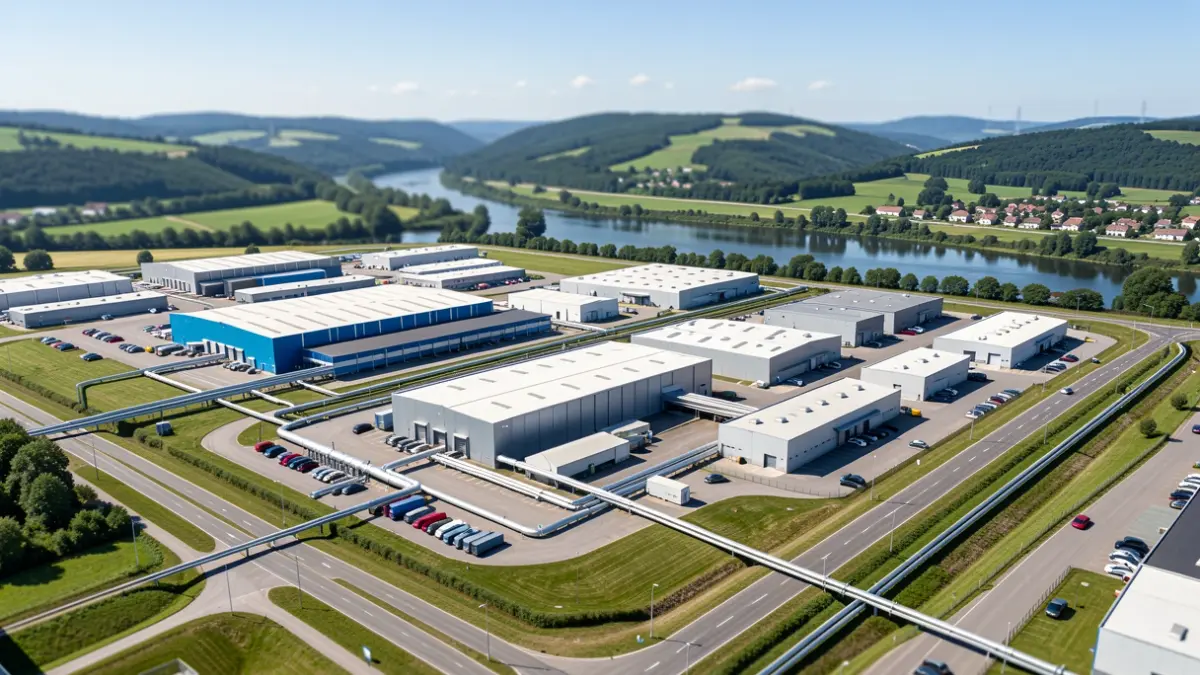
The Goitondo–Ermua collector is a structural component within the region's sanitation system. The new main pipeline has a total length of nearly 1,800 meters and runs parallel to the Errekazabaleta river, connecting the industrial area of Mallabia with the urban network of Ermua. The infrastructure serves the four industrial parks in the Goitondo area, covering approximately 17.23 hectares, one of the main economic activity hubs in the region.
The system is designed for an average flow rate of 15.5 liters per second, similar to that generated by a population of about 4,500 inhabitants, albeit with a significantly higher pollutant load due to the industrial nature of the discharges. The project also includes the possibility of future connections, such as the Berano neighborhood (Mallabia) or urban developments in the Okinzuri area (Ermua), reinforcing its strategic importance in the medium and long term.
The execution of this infrastructure required significant technical effort due to the environmental conditions and coexistence with existing infrastructure. The route runs through a very limited corridor, conditioned by the proximity of the river, the BI-2301 regional road, and various pedestrian paths between Ermua and Mallabia. Added to this is the need to excavate trenches at great depth—exceeding 4.5 meters in some points—to cross the river at several points, the narrowness of the available space between the river, the road, and the paths; the necessity of keeping existing networks operational during construction; or the intervention in soils inventoried as potentially contaminated.
The execution period was 24 months, and the final investment amounted to 3.49 million euros (VAT included). The commissioning of the Goitondo–Ermua collector culminates a series of actions developed over the last two decades by URA, in collaboration with the municipalities, to build an integral sanitation system in the region.
The ultimate goal of these actions is to improve the ecological status of the rivers by progressively reducing the pressures from discharges. The connection of Goitondo to the sanitation system allows for significant progress in eliminating discharges into the Ego river and its tributaries, laying the groundwork for its environmental recovery and the fulfillment of quality objectives established in the hydrological planning.
The development of this system has been possible thanks to the collaboration of the Basque Government through URA, the Gipuzkoa Water Consortium, and the city councils of Ermua and Mallabia, who have coordinated efforts to ensure a comprehensive solution in a complex territorial and administrative environment.