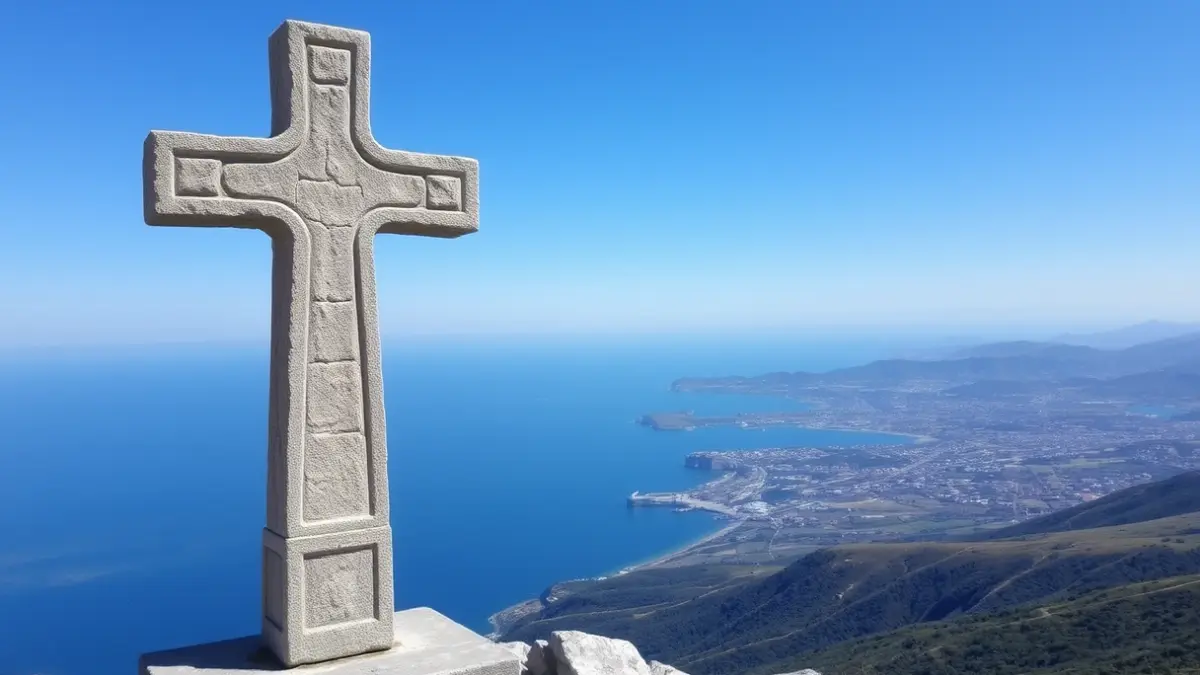
Research in the Mutriku Municipal Archive has determined that the Arno mountain cross was paid for on February 9, 1901, indicating it was already on the mountain by that date. This discovery positions it as the second oldest cross in Euskadi, excluding the one in Bachicabo (1886), and the first known at the beginning of the 20th century, predating the Legate mountain cross.
The found document agrees to pay 150 pesetas to Francisco Aguirre Zabala for transporting the cross to Arno. This sum, significant for the time, suggests the cross was not made of wood but of a heavy material, likely limestone. In April 1930, lightning struck down the original cross, and in March 1931, a new concrete one was erected, retaining the original limestone base.
“"The 150 pesetas paid for the expense of taking the cross up the mountain was a lot of money for that time (today it would be between 2,000 and 3,000 euros), which means the cross was not made of wood, but of something heavy."
The Arno massif is located in the foothills of Izarraitz, south of the Gipuzkoan towns of Mutriku and Deba. The cross stands at an altitude of 601 meters, offering a panoramic view of the Cantabrian Sea. This location was historically used for signaling ships due to its proximity to the sea and considerable height.
The idea of erecting crosses on mountains originated in Italy on June 12, 1899. According to a historian, the Arno mountain cross was funded by the Mutriku City Council after someone returned from the 1900 Jubilee events in Rome, indicating it was not a popular initiative. This finding revises an important milestone in the history of mountaineering and its summit crosses in the Basque Country.