
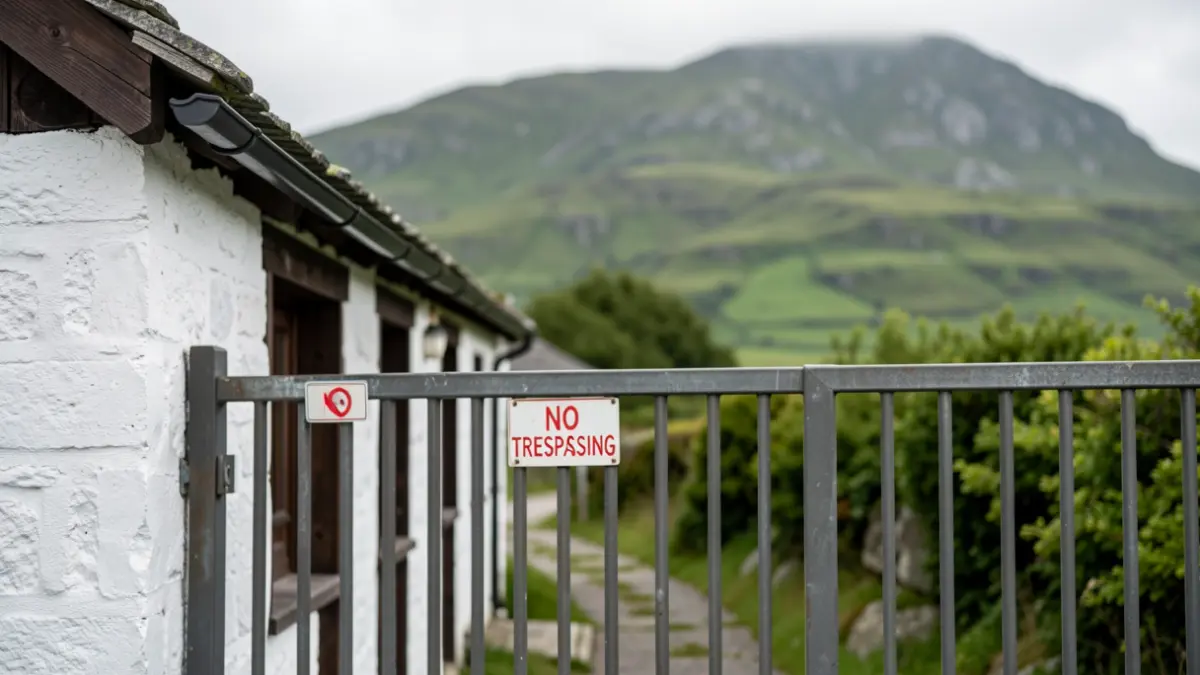
According to the party, the action was taken in compliance with a court order resulting from a complaint filed by the property owner, the construction company Amenabar. The operation led to the sealing of the premises with no individuals inside.
In the view of Elkarrekin Podemos, the eviction highlights the lack of political will from the Eibar City Council and other institutions to respond to the needs of young people. Podemos Eibar councilor, Isabel Fernández Pejenaute, criticized the choice of judicial and police intervention over promoting mediation or seeking alternatives for the groups using the Gaztetxe as a meeting space.
Fernández Pejenaute recalled that, following the approval of the seventh modification of the General Urban Planning Plan in the Txonta area, supported by PSE-EE and EH Bildu, it was known that the eviction of the Gaztetxe could occur sooner or later. However, she stressed that, in her opinion, "it should not have been done this way" nor without offering an alternative.
The councilor defended the value of alternative and self-managed leisure spaces and lamented that, according to her party, such initiatives do not receive sufficient support from the City Council. Elkarrekin Podemos also links the eviction to the debate on the urban model and housing access in Eibar.
The party maintains that such actions prioritize real estate interests over social and youth needs. Pejenaute stated that it once again favors a construction company and housing speculation, in a context where, as she denounced, young people face significant difficulties accessing the residential market. The purple party insists that housing must be recognized as an effective right and not merely as a commodity subject to market dynamics. In this regard, they believe the Gaztetxe case reflects a lack of public alternatives for youth and call for dialogue channels to be opened.