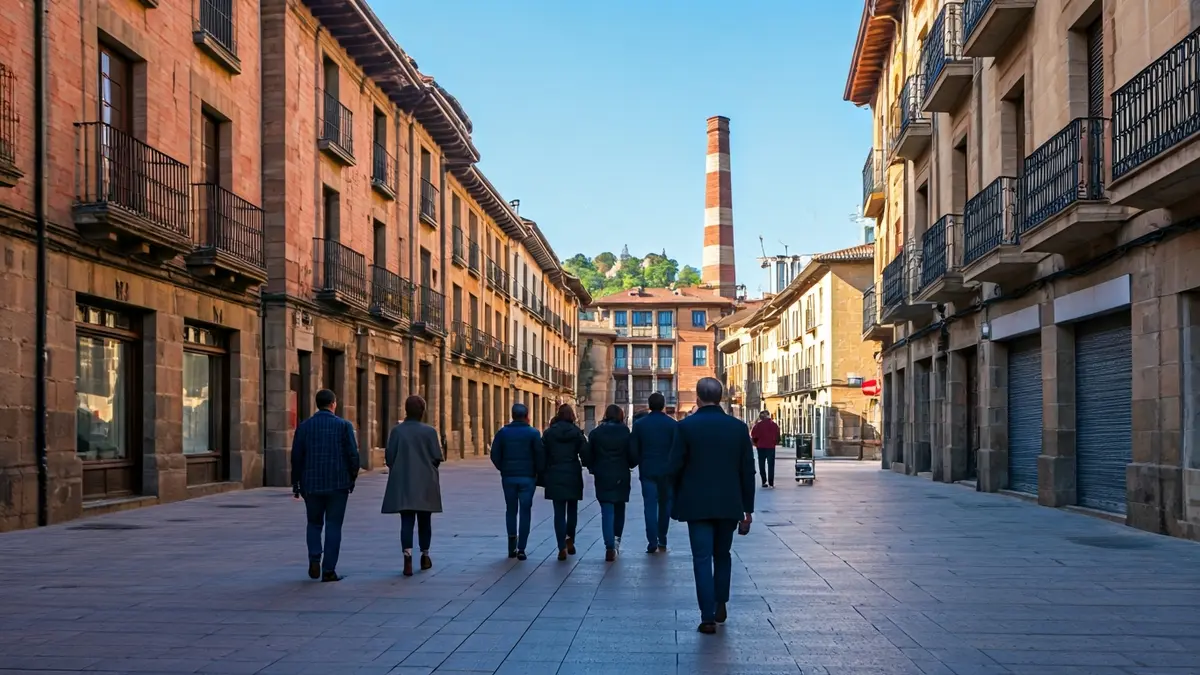
Eibar once again welcomed visitors during the recent Holy Week, reporting a very positive outcome from its guided city tours. Over four days, held on April 2, 3, 4, and 6, approximately 120 people participated in this initiative, promoted by the City Council with the support of Debegesa, to introduce the public to local history and Eibar's rich industrial heritage.
The activity, guided by historian Nerea Alustiza, allowed residents, visitors, and people from various parts of the region and other territories to rediscover Eibar's evolution and the steps taken in its reconstruction after the Civil War. The initiative had a dual objective: to promote the city's tourist offerings and to reinforce the value of its main historical and industrial attractions.
Public response was particularly strong on Holy Thursday, with 53 attendees. Good Friday, marked by bad weather, gathered 19 people, while 23 visitors participated on Saturday and another 26 on Monday, confirming the interest generated by this journey through the city's memory.
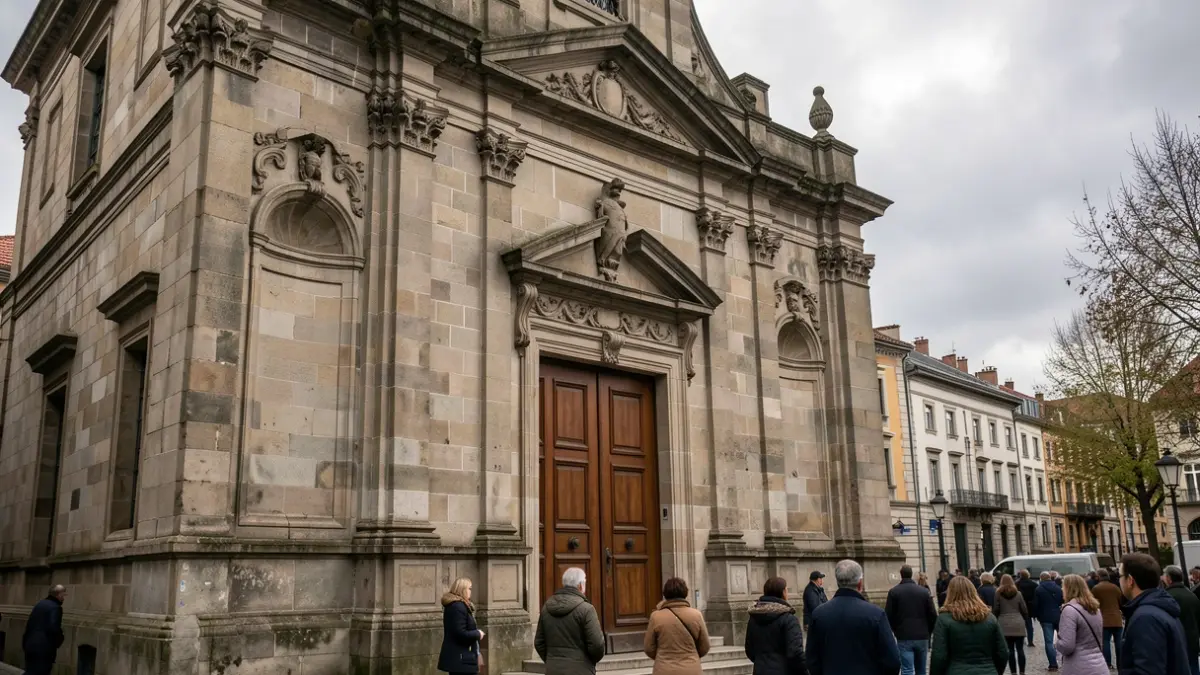
The tours, lasting approximately an hour and a half, began in San Andrés square and concluded on Estación street, following an itinerary through the urban center where Eibar's transformation became the main theme. Throughout the route, Alustiza detailed the city's idiosyncrasies through its historical development and manufacturing tradition.
The journey included references to emblematic companies such as Lazpiur, Sarasqueta, Aurrera, El Casco, and BH, names closely linked to the local collective memory. One of the points that most surprised attendees was the old Aurrera company, whose dimensions particularly caught the visitors' attention.
“"I try to make known the drastic change Eibar underwent during the Civil War and its subsequent resurgence, with references to emblematic companies that are part of the collective memory."
The route also stopped at Errebal, where the existence of the old convent and the subsequent construction of housing linked to the Devastated Regions program were discussed. The tour continued through other significant enclaves such as the Zapata company, the Market square, the Trinkete, Ibarkurutze, and the Station area, in a narrative that sought to show the profound change Eibar experienced in the 20th century.
In the same vein, the Councilor for Economic Development, Employment, and Innovation, Vanesa Hortas, emphasized that these visits help strengthen Eibar's tourism projection during periods when many people take the opportunity to visit the area. With this initiative, Hortas added, the aim is to continue valuing the city's cultural, historical, and industrial resources as elements of attraction and economic revitalization.