In early June, the Socialist Council of Durangaldea and the Socialist Housing Union filed a complaint against Xabier Eguia Basoa, accusing him of threatening a family with the aim of evicting them. Although the news originated outside the region, the businessman's activity also has a significant presence in Aiaraldea, where he charges up to 550 euros per room.
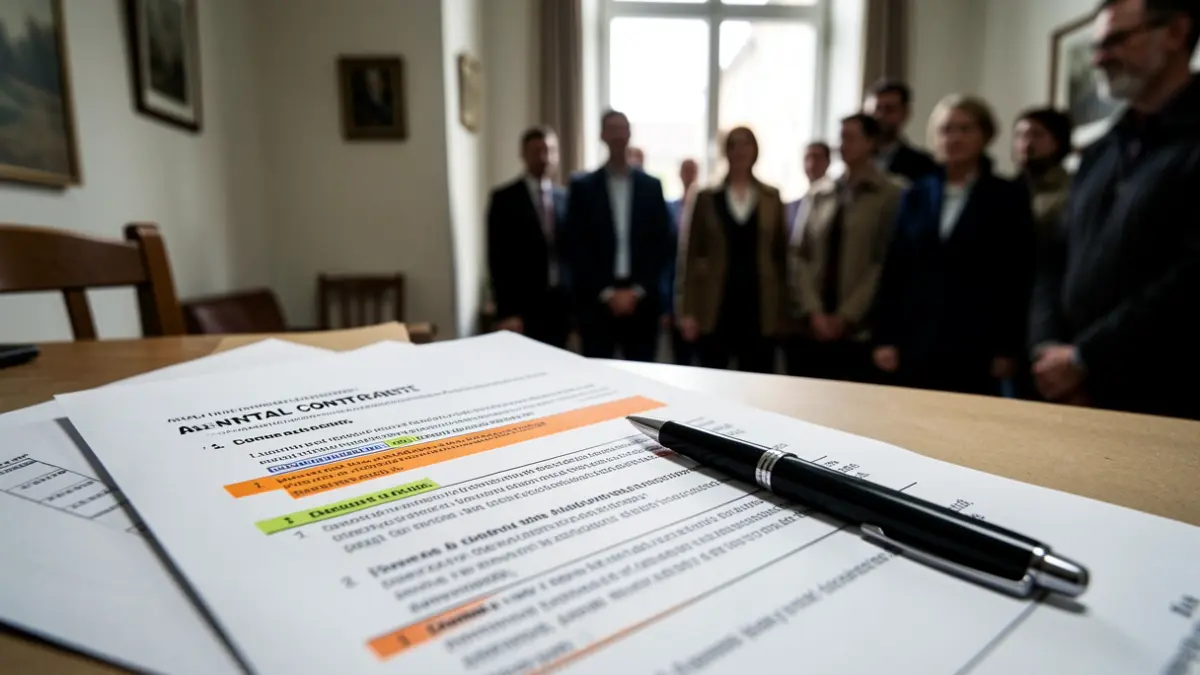
In an investigation by Aiaraldea Komunikabidea, one of the contracts used by the businessman in the region has been examined. According to several consulted lawyers, at least one clause in this contract is completely illegal, and many others are questionable.
Eguia's offer essentially consists of renting out a room for up to 550 euros per month, sharing a bathroom and kitchen with other tenants in the same dwelling. In many cases, more than one person lives in each room, including families, and most are migrants.
Lawyers have highlighted that one clause imposed by Eguia is clearly illegal: after leaving the property, the tenant must send him a certificate proving they are no longer registered there. Otherwise, the deposit will not be returned. Jurists explain that it is not legal to prevent the return of the deposit using the excuse of registration.
Furthermore, they recall that registration is not a right but an obligation to receive public services, and that requesting its removal is not within the businessman's authority.
Eguia's business model is based on the Rent-to-rent technique, meaning he does not own the properties but rents them from owners and then re-rents them to third parties. A person who has rented a property cannot initiate the process of deregistering their address, as it is not their property.
In the opinion of lawyers, considering that Eguia is not the owner, several clauses could be abusive or null. For example, if the property is not vacated on the date specified in the contract, double the daily rent must be paid. Likewise, if the property is abandoned before the contract term, Eguia would keep the deposit.
Eguia demands that his clients allow him access to common areas and vacant rooms whenever he wishes, and the contract stipulates that failure to comply with this condition will result in eviction. Additionally, 30 days before the contract ends, notice must be given if the tenant wishes to continue, otherwise the deposit will not be returned.
The businessman himself admits to having access to the properties "at all times" and using this option to pressure those who do not pay. In a video published on social media, he states: "We have access to the property at all times. Therefore, it is very difficult for someone to occupy a room. If a person does not pay us, we go to the property and knock on the door. That person, even if they don't want to pay, will have to leave their room, because they will have to eat, go to the bathroom..."
Finally, the businessman imposes that clients must facilitate viewings during the last two weeks of the contract so that another person can rent their room, and failure to do so incurs an additional fourteen days' rent (approximately 275 euros). Furthermore, in case of late payment, ten euros extra must be paid per day. The tenant can also be evicted for violating the household rules and daily operations.