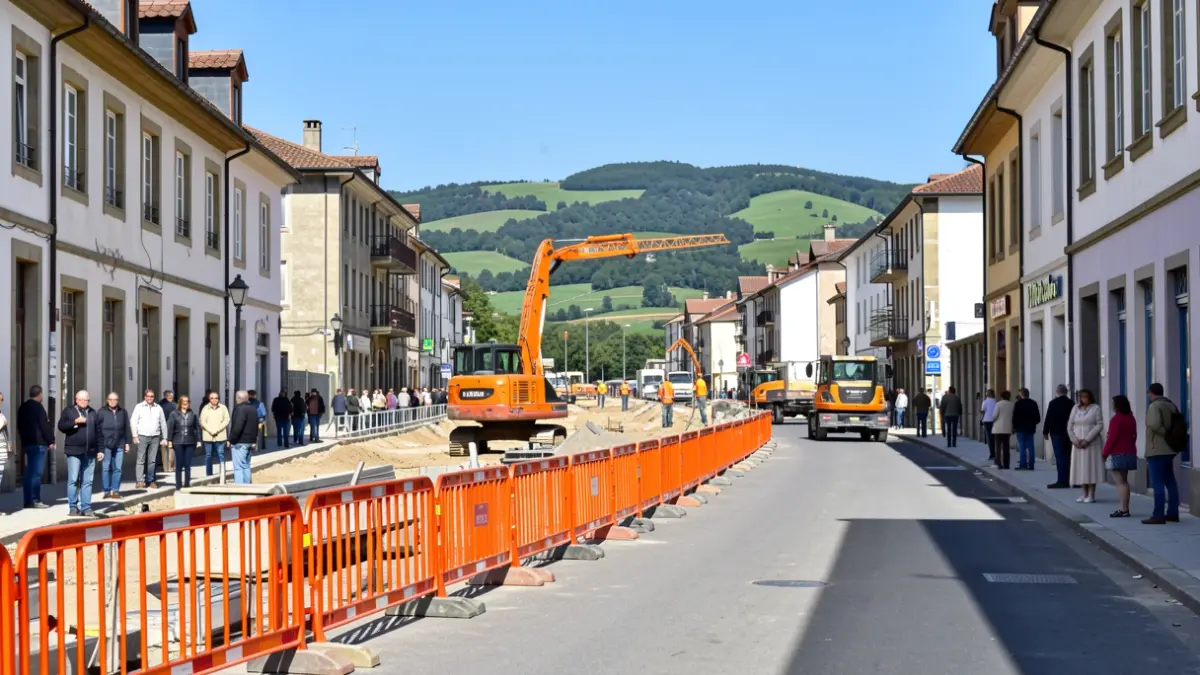
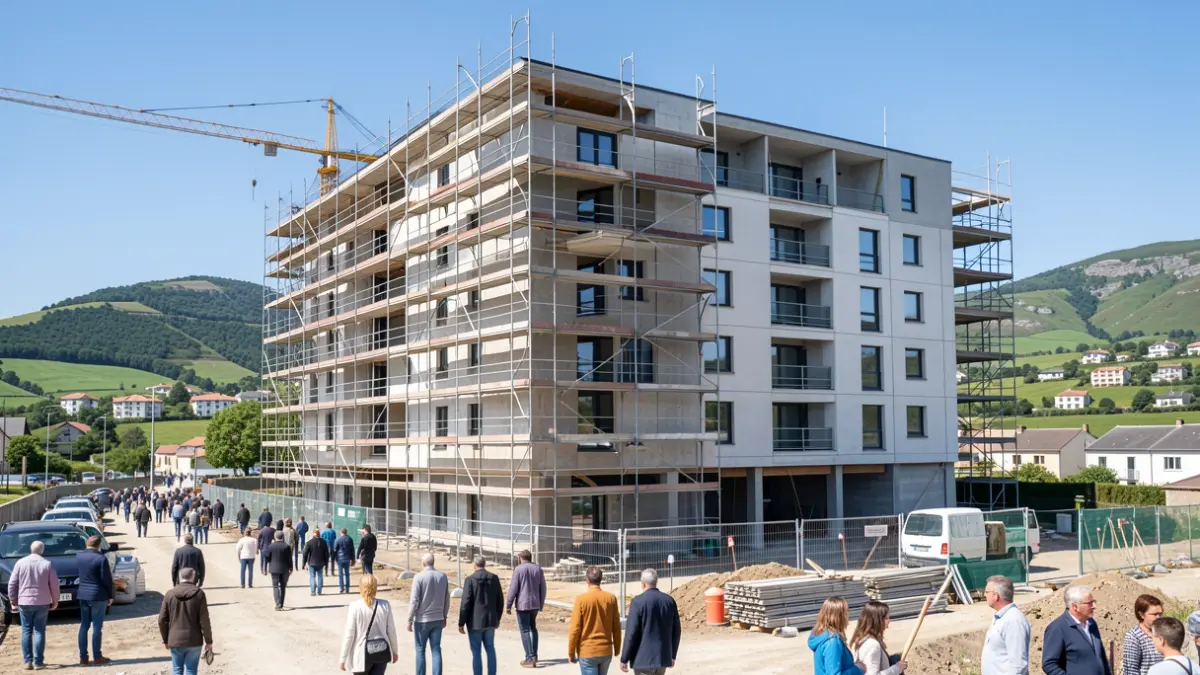
Llodio will feature 93 new public rental housing units in the coming years, promoted by the Basque Government. Currently, construction has started on 64 homes, part of the initial phase. The first stone was laid this Monday at the site located at Avenida Zumalakarregi 55 and 57, within the Goikoplaza area.
The homes will be distributed as follows: 16 one-bedroom units, 43 two-bedroom units (three of which are adapted for people with reduced mobility), and 5 three-bedroom units. The building will comprise two basement levels, a ground floor, and 8 upper floors, with two vertical communication cores and a spacious, freely accessible porticoed area. Spaces for bicycles, strollers, and adapted vehicles, along with other community services, will also be provided.
The construction takes into account the urban characteristics of the surroundings and the conditions arising from the proximity of the San Juan stream. Consequently, the building will be situated on an elevated platform to ensure safety against flooding and facilitate proper integration with adjacent public spaces. Architecturally, the aim is to maximize natural light and winter sun exposure, while terraces will mitigate solar incidence during warmer months.
To enhance the building process, these 64 homes will feature industrialized construction solutions for facades and bathrooms. The structure will consist of reinforced concrete alveolar slab floors supported by walls and pillars. Facades will combine aluminum cladding, exterior thermal insulation systems, and rock wool. Homes will be equipped with electric radiators, individual water heaters for domestic hot water, and renewable energy generation through photovoltaic panels. Upon completion, Alokabide will manage the properties, representing an investment of 9.5 million euros.
The remaining 29 VPO units will be built on a plot at Goikoplaza kalea, 10, with an investment of 4.6 million euros. The distribution will be: 4 one-bedroom units, 22 two-bedroom units (2 adapted for people with reduced mobility), and 3 three-bedroom units. The tender for the project's design, technical direction, and construction execution has been launched. Visesa anticipates that the contracts will be awarded in the third quarter of 2026, with work commencing in 2027. The project aims to be completed by spring 2029, followed by the allocation of units.
Etxebide highlights the "special relevance" of these rental VPO due to the current demand for protected housing in the municipality. As of June 1, 2026, Etxebide had registered 873 cohabiting units seeking such housing. Of these, 82.7% are requesting rental options, including 545 units registered in Llodio. For these 93 future VPO units, the required annual income ranges between 9,000 and 46,463.29 euros. Currently, 416 registered units in Etxebide meet these financial criteria.
Among the groups with the highest demand are those under 36 years old. Out of the 722 cohabiting units seeking protected rental housing in Llodio, 221 are for individuals under that age. Consequently, "the 93 homes planned for Goikoplaza will offer a potential response equivalent to one in five applicants, meaning 20% of this priority group," announced Denis Itxaso. "Housing has become one of the primary concerns for Basque youth. Our commitment is to provide more opportunities for emancipation through protected, stable, and affordable rentals," explained the Housing counselor. The allocation of homes will follow the criteria and quotas established by Etxebide for protected rental housing, with specific reserves for priority groups such as those under 36 (50%), people with disabilities, cohabiting units with special housing needs, and the general quota.