Barcelona is one of Europe's most visited cities, and it's no wonder: Modernism, beaches, markets, mountains, and a very diverse gastronomic scene coexist in a compact city. This guide proposes a tour that starts with the places everyone wants to see and ends with the hidden gems that make it worth returning.
What to see in Barcelona: the must-sees.
To start, there are a few places that are hard to overlook: the Sagrada Familia, Casa Batlló and La Pedrera, Park Güell, the Cathedral and the Gothic Quarter, the Palau de la Música Catalana, and the views from Montjuïc. Each tells a different part of the city's story: the Sagrada Familia and Gaudí's houses showcase the creativity of Modernism, the Gothic Quarter and the Cathedral recall its medieval past, the Palau de la Música Catalana combines architecture and music in one of Barcelona's most surprising interiors, and Montjuïc offers broad perspectives over the port and the city. These are the most popular monuments, so it's advisable to buy tickets in advance and avoid peak hours, when queues and crowds can detract significantly from the experience. A good strategy is to go early in the morning or in the afternoon, when the light is softer and there are fewer people, and not to try to see too much in one day: two or three well-enjoyed sites are worth more than a rushed list of visits. Between visits, it's also worth leaving time to wander through the surrounding streets, where you'll often find cafes, shops, and corners that tell the city's story as much as the grand monuments. But once you've seen the great classics, the city still has much more to offer, especially in districts slightly off the usual routes, where the pace is more relaxed, there's less crowding, and you can discover a more everyday and intimate Barcelona.
Horta-Guinardó: Modernism, viewpoints, and a more tranquil Barcelona.
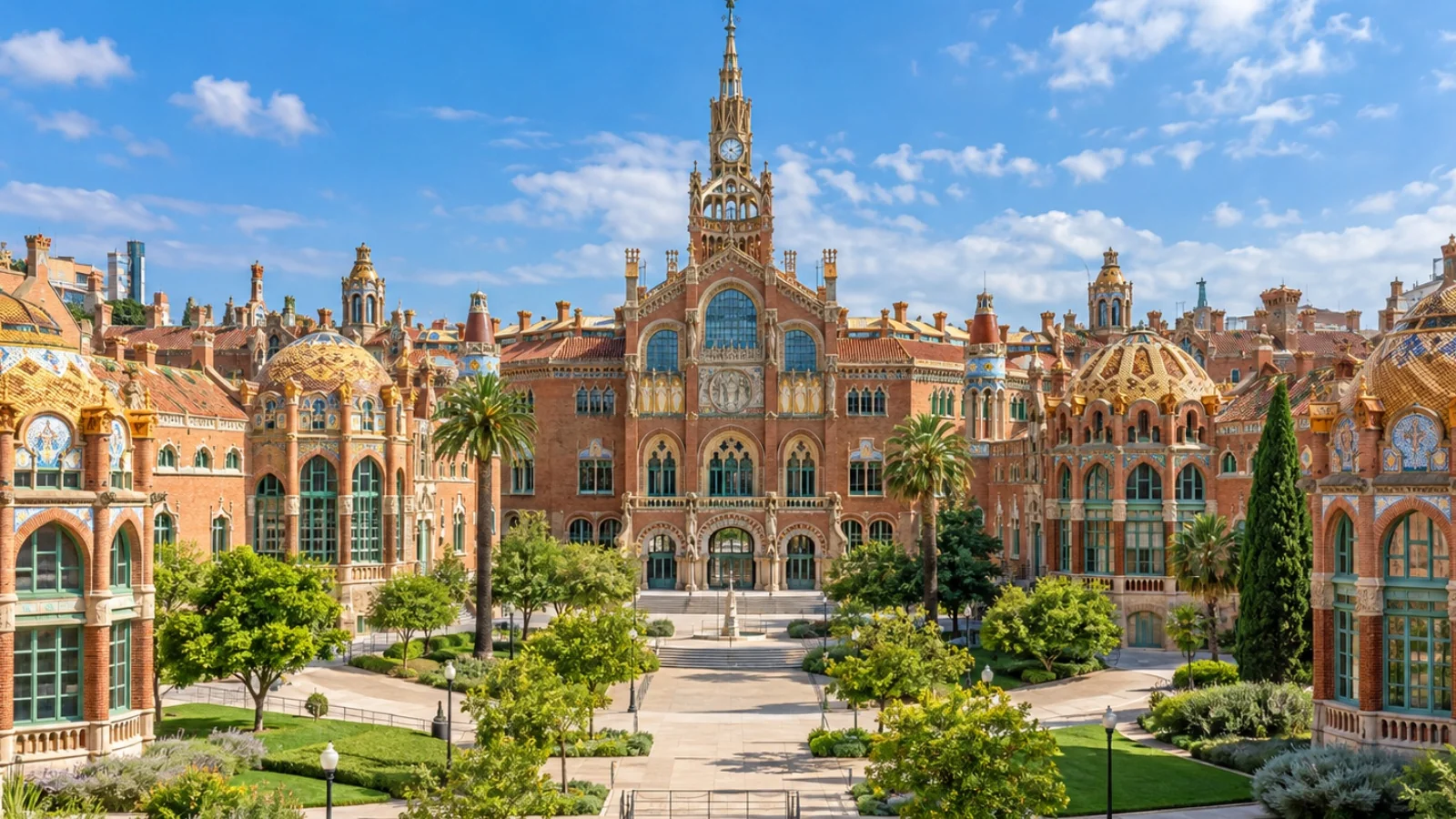
One of these districts is Horta-Guinardó, which combines heritage and nature with much less crowding and allows you to spend a whole day walking among Modernist buildings, parks, and viewpoints without the pressure of mass tourism. You'll find the Recinte Modernista de Sant Pau, the viewpoints of the Búnkers del Carmel, Parc del Guinardó, and Parc del Laberint d’Horta – four very different proposals that can fill your day without repetition. It's a district of slopes, stairs, and corners with views, where the terrain dictates the pace and where residents continue their neighborhood life in the markets, squares, and terraces not featured in the most popular guides. After a morning walking through these streets, it's natural to stay for lunch in the same neighborhood, and if you're looking for an arroz restaurant in Barcelona where the rice is cooked unhurriedly and served perfectly, it's worth venturing beyond the most touristy areas to choose a local spot.
Sometimes, the best plan in Barcelona is to get off the beaten path and eat like the locals do.
Barcelona neighborhoods worth exploring.
Guinardó isn't the only neighborhood deserving a visit outside the center; Barcelona has many more that help you understand the city better than any monument. Gràcia offers squares, narrow streets, and a village-like atmosphere that invites aimless wandering and relaxing at a cafe terrace; Sant Antoni, its market, bookstores, and surrounding bars, buzzing with life at any hour; Poble-sec, tapas, theater, and Carrer de Blai, known for its pintxos bars; Poblenou, with its quieter beaches, converted old factories, and contemporary art; and Sant Andreu and Sarrià, a more local and less touristy Barcelona, with a village feel still evident in the streets and squares. Each has its own rhythm, a defined character, and a different way of being a city, and choosing one or two is the best way to get to know the city beyond the monuments, as it allows you to see how people live, eat, and stroll when they aren't rushing between appointments. Many of these neighborhoods were independent villages before being absorbed by Barcelona, and they still retain squares, shops, and habits that make them recognizable and explain why residents defend them so passionately. If you want to visit more than one, a good idea is to dedicate half a day to each, walk without haste, and let the streets guide you, stopping wherever the place invites you to.
When to visit Barcelona: the best time of year.
To decide when to take this tour, the good news is that Barcelona can be visited year-round, as its mild climate and offerings allow enjoyment in any season, although each period has its own character. Spring and autumn offer mild temperatures and fewer crowds, making them ideal for walking, visiting viewpoints, and taking long tours without suffering from the heat; plus, the days are long enough to make good use of your time. Summer is ideal for the beach and outdoor evenings, but it brings more heat and more people, so it's advisable to plan outings for early morning or late afternoon, and save the midday hours for a pool, shade, or a leisurely lunch. Winter, with often sunny days, is a good time for museums, visiting interiors like Sant Pau or the Palau de la Música, and strolling peacefully through the neighborhoods, with shorter queues and often more affordable accommodation prices. Whatever the season, it's advisable to check the official calendar for festivals and dates before traveling, as celebrations like La Mercè in late September or Sant Jordi in April significantly change the city's atmosphere and can affect schedules, transport, and booking availability. Planning a little in advance is the best way to avoid surprises and make the most of your visit.
Getting around Barcelona: metro, bus, and on foot.
Once you've chosen the time of year, think about how to get around. The city is compact and very well connected: the metro and bus reach practically everywhere, with high frequencies during the day and service until late at night. Multi-trip transport passes, like the T-casual, are more economical than single tickets if you plan to use public transport regularly. Many central attractions can be reached perfectly on foot, and walking is often the best way to discover shops, courtyards, and facades you might otherwise miss, as well as being the most convenient way to link the Gothic Quarter, El Born, and Barceloneta. In hilly neighborhoods like Guinardó or Carmel, the bus and metro are appreciated, especially if your plan includes lunch and more walking afterward, as they save energy for the afternoon and allow you to reach viewpoints without tackling the entire climb. The metro also takes you close to Sant Pau, making it very convenient to combine with the Sagrada Familia on the same route without complicated transfers. For longer journeys, such as going to Montjuïc or Park Güell, it's advisable to check the lines and nearest stops beforehand, as the last leg is usually on foot and may involve a climb.
Where to eat in Barcelona and what to try.
After exploring the city, it's time to sit down for a meal, and in Barcelona, eating well depends less on spending a lot and more on knowing where to sit. On the most touristy streets, menus are often long and feature photographs, while in neighborhoods with local life, you're more likely to find short menus, market cuisine, and reasonably priced daily specials – the most common formula for weekday lunches and one of the most convenient ways to try local cuisine without overpaying. A good clue to distinguish these places is to observe who's eating there: if there are locals, neighborhood workers, and families, the food is probably authentic. As for dishes, Catalan cuisine combines traditional recipes like pan con tomate, escalivada, or botifarra amb mongetes, with the Mediterranean tradition of rice dishes and fideuà, and often concludes with crema catalana. Therefore, anyone wanting to try a good rice dish will find many options in the city, and a neighborhood arroz restaurant in Barcelona, with time and without rushing, is usually a better choice than tourist traps, as rice dishes require slow cooking and service that doesn't rush you out the door. And if you want to try a bit of everything without choosing just one dish, tapas and shared plates are a great way to discover local cuisine, compare flavors, and understand why eating is, in Barcelona, an important part of any visit.
Barcelona in a day: suggested itinerary.
If you want to organize it all into a single day, a good suggestion is to start the morning at the Sagrada Familia, with tickets bought in advance and arriving early to avoid queues, then continue to the Recinte Modernista de Sant Pau, which is a short distance away and allows you to move from Gaudí's most famous work to another major Modernist landmark, with gardens and pavilions to explore at a leisurely pace. Afterward, head up to Guinardó for a relaxed lunch, taking advantage of the neighborhood's local cuisine and much calmer atmosphere than the city center, as lunchtime is the ideal time to rest your legs before the most demanding part of the day. The afternoon can be dedicated to the Búnkers del Carmel or Park Güell, where the city views are the best; if you choose the Búnkers, it's advisable to go up with time to spare before sunset, when the light changes and the panorama fills with warm tones. To finish, dinner in Gràcia, among squares and terraces, or a stroll through the Gothic Quarter and El Born, between narrow streets and illuminated facades, will conclude the day with a very different, more lively, and more urban atmosphere. It's a demanding but achievable route, designed to see the essentials without losing the pleasure of walking or sitting down to eat.
Barcelona at your own pace: how to make the most of your visit.
After exploring the must-sees, neighborhoods, and dining spots, the best recommendation is not to try to see everything at once. Barcelona is best enjoyed when you leave room for improvisation: a walk without a fixed destination, a viewpoint at sunset, or a long lunch in a neighborhood not found in every guide. Often, the best travel memories aren't the monuments marked on the calendar, but the square where you made an unexpected stop, the street that turned out to have a lovely bookstore, or the conversation with a local who recommended a place to eat. Therefore, it's advisable to leave a free slot each day, without schedules or tickets, so the city has a chance to surprise you. With a little advance planning for tickets and reservations, and a willingness to stray from the usual routes, the city always offers a reason to return, and each visit can reveal a different facet of a place that, no matter how well you know it, you can never fully grasp. Perhaps the best way to say goodbye is to leave something for next time, because that's what gives meaning to returning.