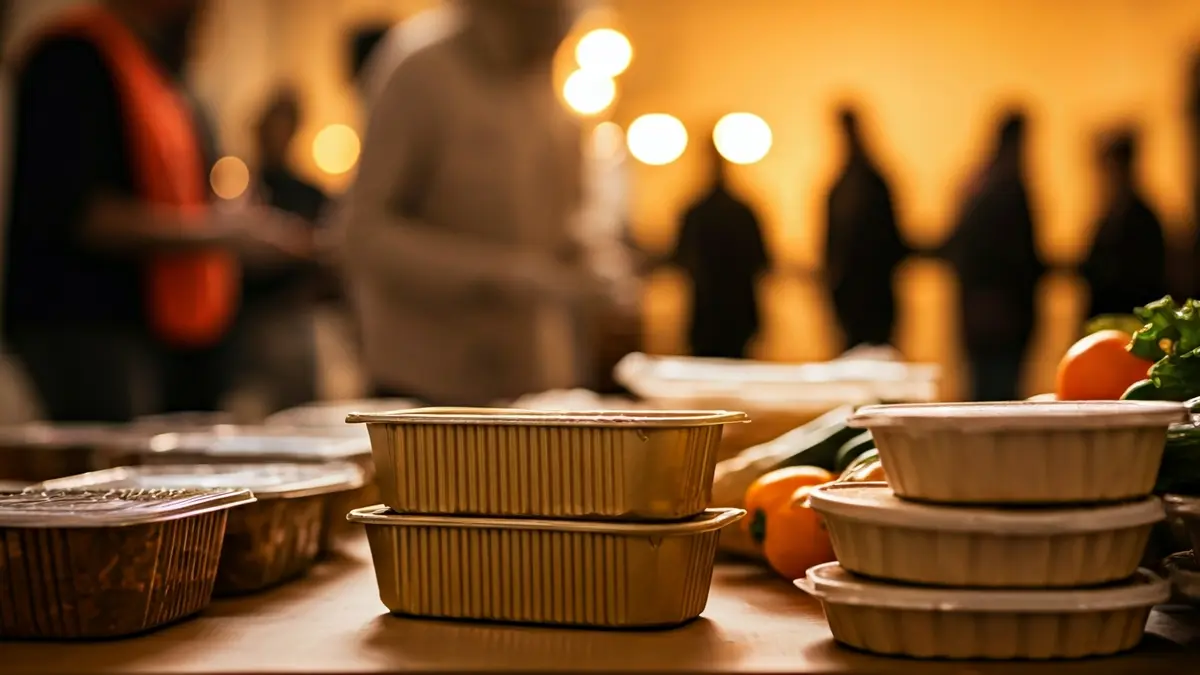
The implementation of Law 1/2025 on the prevention of food loss and waste has completely transformed the daily operations of the Food Bank of Bizkaia. While on paper this represents a step forward in combating waste, in practice it translates into significantly greater logistical demands for an organization heavily reliant on volunteers.
The regulation mandates that businesses establish plans to reduce losses, improve resource management, and promote the donation of surplus food. Although the law came into force in April 2025, a one-year adaptation period was granted, which has now expired, meaning that requirements and penalties are fully applicable. Among other measures, supermarkets and establishments must prioritize the donation of edible food, encourage the sale of products nearing their expiration date, and, in the hospitality sector, offer containers for customers to take home leftovers. Non-compliance can result in fines of up to 500,000 euros in the most severe cases.
The main shift lies in the type of products received. In addition to regular food items, the bank now receives prepared meals from supermarkets. "We are collecting cooked food, and that's a problem because its shelf life is very short," explains its president, Luis Crovetto. This factor necessitates accelerating all processes. Collection must be almost immediate, and distribution equally swift, to ensure products arrive in good condition. "The cold chain must be maintained, which means refrigerated vans," he adds.
“"We are collecting cooked food, and that's a problem because its shelf life is very short."
The Food Bank currently operates with four routes —Margen Derecha, Margen Izquierda, Bilbao, and Duranguesado— and eight vans cover these itineraries from Monday to Saturday. However, the increase in volume has necessitated more frequent trips. "The route is the same, but more journeys are required," notes Crovetto. This surge in activity has highlighted the urgent need to recruit more volunteers, especially drivers. "No special permit is required, a regular driving license is sufficient, but commitment is essential," he emphasizes. Tasks involve collecting food from supermarkets from early morning, between eight and noon, and transporting it to the central warehouse, from where it is distributed to social entities. Currently, this aid organization has around 170 volunteers, a number that falls short of the new demands.
In addition to transportation, the law has mandated investments to adapt to the new conditions. "We have had to install refrigeration in all vans, increase warehouse staff to control temperatures, and purchase equipment to guarantee the cold chain," explains the president. They have even acquired special containers for the safe transfer of food to the organizations that distribute it.
Despite the challenges, Crovetto insists that the change is positive. "We are significantly improving diets and, above all, we are providing meat and fish, which we didn't do before," he highlights. The arrival of prepared dishes such as chicken, tortillas, and stuffed vegetables represents a qualitative leap, especially for families without cooking facilities who live in single rooms. "For these people, these foods are wonderful," he points out.
The law has only been in full effect for a week, and the system is in an adjustment phase. "You never know what you're going to get; one day you collect a lot, another day less. But the volume of donations has increased," he acknowledges. "Without enough volunteers, the model is unsustainable," he admits. Therefore, the Food Bank continues its appeal to the public. Those who wish to collaborate can do so flexibly, adapting to their availability, but contributing to a chain that, now more than ever, needs hands to prevent it from breaking.