More and more sectors are demanding profiles with specific training in drones. Engineering, agriculture, emergencies, energy, and audiovisual are incorporating this technology and, with it, beginning to require more specialized pilots. A few years ago, knowing how to fly was enough to stand out: there were few pilots and the technology was just beginning to spread.
That scenario has changed. Drones are used today to inspect infrastructure, analyze crops, support emergency teams, monitor energy facilities, or produce audiovisual content, and more and more people want to work with this technology. The consequence is simple: knowing how to fly remains essential, but it is no longer enough to stand out professionally.
Companies are looking for more complete profiles: pilots who know the regulations, can plan an operation, and apply the drone to a specific need. An engineering firm doesn't just need someone to fly, but useful information about a construction site; a farm seeks data to make better decisions; an emergency team needs to integrate the drone into an operation where every minute counts.
The aircraft is the tool; the real value lies in the person who knows what to do with it.
More complete profiles, not just pilots
Licenses remain the entry point, but what comes next is increasingly important. Inspections, photogrammetry, precision agriculture, emergencies, audiovisual, or operations management are areas where a pilot can build a profile that is harder to replace, improving their chances of finding work, expanding skills, or starting a business by offering a service for which a client is willing to pay.
The need for training does not only affect the worker: it also changes how companies develop the talent they need. When faced with a new capability, the usual approach is to look for it externally, but it is not always the only option. Many workers already know the business, the clients, and the procedures, and training them can be more interesting than starting from scratch.
A technician can learn drone inspections; an agricultural professional, specialize in remote sensing; an audiovisual professional, incorporate UAS operations; and a pilot, evolve towards operations management. Training thus becomes a tool for creating talent within the organization and a key piece of career plans, at a time when many companies are competing to attract and retain qualified professionals.
It also allows for building growth paths within the organization itself: an employee can start by acquiring basic drone operating skills and continue specializing as they take on new projects and responsibilities.
Fundae: the credit that many companies miss out on
Spanish companies have an annual credit for training their employees, which can be subsidized from their Social Security contributions through Fundae. This is known as the company's programmed training system.
The amount depends on contributions for vocational training and the size of the workforce. A training action can be subsidized up to 100% of its cost, reducing the investment needed to develop new skills.
But the most interesting question is not how much credit is available, but what skills the company will need in the coming years and which people within the organization can develop them. In a rapidly changing environment like that of drones, anticipating this answer can make a significant difference.
Campus UAS: itineraries adapted to each company
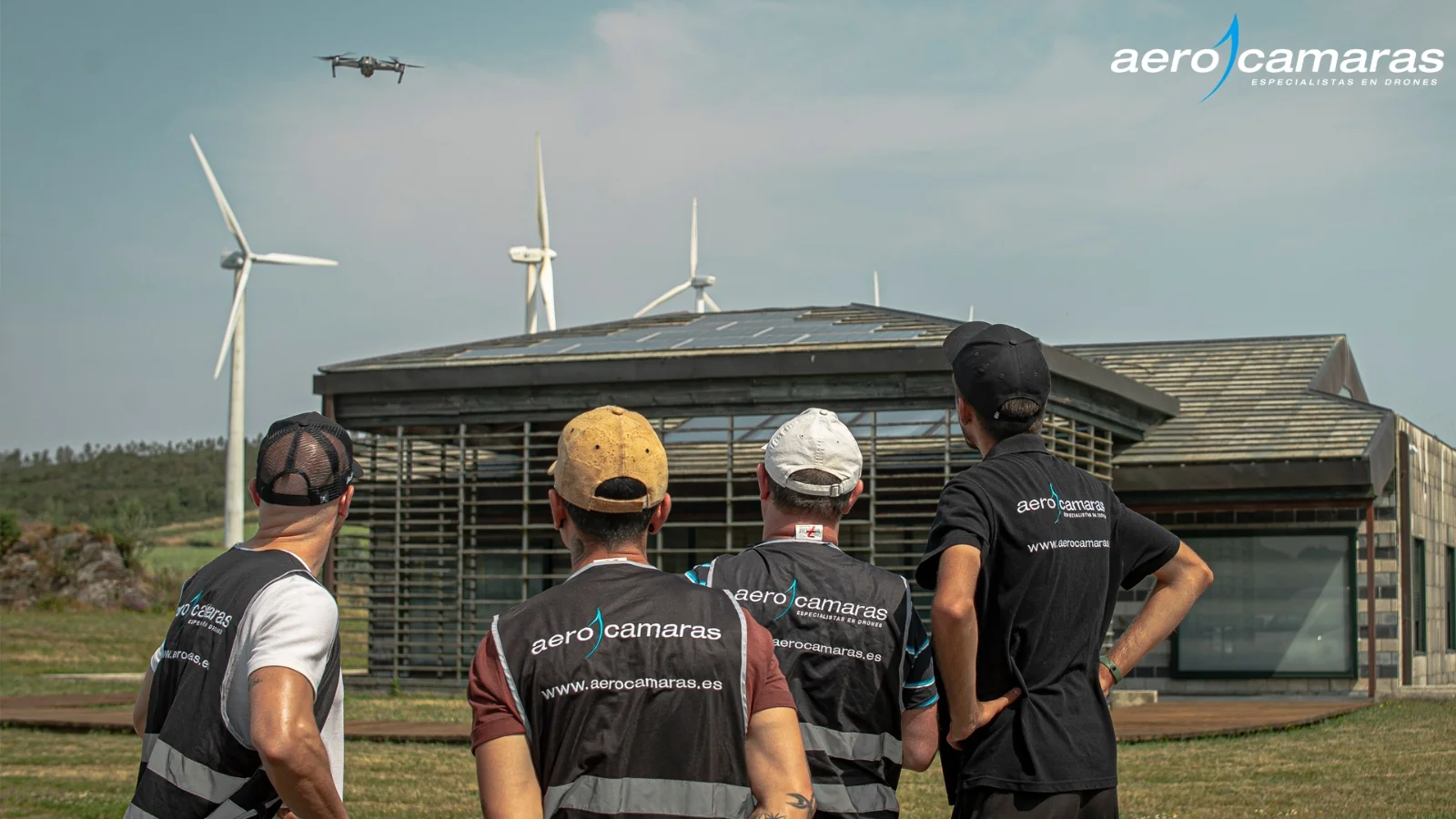
Aerocámaras has been involved in the drone sector for 19 years, with activities in training, management, and aeronautical consulting, technology, and professional UAS project development. Its educational area, Campus UAS by Aerocámaras, is its Higher School of Droning, with over 50,000 certified students, its own virtual campus, and flight fields throughout Spain.
Its itineraries range from the necessary operating licenses to specializations such as technical inspections, precision agriculture, photogrammetry, emergencies, or audiovisual production. A significant portion of this training can be covered by the programmed training system. Aerocámaras also offers advice on subsidized training through Fundae, allowing for analysis of which programs can be subsidized according to the credit and conditions of each organization.
This approach allows companies not to have to go to the market every time a new need arises, but rather to develop these skills among people who already know the company, its clients, and its way of working.
The same logic works from the other side: more and more professionals understand that their development also depends on the skills they build on their own initiative. Having a license allows you to fly; knowing how to perform an inspection, a photogrammetric survey, or participate in an emergency operation allows you to offer a service.
A pilot looking for a job, a professional looking to change sectors, or someone aiming to start a business offering their own drone services can build, through this specialization, a much more valuable profile in the market.
A university itinerary to make the leap
Training is then no longer understood as an accumulation of certificates but becomes part of a professional strategy: deciding what type of work you want to do, acquiring the necessary skills, and building a useful profile for a company or directly for the market.
For those seeking comprehensive preparation, Aerocámaras and the Distance University of Madrid (UDIMA) have developed the Professional Master's Degree in Unmanned Aerial Systems (Drones/UAS) and Aeronautical Operations, a 60 ECTS credit program that brings together almost two decades of experience training pilots.
The approach starts from the same reality that is transforming the job market: preparing someone to work with drones requires much more than teaching them to fly them.
When a technology is new, knowing it is an advantage; when it becomes widespread, the advantage lies in knowing how to use it better than others.
The program combines aeronautical training, regulations, planning, and professional specialization, with a significant emphasis on practice. It does not aim to replace the progressive path many pilots build throughout their careers, but rather to offer another way to approach this preparation for those seeking a broad profile or a significant career leap.
Training as a competitive advantage
Companies need to incorporate capabilities to remain competitive, whether by seeking them externally or developing them among those who are already part of their teams, using tools like subsidized training.
In a sector that evolves at the speed of drones, standing still is probably the only option that no longer exists. Training ceases to be an expense associated with a specific need and becomes an investment in employability, competitiveness, and talent.
Aerocámaras and Campus UAS
Aerocámaras is a Galician company specializing in comprehensive drone solutions, with activities in training, management, and aeronautical consulting, technology, and professional UAS services. Its educational area, Campus UAS by Aerocámaras, is its Higher School of Droning and brings together official, technical, and university training, with over 50,000 certified students, a virtual campus, and flight fields distributed throughout Spain.