The Gipuzkoa Provincial Council has initiated a new phase of forestry work in Jaizkibel, within the municipality of Lezo, aiming to advance the recovery of native vegetation in this protected natural space.
The operations are taking place on a plot located in Gaintxurizketa, in the upper area of Alarguntza, and are part of a long-term strategy to improve the ecological quality of the mountain and promote forest regeneration in the territory.
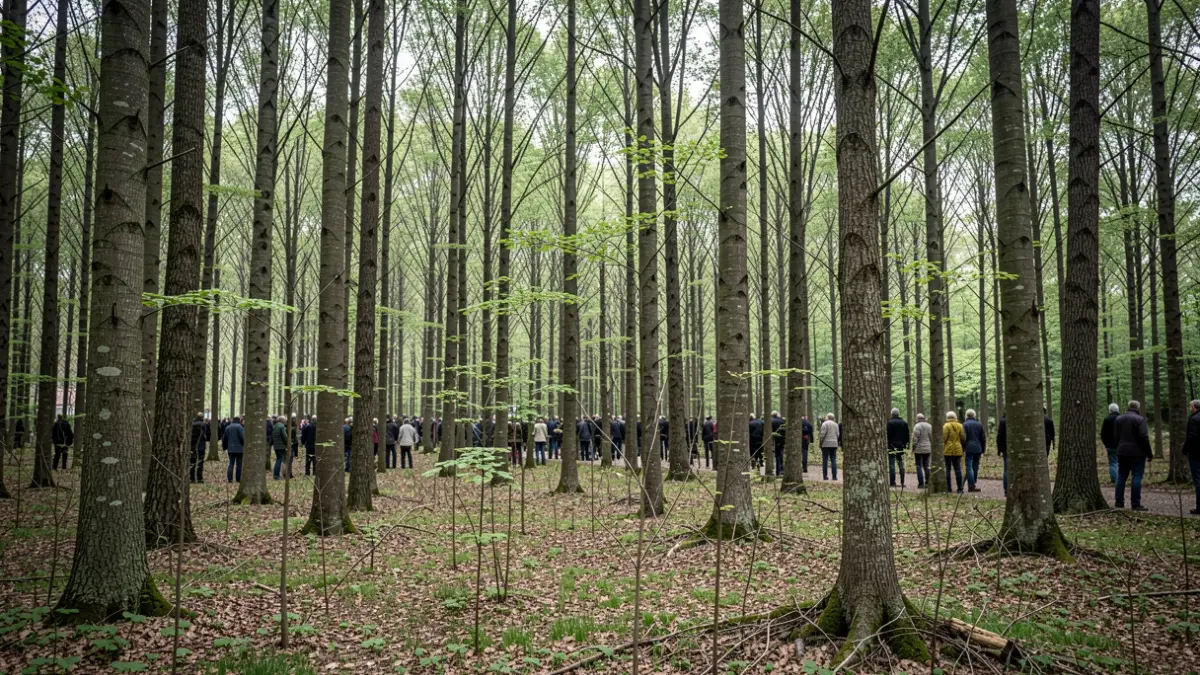
The intervention focuses on a Japanese chestnut forest mass planted in 2002. At that time, the introduction of this species responded to the need to control the spread of gorse and reduce forest fuel continuity, a measure aimed at decreasing fire risk and improving forest management. Over two decades later, the Provincial Council considers that these initial objectives have been met.
However, the evolution of the plantation has revealed that the dominant presence of Japanese chestnut hinders the natural development of native species, limiting the area's ecological diversity.
For this reason, the ongoing work pursues a second phase of environmental restoration focused on increasing the forest's naturalness and promoting the recovery of Jaizkibel's characteristic ecosystems.
The main objective of the action is to boost the recovery of the marojal, a forest formation dominated by the Pyrenean oak (Quercus pyrenaica), which is one of Jaizkibel's most unique and valuable ecological elements.
The importance of this habitat is such that it was one of the reasons justifying the declaration of Jaizkibel as a Special Area of Conservation (SAC) within the Natura 2000 network, the European network of protected areas designed to ensure habitat conservation.
Despite its ecological value, the current presence of marojal in Jaizkibel is very limited. According to data handled by the Provincial Council, this type of forest currently occupies barely 6% of the protected area, even though its potential extent could reach about 75% of the territory.
To achieve this goal, two complementary lines of action are contemplated. Firstly, thinning is being carried out through selective felling and tree-ringing techniques. These actions are particularly concentrated in areas where native vegetation is already detected. Secondly, clearings are being opened in areas where there is no natural regeneration of native species to create favorable conditions for the establishment of native specimens.
The intervention will not end with the thinning work currently underway. The Provincial Council plans to complete the process during the coming winter through new plantings of native species adapted to Jaizkibel's ecological conditions.