
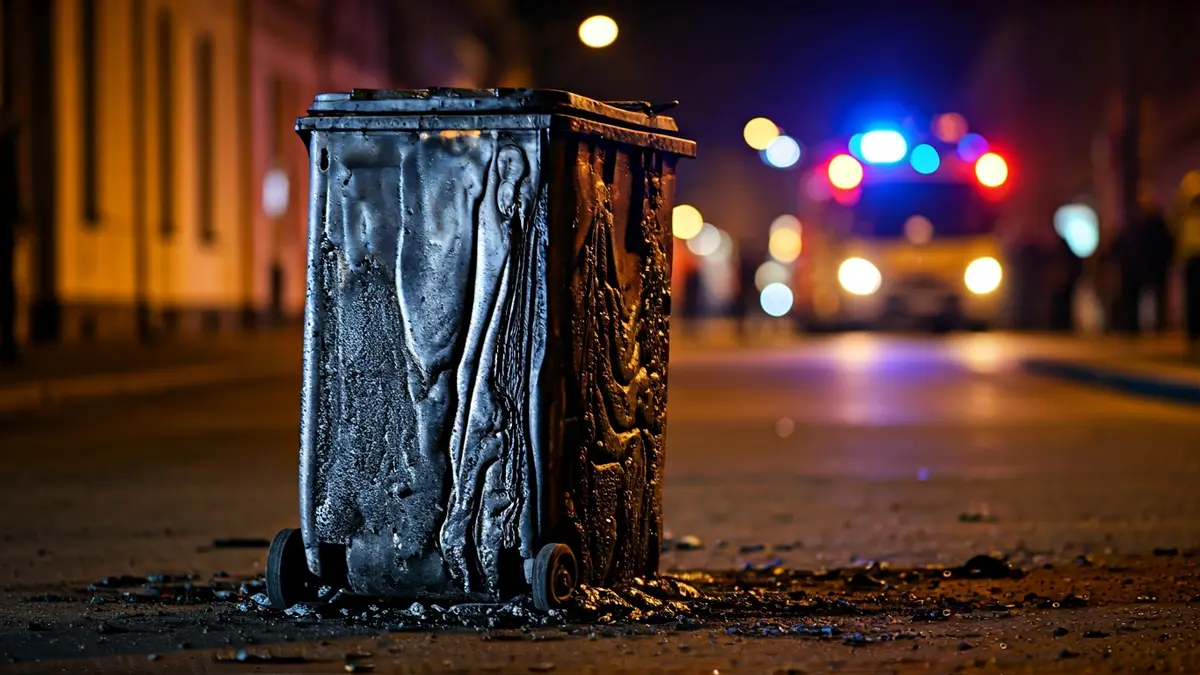
Interventions by Bizkaia Provincial Council firefighters for container fires in 2025 exceeded those for house fires, with nearly five hundred mobilizations recorded. These incidents were concentrated mainly in Barakaldo and Getxo, but also occurred to a lesser extent in Santurtzi, Portugalete, Basauri, Sestao, Leioa, and Erandio, among other locations. This figure represented a 7% increase compared to 2024 data.
These events, classified as outdoor fires, affected not only containers but also vehicles and urban furniture. In total, fifteen municipalities recorded ten or more interventions of this type. However, it was in the main towns of the Left Bank and the Right Bank, Barakaldo and Getxo respectively, where the number of fires exceeded fifty, according to the activity report of the provincial firefighters published by the Provincial Council for 2025. This document indicates that 52 and 51 fires had to be extinguished in these two municipalities throughout the year.
In many cases, outdoor fires are intentional and repeatedly committed by the same individuals.
The report itself explains that affected areas can vary annually, as outdoor fires are often intentional and repeatedly perpetrated by the same individuals. Firefighters also clarify that a single fire can damage multiple elements, so the number of affected properties is higher than the number of interventions. Regarding the time frame, only 36% of these outdoor fires occurred between 07:00 and 18:00, mostly involving vehicles. Container fires, on the other hand, predominantly occur at night, with few passersby, and are deliberately set.
Structural fires in homes or other buildings led to 398 firefighter call-outs last year, compared to 366 in 2024. A significant portion of these originated from cooking activities and extractor hood fires, which explains why most occurred during meal times. The number of nighttime incidents is considerably lower, but they tend to be more severe due to higher occupancy and the fact that people, often asleep, take longer to detect the risk, react, and alert emergency services. In 2025, three people died due to residential fires, the same number as in 2024. One of these fatalities occurred in the incident on Kareaga Goikoa street in Basauri in January, where four other people were rescued alive.
Furthermore, Bizkaia firefighters intervened in a total of 136 forest fires. Of these, 104 were Level 1 (isolated in urban or peri-urban areas without risk) where the Forest Service did not need to act. They responded to a single Level 4 fire (large forest fire), but this occurred during the support sent in August to León, as part of the simultaneous large forest fires that affected much of the peninsula. The autumn months saw the highest concentration of outbreaks, coinciding with the highest risk season.
Out of 6,640 services attended by provincial personnel, intervention was necessary on 4,418 occasions (66.54% of the total), as some alerts were false alarms or did not require action. The types of calls with the highest percentage of services without intervention include suicide threats (81.33%), risky openings (56.54%), water rescues (55.56%), and traffic accidents (50%). These figures remain stable over the years, as specified by the Provincial Council. Overall, firefighters handled an average of 12 interventions daily. On 154 days, between 5 and 10 interventions were attended, while only on seven days did interventions exceed 30.
On April 28, 2025, Bizkaia firefighters experienced a particularly frantic day. Due to the widespread blackout that deprived most of the peninsula of power, personnel had to mobilize on about fifty occasions, mostly to rescue people trapped in elevators. They evacuated 61 people and performed 13 technical assists, including 11 transfers (8 for people in wheelchairs with reduced mobility to their homes and 3 actions in residences to move users to their rooms: two in Zalla and one in Markina). In the case of one of the residences in Zalla, about twenty residents were relocated. Technical assistance was also provided to two other residences with generators to ensure electricity supply.