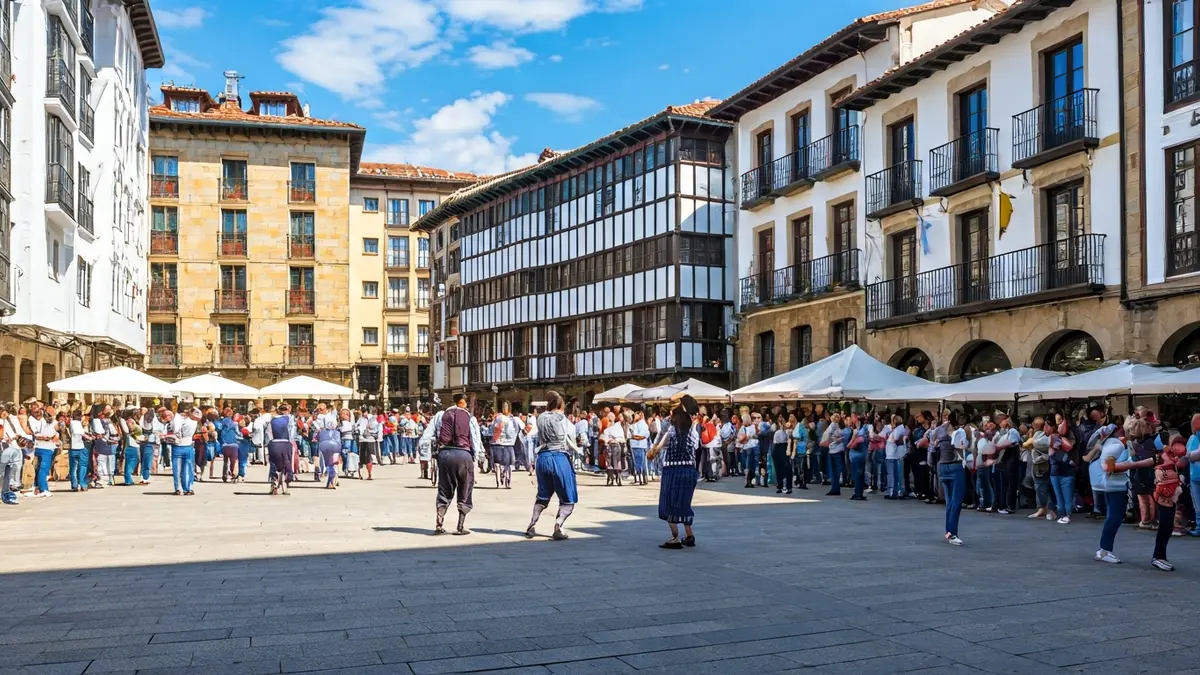
The Bilbao Basque FEST, organized by the Bilbao City Council, has successfully concluded its 2026 edition, solidifying its role within the city's Holy Week cultural programming. Held from April 1st to 4th, the event once again combined music, gastronomy, sports, and participatory activities across various urban spaces. A notable new feature this year was the creation of the "Basque Culture Plaza" on the El Arenal pier, which served as one of the main focal points of the festival.
This dedicated area hosted workshops, showcookings, concerts, and Herri Kirolak exhibitions in a continuous format that encouraged public flow. According to data provided by the organizers, over 41,000 people visited this location during the three central days, making it one of the festival's most active spots.
When the weather is bad, put on a good face.
Despite adverse weather conditions during the initial days, the program proceeded almost entirely as planned. Only on Thursday were a few activities affected, such as the Urbasa show, a txalaparta workshop, and the batel rowing activity, without significantly altering the overall success of the event.
Music once again took center stage, with an estimated attendance of around 18,000 people across concerts held at Azkuna Zentroa, El Arenal itself, Bilborock, and Kafe Antzokia. The lineup featured both established artists and emerging talents, offering a diverse journey through different generations and styles of the Basque music scene. At Azkuna Zentroa, the festival kicked off with Anje Duhalde and Niko Etxart, followed by performances from artists like Olaia Inziarte and Maren, who presented her second album alongside new compositions in Euskera.
Meanwhile, El Arenal hosted some of the most attended concerts, including Neomak, which went ahead despite the rain, and Korrontzi, marking the start of their international tour Mundua dantzan in Bilbao. Concurrently, Bilborock continued to showcase new talent with performances by Gar, Mugan, and Bisai, while Kafe Antzokia hosted the Bilbao Basque FEST Rock City cycle.
In the realm of sports, Herri Kirolak exhibitions maintained their prominence within the festival, drawing 17,300 people to the El Arenal area. The family-oriented program also saw significant participation, with an estimated 10,000 attendees. Activities such as Gargantúa, batel boat rides along the estuary, and workshops on percussion and traditional games accounted for a large portion of this turnout.
From a tourism perspective, the offices at Plaza Circular and the Guggenheim Museum assisted 3,774 people between April 2nd and 5th. Of these, 49.6% were visitors from other Spanish autonomous communities, 40.41% were international tourists, and 9.99% were residents of Euskadi. Madrid was the leading source of domestic visitors, while France was the primary international market, followed by Germany, Italy, the United States, and the United Kingdom. The festival's impact also extended to the digital sphere, where Bilbao Turismo's social media profiles garnered 562,322 impressions during the event days. With these figures, the Bilbao Basque FEST continues to hold its significant position within the city's cultural offerings during Holy Week.