After five years dedicated to highlighting the works of Basque female filmmakers, the Basque Film Library is expanding its focus this year. The program will feature 16 films across ten sessions, revisiting titles that "have marked the history of our cinematography," emphasizing the rich film heritage.
The cycle, which begins on Wednesday, April 15, in Gasteiz, was presented this Tuesday at Tabakalera. The event was attended by prominent figures including the Vice-Lehendakari and Minister of Culture of the Basque Government, Ibone Bengoetxea; the director of the Basque Film Library, Joxean Fernández; the director of the Bilbao Fine Arts Museum, Miguel Zugaza; the director of Programming for EITB, Joselu Blanco; and filmmaker Helena Taberna.
Throughout April, May, and June, films directed by women will be shown at Artium Museoa, Bizkaia Aretoa, and Tabakalera. These include Helena Taberna's Yoyes (2000), the debut film of one of the "reference" directors of Basque cinema, and Lur Olaizola's Hirugarren koadernoa (2022), a work that recovers the memory of ETA militant Yoyes through the voice of Ana Torrent.
Also to be screened are Urak aske (Bego Zubia Gallastegi, 2021), which addresses "the reversal brought about by the destruction of the Artikutza dam," and La capitana Alegría / Pour don Carlos (Musidora/Jaime de Lasuén, 1921), possibly the first fiction film shot in Euskadi with Basque production, directed by Musidora, a myth among French actresses of the era, alongside the Carlist aristocrat Jaime de Lasuén.
To celebrate the tenth anniversary of (H)emen, the association of women in the audiovisual and performing arts sector in Euskadi, a work by one of the pioneers of Basque cinema, Mirentxu Loyarte's Irrintzi (1978), will be screened, along with the revision of this film by one of the association's founders: Iratxe Fresneda's Irrintziaren oihartzunak (2016).
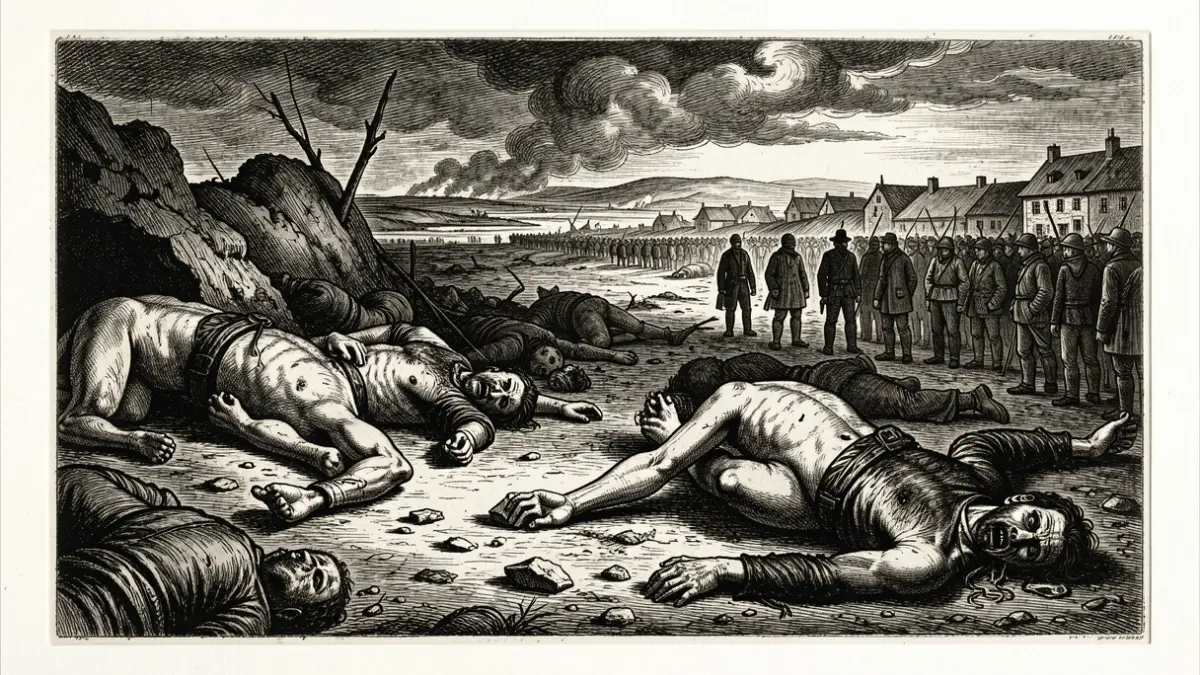
Heritage also structures the rest of the program, particularly the session dedicated to the Civil War. This includes four films produced by the Propaganda section of the Basque Government: Entierro del benemérito sacerdote vasco José María de Korta y Uribarren, muerto en el frente de Asturias (1937), Semana Santa en Bilbao (1937), Nemesio Sobrevila's Guernika (1937), and Nemesio Sobrevila's Elai-Alai (1938).
Additionally, Gure Sor Lekuaren bila (2015) by Josu Martinez will be screened, a work that aims to complete the history of what was likely the first documentary made entirely in Euskera, premiered in Hasparren in 1956. Koldo Almandoz and Gorka Bilbao also undertake a memory exercise in Itzalak argitzen (2026), documenting the recent restoration process of four medium-length films produced in the mid-80s: Anjel Lertxundi's Hamaseigarrenean aidanez (1985), Xabier Elorriaga's Zergatik panpox (1985), Alfonso Ungría's Ehun metro (1985), and José Julián Bakedano's Oraingoz izen gabe (1986). These works were restored last year in collaboration with the Basque Government and EITB, and the result of this effort, an EITB production, will be shown in cinemas for the first time.
The Basque Film Library will also revive Fuego eterno (1985), directed by José Ángel Rebolledo and produced by Imanol Uribe, featuring cinematography by Javier Aguirresarobe, music by Alberto Iglesias, art direction by Gerardo Vera, and performances by Ángela Molina and Imanol Arias.
Comedy will also be present in the cycle with Agur Etxebeste! (Asier Altuna/Telmo Esnal, 2019), which will be presented in Donostia by Elena Irureta, and the short film Un novio de mierda (Borja Cobeaga, 2010) and Pagafantas (Borja Cobeaga, 2009). The latter is the first feature film by one of the "fathers" of Basque comedy. Tickets will be available at the box offices and on the websites of Artium Museoa, Tabakalera, and the Bilbao Fine Arts Museum.