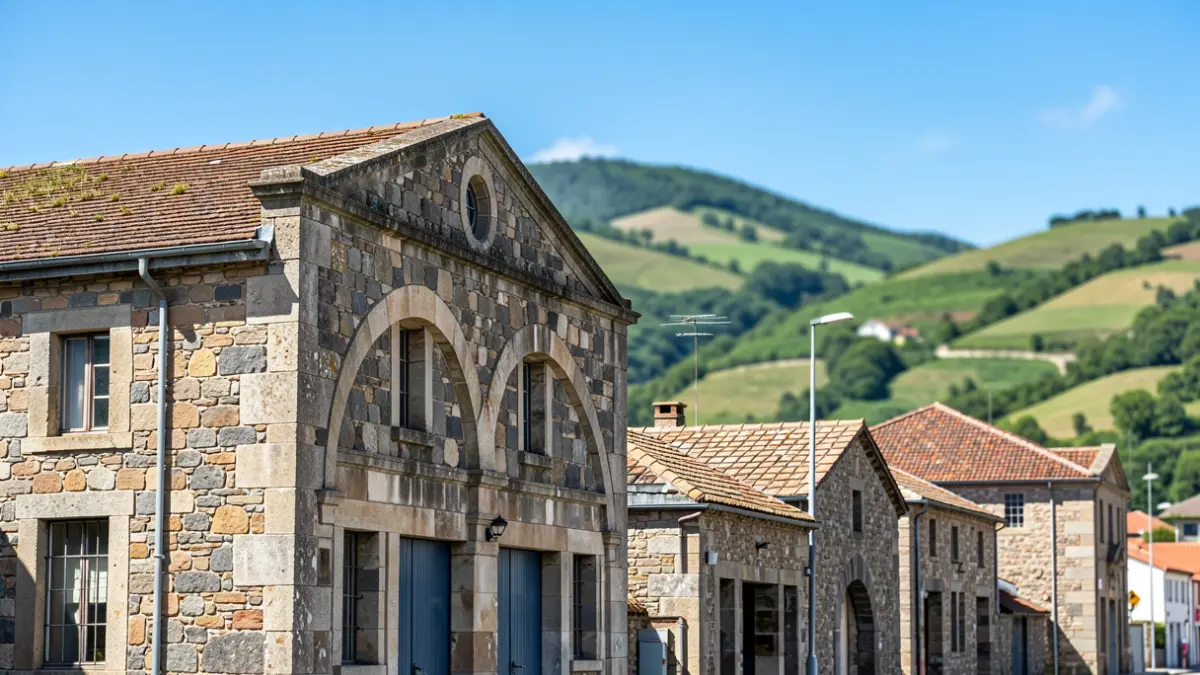
Irun has taken a significant step in recovering its mining and industrial heritage with the inauguration of the new interpretation center and the rehabilitated enclave of the Irugurutzeta ovens. The project, which involved an investment of 2 million euros, has led to the complete restoration of the oven complex, the adaptation of the surrounding area, and the creation of a space dedicated to understanding the town's mining history.
The Irugurutzeta oven battery is recognized as the largest preserved in Gipuzkoa and one of the most important in the Basque Country. Visitors can embark on a journey through galleries, ovens, paths, and mountains, from Roman times to the present day, delving into the harsh and dark world of the mining site, which once included its own house, offices, company store, and canteen.
“"It is a special day for Irun. This center will offer us the opportunity to know our past and present like never before."
The inaugural event was attended by various authorities, including Javier Hurtado, Minister of Tourism, Commerce and Consumption of the Basque Government, and Cristina Laborda, mayor of Irun. Hurtado emphasized that the project "highlights our industrial heritage" and contributes to more sustainable tourism. Laborda stressed the recovery of "a very important part of our history" and the significance of Irugurutzeta in the identity of the Bidasoa region, shaped by mining.
Azahara Domínguez, Deputy for Mobility, Tourism, and Territorial Planning of Gipuzkoa, also participated, viewing the new tourist attraction as an "ally in the decentralization strategy" that will strengthen the Bidasoa region as a "tourist destination with its own identity".
Following the speeches, attendees took a guided tour of the new interpretation center, located in the former mineral storage silo. The museum space is organized into five exhibition areas combining physical, graphic, and digital elements, featuring an interactive table on trades, an audiovisual projection on historical evolution, and a digital Memory Archive.