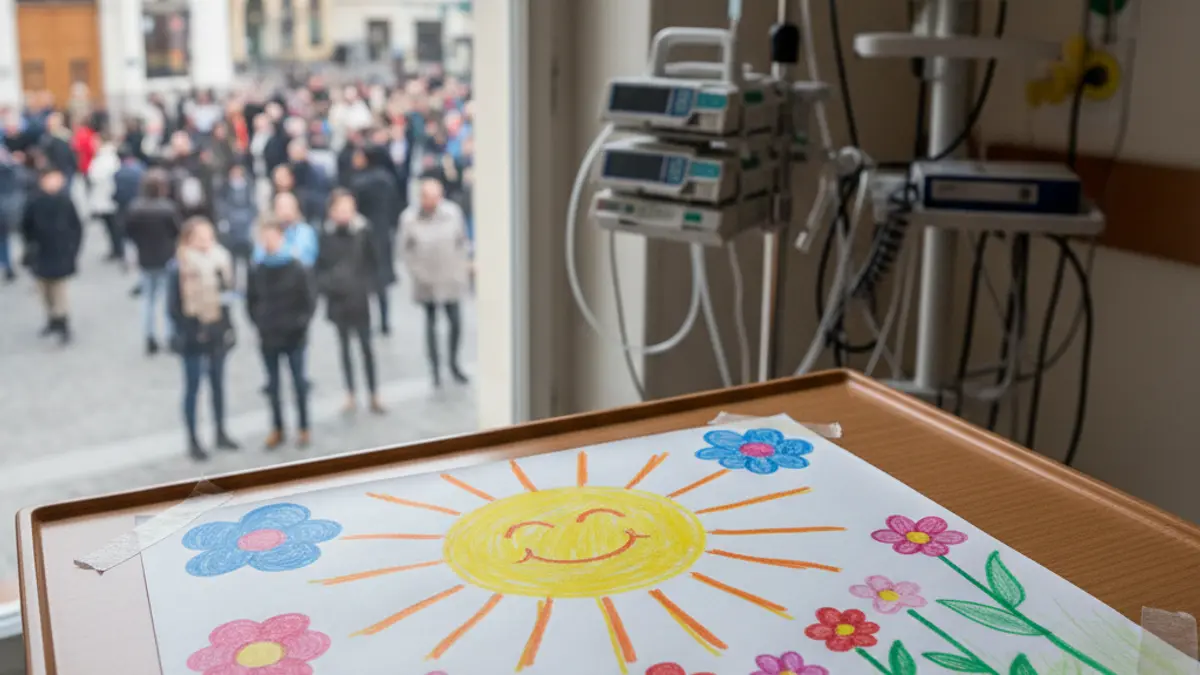
On the occasion of Hospitalized Children's Day, celebrated this May 13, Red Cross Youth has emphasized its work to improve the hospital experience for children and adolescents. The 'Hospitalized Children' project aims to humanize healthcare environments and complement medical care, as hospitalization represents a break from children's daily lives, forcing them to adapt to unfamiliar spaces and routines.
The program is currently implemented in three reference hospitals: Txagorritxu Hospital in Álava, Basurto Hospital in Bizkaia, and Donostia Hospital in Gipuzkoa. In 2025, approximately 1,350 interventions were carried out (300 in Álava, 404 in Gipuzkoa, and 632 in Bizkaia), and so far in 2026, over 400 children have already received attention, reflecting the scope and necessity of this intervention in the hospital environment.
This work is made possible by 72 volunteers who visit the hospitals weekly. According to a coordinator from Red Cross Youth, the objective is to offer “a more playful space for the little ones who are admitted.” The methodology involves inviting children to playrooms for games and crafts, adapting to their tastes and possibilities.
“"We learn a lot from their ability to think positively, to smile even when they are unwell."
For those who cannot or do not want to leave their room, volunteers have created kits with crafts, paints, or sudokus. The coordinator clarifies that while hospitals offer school support with their own teachers, Red Cross's work focuses on “the other part, which is especially that support once all educational tasks are finished, a bit of leisure so they are not stuck in their room all day.”
This support not only seeks to prevent loneliness and reduce anxiety in minors but also in their families. The coordinator emphasizes that family members should not be forgotten, as the situation “is always a source of discomfort” for them. The intervention offers them a respite, allowing them to “rest peacefully while the little ones are with us,” or providing them with tools and opportunities to play together.