Significant progress has been made in regenerative medicine over the last 20 years. This medical specialty applies advanced biomedical technologies to replace, manufacture, or regenerate human cells, tissues, or organs, thereby restoring or establishing their normal function.
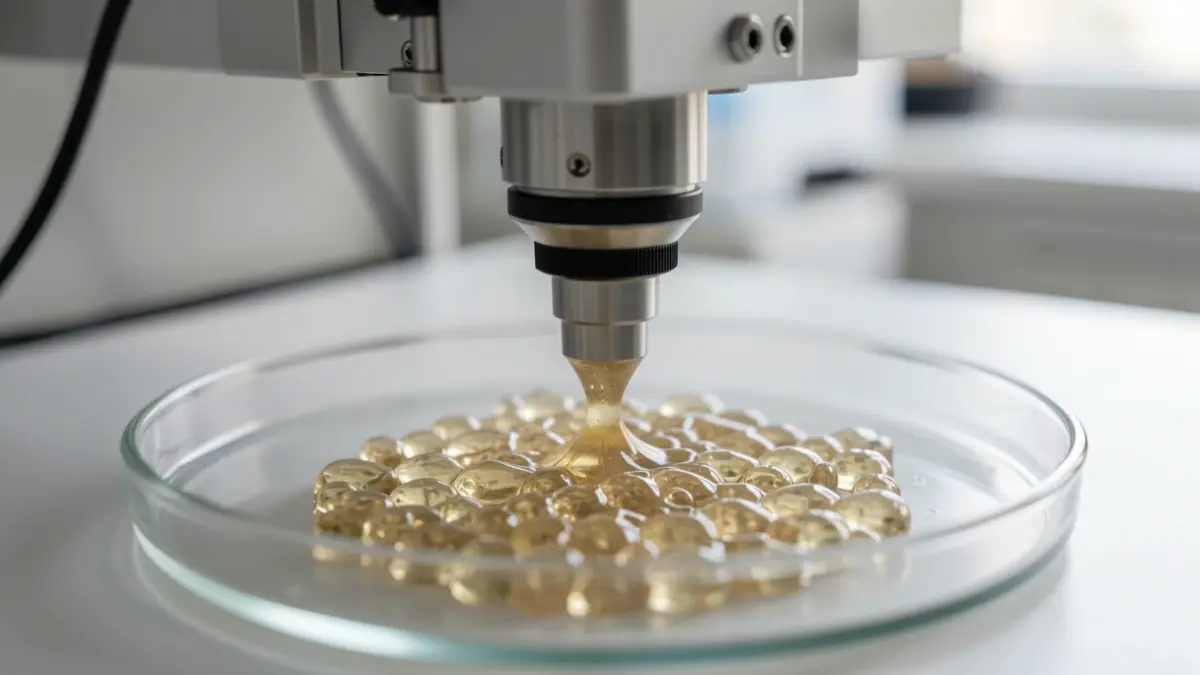
The NanoBioCell research group at UPV/EHU, led by doctor José Luis Pedraz, along with Ikerbasque researcher Denis Scaini and postdoctoral researcher Martina Gruppuso from the Department of Pharmacy and Food Sciences at UPV/EHU, is working on a project involving 3D bioprinting of pancreatic spheroids. This collaboration is carried out with Laboratorios Farmacéuticos ROVI, within the framework of the European IPCEI Med4Cure project.
Pancreatic spheroids are small three-dimensional (3D) clusters of pancreatic cells cultured in the laboratory from stem cells (iPSC). These models mimic the organization and function of the pancreas. The use of stem cells, derived from normal adult cells like skin or blood, allows them to revert to a juvenile state in the lab and regain the capacity to become almost any type of tissue in the body.
As explained by José Luis Pedraz, "3D bioprinting of pancreatic islets allows control over their spatial organization and the incorporation of biomaterials and support cells that mimic their natural environment. This can promote cell survival, vascular network formation, and insulin secretion in response to glucose." Consequently, it facilitates the creation of reproducible models for studying diabetes and evaluating drugs, as well as offering potential for the experimental development of beta-cell replacement grafts.
Furthermore, the iPSCs they use enable the generation of patient-specific models, which aids in studying how genetic alterations contribute to diabetes and in evaluating genetic correction strategies.
The collaboration between NanoBioCell and ROVI laboratories is integrated into the LAISOLID project, led by ROVI and funded by the CDTI, under the IPCEI Med4Cure program. This program is the first European Important Project of Common European Interest (IPCEI) initiative in the healthcare sector, aiming to strengthen European biomedical research and innovation capacity.
Pedraz emphasizes that "the contribution of the UPV/EHU highlights the relevance of university research in strategic areas such as 3D bioprinting, tissue engineering, and regenerative medicine." He also notes that these collaborations foster knowledge transfer between academia and industry and reinforce the role of public research in developing technologies with potential impact on public health. The UPV/EHU's contribution has been made possible by the 3D bioprinting unit located on the Álava Campus of UPV/EHU.