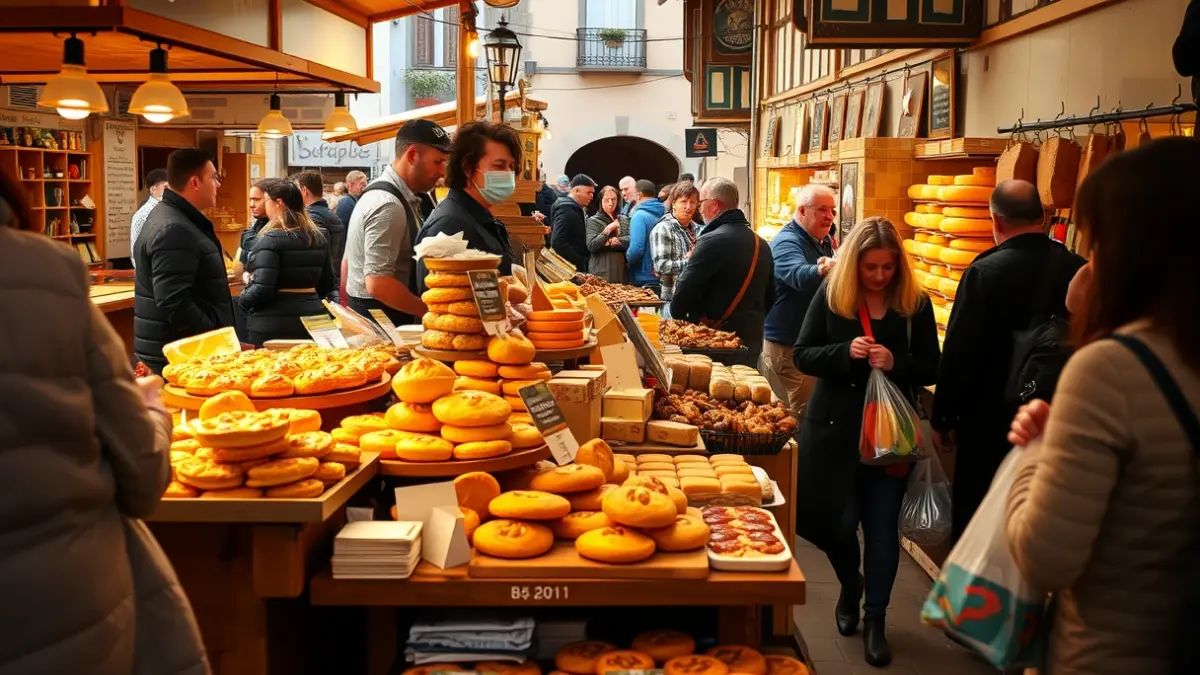
As every year, the Armentia fields transform into a bustling market during the San Prudencio festivities, stretching from the saint's sculpture to behind the basilica. The offerings have evolved, now including not only traditional gastronomic products like cured meats, doughnuts, nuts, and cheeses, but also textile, leather goods, and costume jewelry, expanding the variety for visitors.
From early morning, attendees rise early to savor the festivities and take advantage of the rain's brief respite. The saint's sculpture is adorned with flowers, ready to be photographed. At the stalls, doughnuts are a highlight, with white, black, fried, and wafer varieties, all highly sought after. San Blas white doughnuts, known for their sweetness, are also available, priced between 4.50 and 8.5 euros, sold by the dozen or in smaller packs.
Although fewer in number, perretxiko (wild mushroom) stalls can still be found, offering specimens from Kuartango and Navarra, priced at 80 and 60 euros respectively. Despite the cost, tradition drives their sale. At ten in the morning, the fields are green and damp, but they are expected to fill with families and groups of friends within hours, gathering to eat, drink, sing, and dance around the emblematic Romanesque temple, where the first parishioners are already entering.
Among the stalls, Clauval, a family bakery from Valladolid, offers a wide variety of pastries. Its owners highlight the loyalty of their clientele in Vitoria and the public's ability to appreciate artisan products. The 'zapatillas', a soft puff pastry shortbread with a hint of orujo, are the most typical sweet from Arrabal del Portillo, their hometown. They also sell San Blas doughnuts and candied almonds, complementing the nut offerings.
The Armentia basilica experiences its grand day with thousands of visitors from Álava, who attend mass or simply contemplate its interior in silence, in honor of the patron saint of Álava. Outside, as the procession passes, the air fills with the aroma of txistorra, panceta, and talo from nearby stalls. Cider and txakoli flow at the txosnas, and the first bottles of red and white wine from Rioja Alavesa are uncorked, breaking the usual tranquility of the town's 310 residents, who also celebrate their own festivities with popular meals, mus championships, children's theater, and dances.
In the area behind the basilica, goat cheeses from the Pyrenees and the Sierra de Guara can be sampled. This year, a new addition is a blue cheese made from cow's milk, produced by a vendor whose livestock is primarily goats, but who seeks innovation. These homemade cheeses are characterized by their flatter, darker, and larger shape compared to traditional Basque cheeses, aiming to offer a mild and low-salt product. The San Prudencio festivity is a blend of tradition, culture, and leisure in a privileged natural setting.
For the aurresku of honor, held at noon, everything is ready in the fields for the exhibition of euskal dantzak by Arabako Dantzarien Biltzarra, with the participation of the Eguzkilore group and musical animation by the Aramangelu fanfare. Families, with their bags of doughnuts and Basque cake, approach the herri kirolak area to not miss the display of Basque rural sport.
“"No, no, we leave the afternoon concerts to the young people. We've already visited the stalls, bought Basque cake for dessert, entered the basilica, and from here we're going home to eat, as we're getting old."