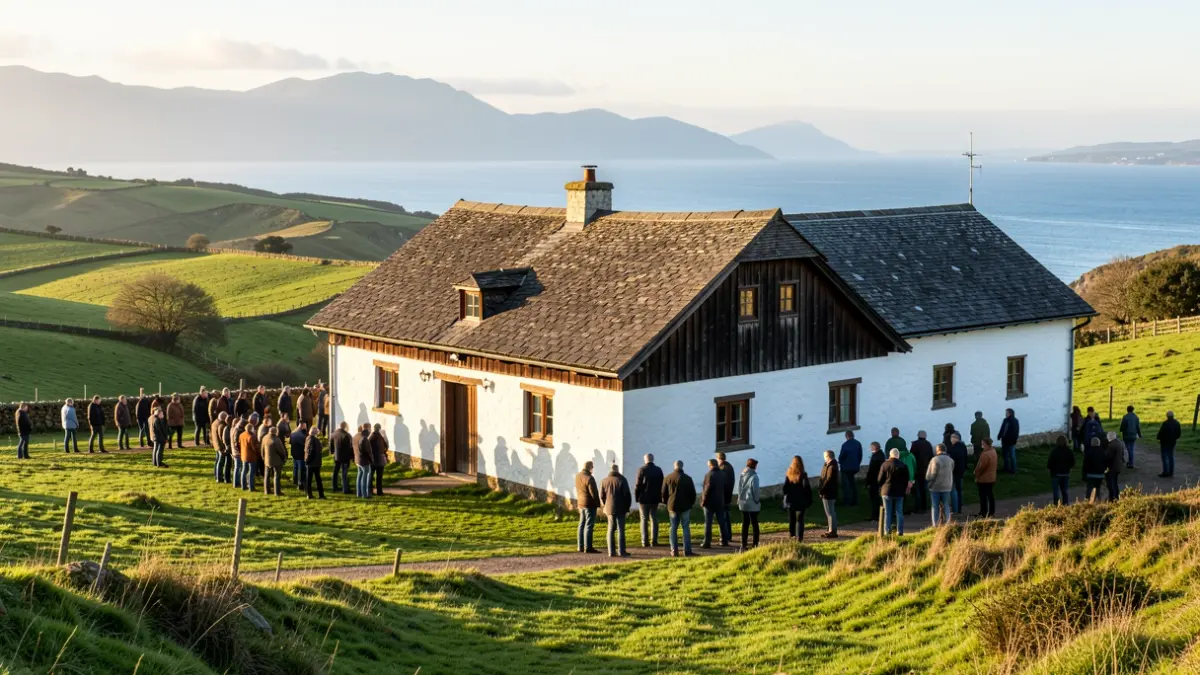
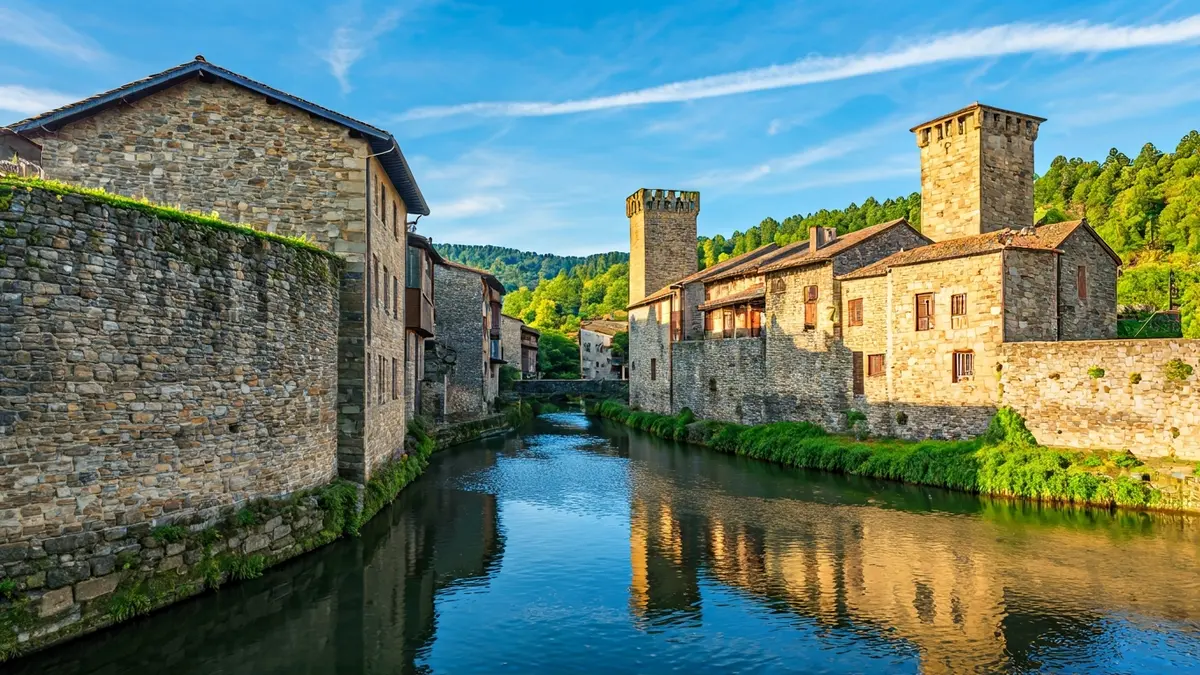
In the Álava landscape, there is a village where time seems to have stood still and the medieval essence remains intact: Antoñana. This charming locality, a council of Kanpezu, is located about 35 minutes from Vitoria and very close to the border with Navarra, and has been featured by the prestigious 'National Geographic' magazine in one of its recent digital articles.
The most notable feature of Antoñana is its defensive system, where the houses themselves form a wall. Unlike other enclosures, this outer wall has a thickness of more than one and a half meters at its base. The wall was erected at the end of the 12th century, after the foundation of the town by Sancho the Wise of Navarra, and played a crucial defensive role in its history.
One of the great attractions of the place is its status as a National Monument of the Basque Country, a title it has held since 1982, making it a fundamental part of the historical and cultural heritage of all of Álava. The Ega River, acting as a natural moat, forms the most imposing western section, while a quadrangular tower rises to the north. To the south, the only medieval gate that is still preserved can be found.
After entering the village, one of its points of interest is the church of San Vicente Mártir, known for its portico of semicircular arches. This building was rebuilt in the 18th century on the remains of an old fortified church, and features a neoclassical tower from which the valley can be seen. Also noteworthy is Calle Mayor, a key axis of the urban structure, surrounded by parallel streets and alleys that give Antoñana its identity. The Casa-Torre de los Hurtado de Mendoza, another essential building in the village, should not be forgotten.
To reach Antoñana from Vitoria, the journey is just over 30 kilometers. If traveling by car, the fastest route is the A-132, taking approximately half an hour. If public transport is chosen, a bus connecting the Alavese capital with Antoñana can be taken.