
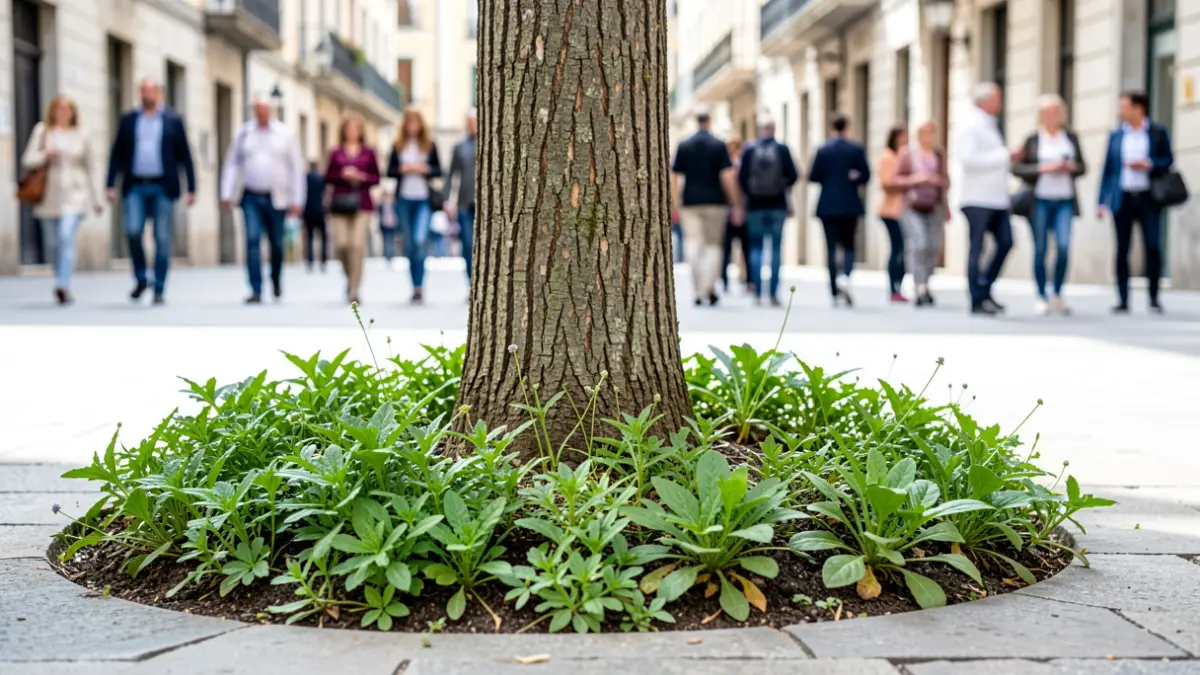
During spring, the tree pits around trees in Vitoria-Gasteiz begin to flourish, due to both the growth of weeds and the emergence of new saplings. Tree pit cleaning is not part of the general gardening contract but is a separate service, for which the council invests 600,000 euros.
Over a decade ago, the City Council stopped killing tree pit vegetation with poison. While chemical products were used previously, the benefits of the vegetation growing in these environments are now recognized. The council emphasizes that a tree pit is "a mini-system in itself," providing shelter for insects, maintaining soil moisture and aeration, increasing biodiversity, and supporting pollinators.
However, it requires intensive care. Therefore, the municipal contract imposes several obligations on the contractor: vegetation must be at least 5 centimeters high but never exceed 40 centimeters. The use of chemical products to eliminate weeds is prohibited. In pits with sand or wood chips, vegetation will be removed by the root. Once a year, typically in August, the first two meters of the tree trunk will be cleared of branches.
In spring, due to rapid vegetation growth, it is common for the 40-centimeter height limit to be exceeded, sometimes becoming inconvenient for pedestrians. The contract also mandates refilling pits lacking soil, using washed river sand or wood chips up to two centimeters below ground level. Furthermore, it includes the inspection of tree pit covers to ensure they do not suffocate the trees.
Currently, this tender is still in the proposal submission phase.