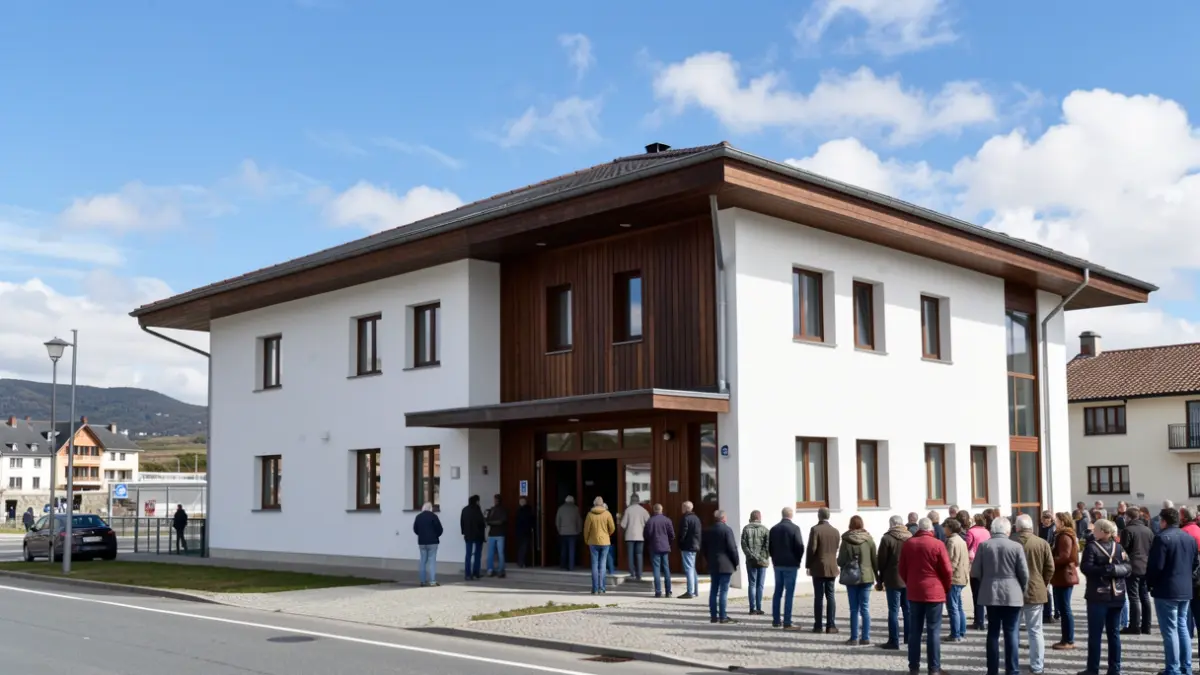
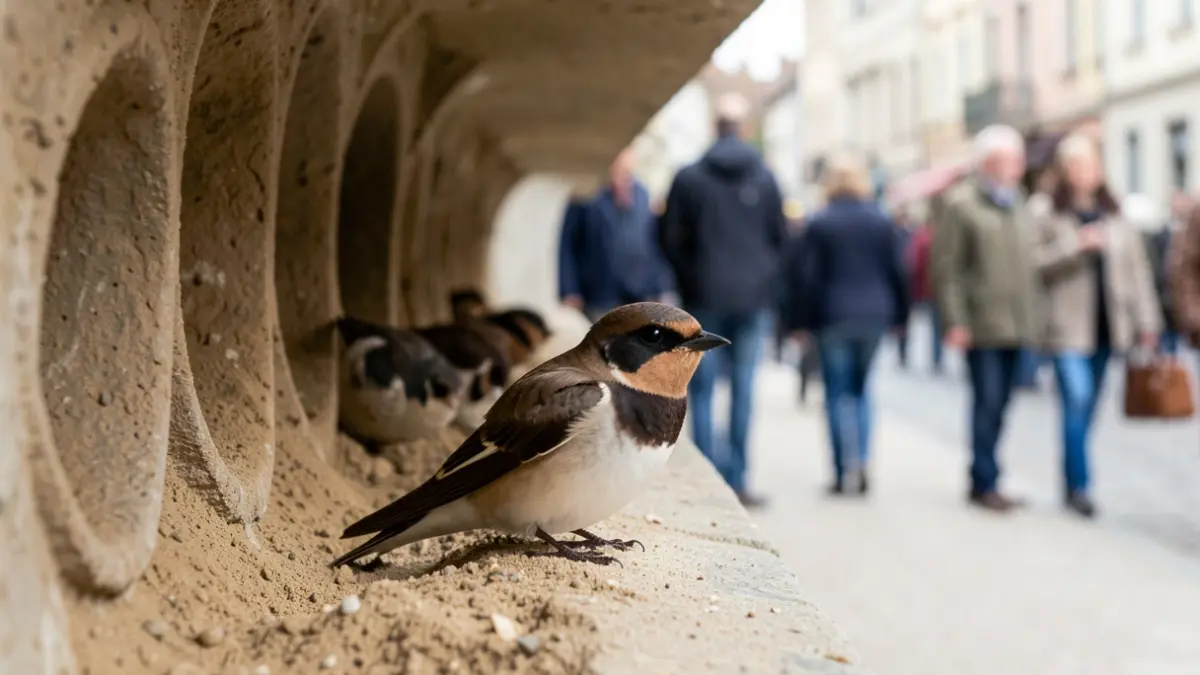
The sand martin colony, located at the Ataria interpretation center in Salburua since 2010, has set a new record this year with 74 occupied nests, according to the count conducted by the Green Belt and Biodiversity Unit.
The sand martin, one of Europe's smallest swallows, feeds on insects and is migratory, traveling south of the Sahara to spend the winter. It excavates galleries in sandy riverbanks and typically forms breeding colonies.
In the Basque Country, the species is classified as vulnerable. Its main threats include river flow regulation, agricultural intensification, and droughts in its wintering grounds. In Álava, it breeds in about half a dozen colonies, indicating its high vulnerability.
To address this, in 2010 the Green Belt and Biodiversity Unit constructed an artificial colony at Ataria, simulating a riverbank with 304 nesting tubes. Pascual Borja, the unit's responsible councilor, explained it was "specifically designed to encourage its breeding settlement."
The colony's success began in 2013 with the first six pairs, and the population has gradually grown to reach its peak this year, 2026, with 74 occupied nests. "This is excellent news that contributes to improving the conservation status of this small, threatened bird," Borja stated.
Now, in autumn, after the breeding season concludes, the occupied nests are cleaned and disinfected to ensure they are in perfect condition for the following year.
Elsewhere in the municipality, the species is very scarce, with several historical colonies having disappeared in recent decades. However, in 2022, the species also began breeding on the bridge over the Zadorra River in Asteguieta, hosting five pairs this year.
The scarcity of breeding colonies and its dwindling population have led to the inclusion of this species in the II Municipal Strategy for Biodiversity Conservation of Vitoria-Gasteiz to develop a local conservation plan.