During last week's plenary session, the entire Zumaia municipal corporation unanimously approved a motion to formally request the Basque Government for a substantial improvement in the railway line connecting Zumaia with Donostia. The clear petition is to establish a 30-minute frequency throughout the week and year-round, and to ensure the necessary staffing to make this reinforced service viable and stable.
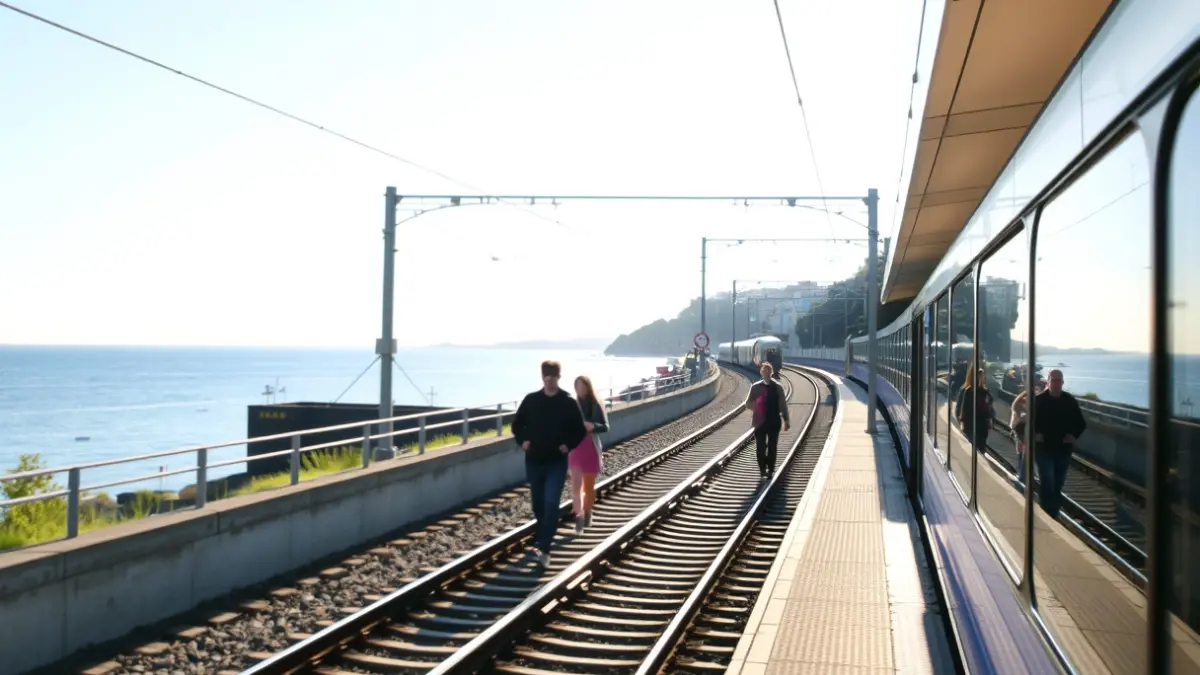
Currently, the railway connection between Zumaia and the capital of Gipuzkoa depends on two routes of the E1 line. While a half-hour frequency is maintained on weekdays, the situation changes on weekends. In winter, users must wait an hour between trains on Saturdays and Sundays. In summer, although the situation improves slightly, the 30-minute frequency is only activated in the afternoons, leaving mornings with a reduced service that does not meet current mobility needs.
This is not a seasonal problem, but a structural change in mobility habits.
The approved motion highlights a significant increase in passenger numbers in recent years. This surge has led to constant train saturation, a problem that worsens from spring onwards. These crowds are not just a matter of comfort; they represent a direct detriment to workers who rely on public transport. They also affect elderly people or those with reduced mobility, who suffer more intensely from the consequences of overcrowded carriages.
The Zumaia City Council argues that this is not a temporary summer season issue, but a structural change in mobility habits. The rise of tourism and growing awareness of sustainable transport indicate that train usage will continue to increase throughout the year. Therefore, the Zumaia City Council believes it is time to act and adapt the infrastructure to real demand. For this reason, the request to maintain the 30-minute train frequency to Donostia uninterruptedly has been supported by all political parties in the plenary session.