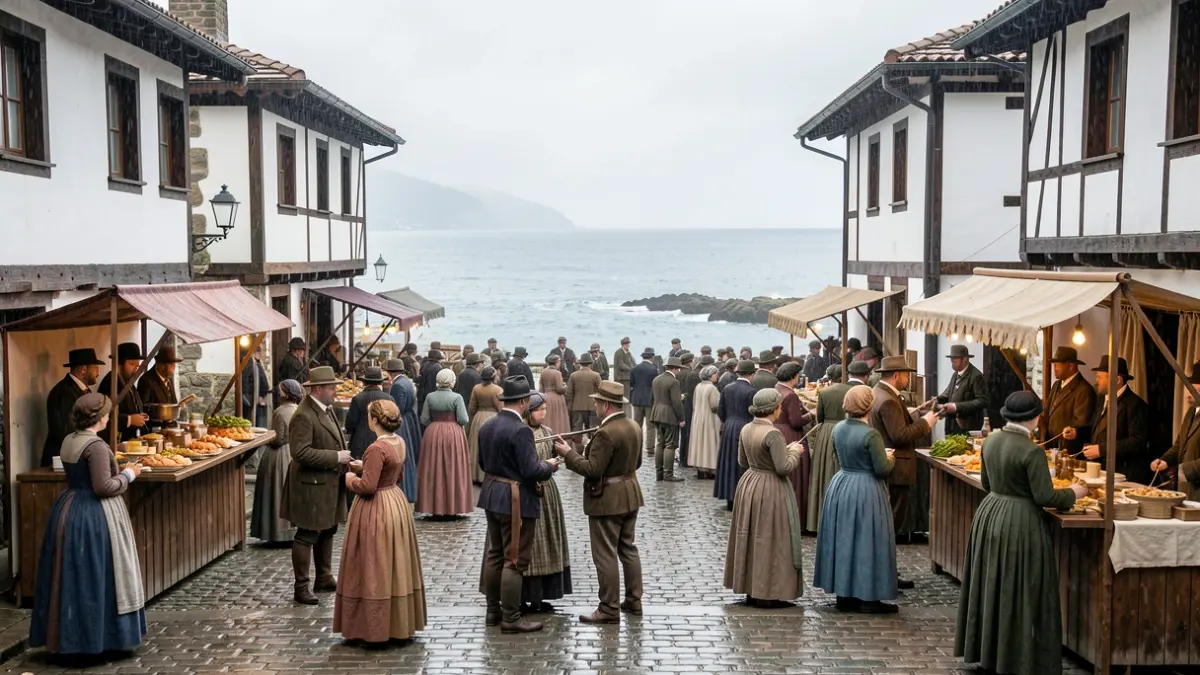
Amidst the rain and the scent of salt spray, the residents of Orio have traveled back 125 years to celebrate the historic day of May 14, 1901, when local fishermen hunted the last whale in the Cantabrian Sea. The event recalled the date permanently etched in the town's collective memory.
From early morning, the old town transformed into a stage from the early 20th century. Citizens, dressed in period clothing, filled the squares and streets, reviving the spirit of a town that lived by the sea and fishing. Net makers on one side, women from the salting industry on the other, immersed themselves in recreating the atmosphere of 125 years ago.
In Piliku Square, Kale Nagusia, and Zimitorio, small theatrical performances depicted the trades of the era, including a high-fashion sewing workshop, a small infirmary, and mattress makers and repairers. Despite the unfavorable weather, hundreds of people gathered to enjoy a day that blended history and tradition.
After midday, as the bells rang, a crowd descended to the river to witness the reenactment of the whale hunt. There, by the estuary, Orio once again looked out at the Cantabrian Sea, just as Olaizola, Loidi, Atxega, Uranga, and Manterola did in 1901. Following the spectacle, the festivities moved to the Town Square, where attendees enjoyed music and dance performances.
The 'Balearen Eguna' celebrations will continue in the afternoon with Ttipika guided dances in the square, followed by a performance by the band Itzal for folk dance enthusiasts. In the evening, DJ Ostok will be responsible for livening up the night. To conclude the program, the symphony orchestra Et Incarnatus, with a children's choir, will offer a concert in tribute to Benito Lertxundi tomorrow at 8:00 PM in the Karela sports center.