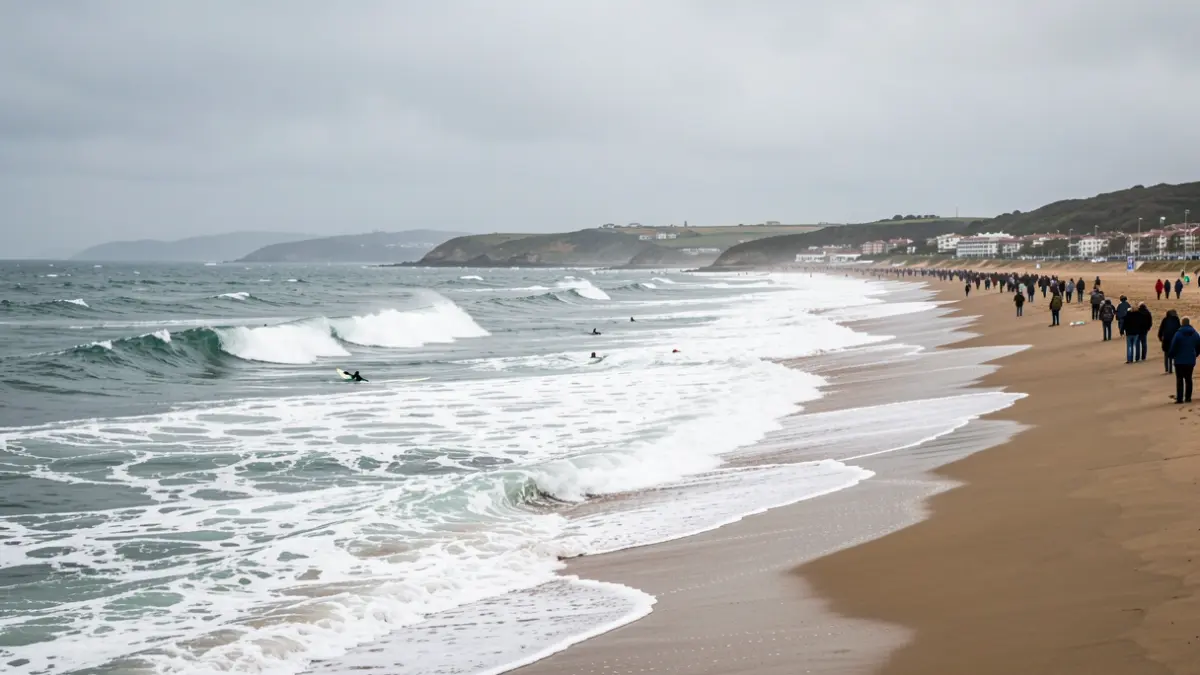
A group of residents, surfers, and surf schools from Zarautz has publicly shared an account of incidents that occurred on the beach in late May. A combination of strong currents (known as 'txurros'), heatwaves, and a large influx of people led to extremely serious situations for bathers, exacerbated by the absence of the official lifeguard service, which had not yet begun its season.
According to their account, conditions worsened from May 20th, but the most critical day was May 21st, when twelve continuous hours of emergencies unfolded. The statement describes episodes such as two minors under 12 being swept away, whose friends also ended up adrift when trying to help them; a dozen young people trapped simultaneously; and a father and son sucked into the current, with the father losing consciousness before being rescued. The danger persisted in the following days, with the last rescue recorded on Sunday, May 31st, at 8:30 PM.
Given the severity of the situation, a citizen surveillance network was spontaneously organized. Volunteers obtained red flags from the Red Cross and created their own material to mark dangerous areas. They also established observation shifts, distributed boards and flotation buoys anchored in the water, created an informal communication network with walkie-talkies, and one individual even provided their personal jet ski. However, the collectives denounce that they requested assistance from the City Council and the Local Police for shore-based prevention efforts, but "received no response".
Consequently, the volunteers express their "discomfort and surprise" regarding subsequent statements from the Zarautz City Council, which spoke of alleged "coordination" with them. "In the most critical moments, there was no coordination or shared channels. Citizen organization filled that void," they state.
Despite the criticism, the statement avoids "seeking controversy" and focuses on "drawing lessons." Therefore, they conclude by posing urgent questions to the administrations regarding the lack of protocols for climate change and off-season tourism, demanding a review of the safety of a beach that, nowadays, "receives bathers year-round."