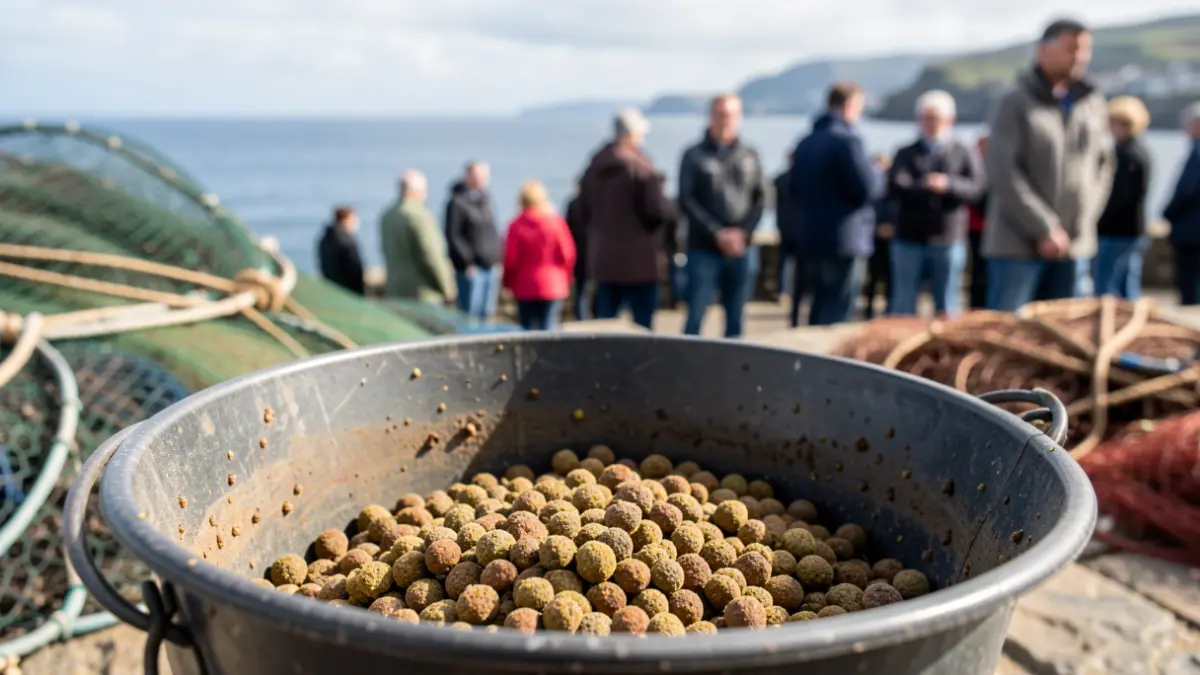
In Zumaia and nearby towns such as Pasaia, Zarautz, and Getaria, the mass thrown into the water to attract fish is called ‘apasta’. In the Biscayan coast, however, the terms ‘mazi’ or ‘masi’ are used, with Spanish equivalents being ‘macizo’ and ‘engodo’.
As explained by Jexux Gorostola and Akelino Osa, anchovy heads and guts were used to make apasta, and subsequently, they would go fishing for horse mackerel. Apasta was employed to draw fish up from the seabed, with the primary aim of attracting them.
According to the Zarautz-based writer Txiliku, various formulas were used to prepare apasta: entrails and roes of other fish, flour to solidify the mass, sand, and brine, among other ingredients. Furthermore, the expression ‘apasta botatzea’ can also mean preparing the way to deceive someone.
In Getaria, Hondarribia, and other locations, a machine is used to prepare apasta, which has sometimes been referred to as ‘errota’. This machine serves to grind the fish.
In Ondarroa, apasta is known as ‘mazi/mazixe’. In the local dialect, it was a paste made from crushed cod stomachs and intestines, historically used to attract fish, particularly during sardine fishing. The highest quality was considered the best mazi by fishermen, although lower-quality versions made from anchovy and horse mackerel remnants also existed.
In Bermeo and Mundaka, ‘mazidxe’ or ‘masidxe’ is used. Within the fishing community, the word ‘mazi’ refers to the bait thrown into the sea to attract fish. However, this term has also been used to denote dirt and other meanings.