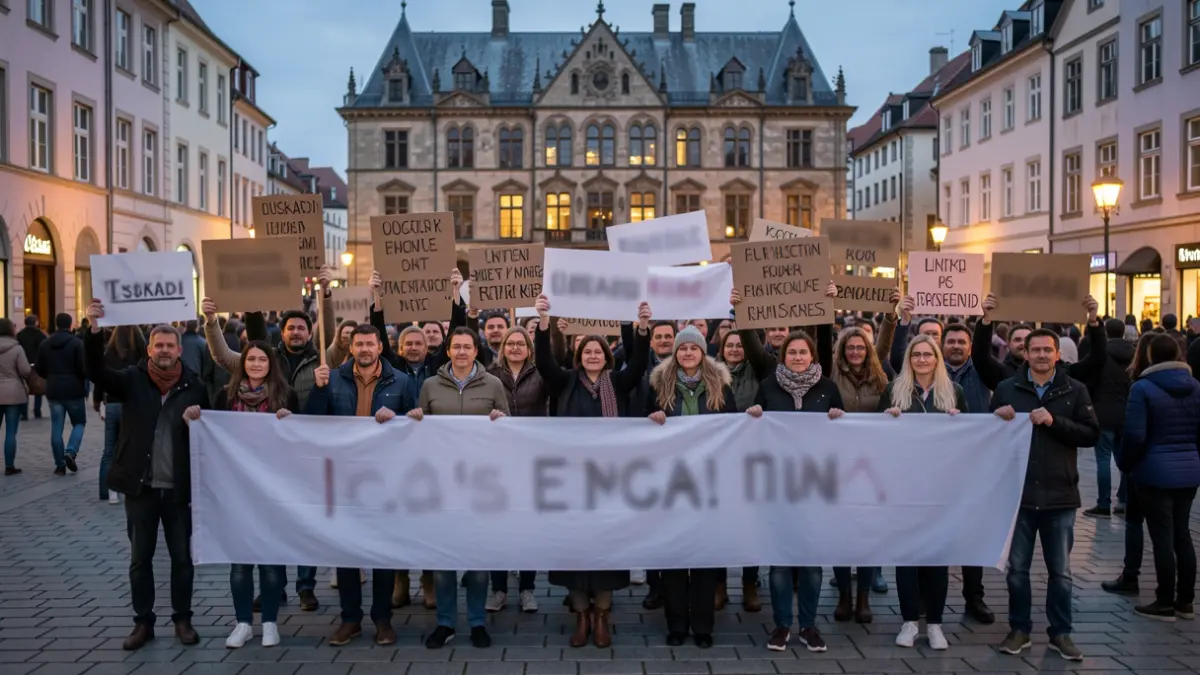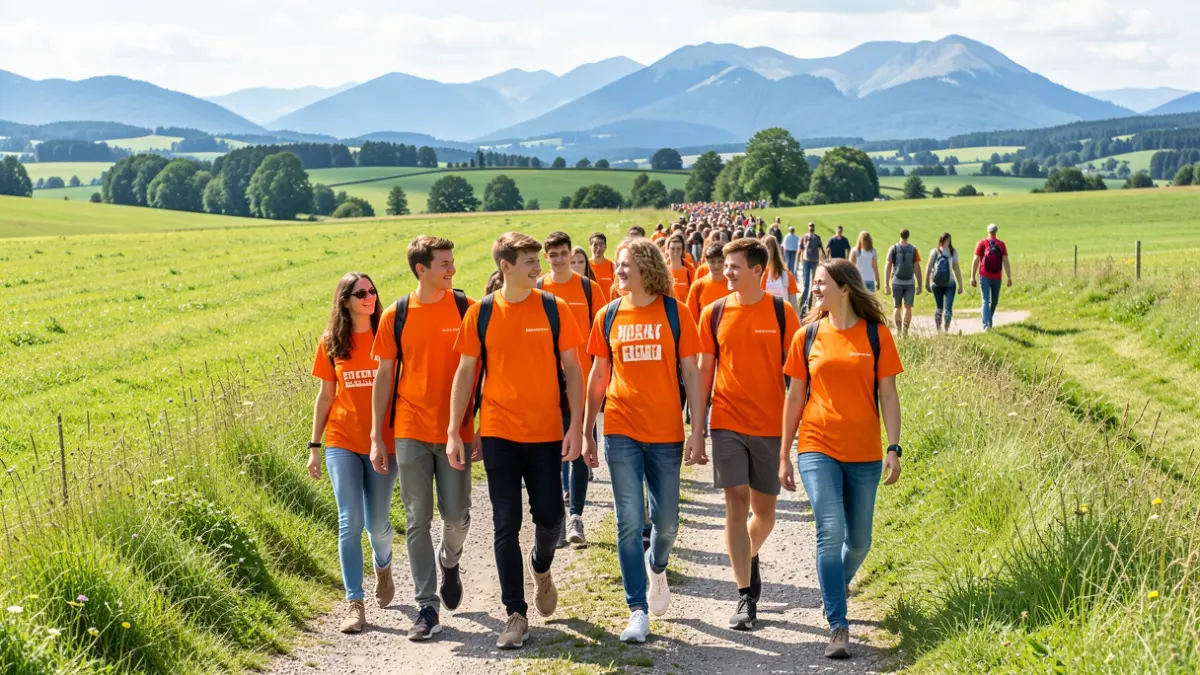
The eighth edition of EuskarAbentura began today in Atharratze and will conclude on July 31 in Getxo, covering a total of 650 kilometers. The primary objective of the 130 participating Basque youth is to promote the Basque language under the motto ‘Jzioqui dugu’.
Since its creation in 2018, EuskarAbentura has aimed to foster the use of Basque among young people through positive experiences. Each year, hundreds of young people join this network with the purpose of "continuing to build and strengthen that network," according to the organizers.
This year, in addition to following the usual routes of the Camino de Santiago, the expedition will traverse the Sakana region for the first time, passing through Irurtzun, Arbizu, and Olazti. They will also make a new entry into the coast of Ondarroa.
They will arrive in Ondarroa from Zarautz on the 25th. From there, they will visit Lekeitio, Nabarniz, Gernika-Lumo, Bermeo, Bilbao, and Getxo. Among the participants, 45 are from Bizkaia, 29 from Gipuzkoa, 24 from Navarra, 13 from Álava, 7 from Lapurdi, 6 from Lower Navarre, 1 from Zuberoa, and 3 from the diaspora. In total, 130 committed young people, selected from 264 candidates.
The phrase ‘Jzioqui dugu’ is one of the earliest known written expressions in Basque and is interpreted as 'we have started' or 'we have achieved'. Therefore, EuskarAbentura has adopted it as its motto and calls the young participants 'jzioquitarra'.
Participants do not pay to be part of the expedition; they earn their place through demonstrated interest and work, akin to receiving a scholarship. This year, they submitted works responding to questions such as: 'What does it mean to be Basque?', 'Can dreams come true?', and 'To which historical era would you like to travel?'.
Alongside the young participants, a 24-person organizing team, known as the 'urdinak', will travel: 14 sherpas, 2 drivers, 3 from the health team, 3 from the communication team, and 2 coordinators. The new coordinators, Libe Martínez de Rituerto Zeberio and Garazi Hurtado Prieto, were participants in the first and second expeditions, respectively.
The organizers indicate that the number of submitted works, the handover in coordination, and the incorporation of new volunteers show that the project continues to spark the interest of Basque youth and possesses the strength to keep growing.