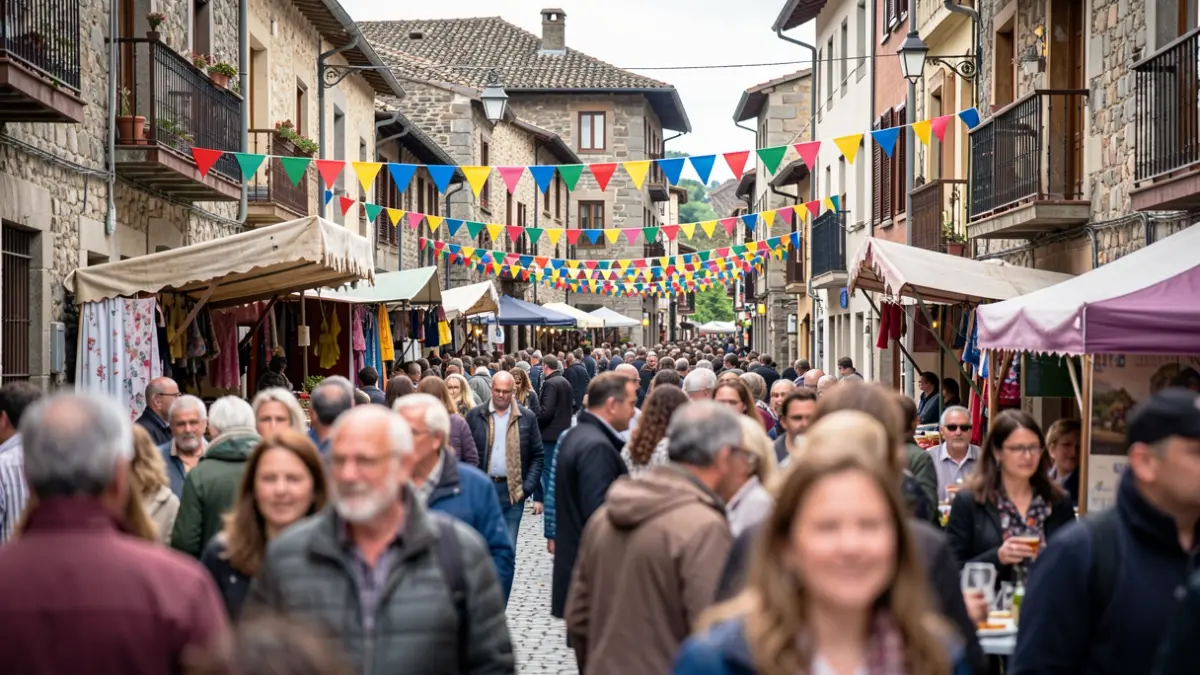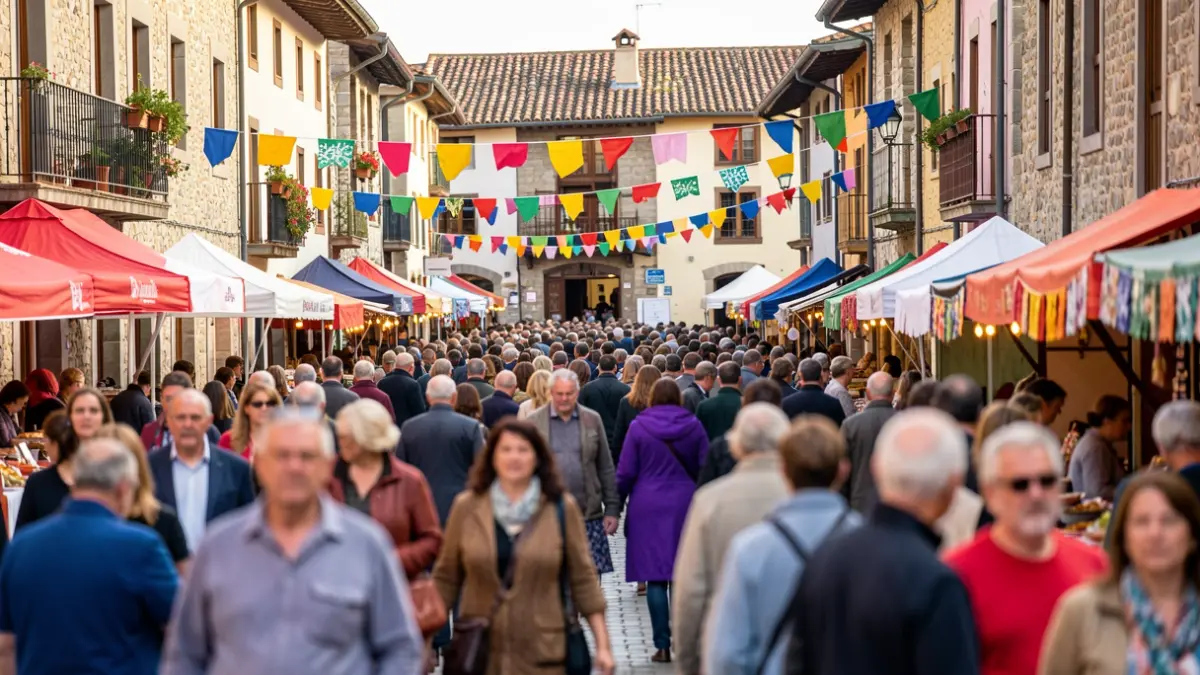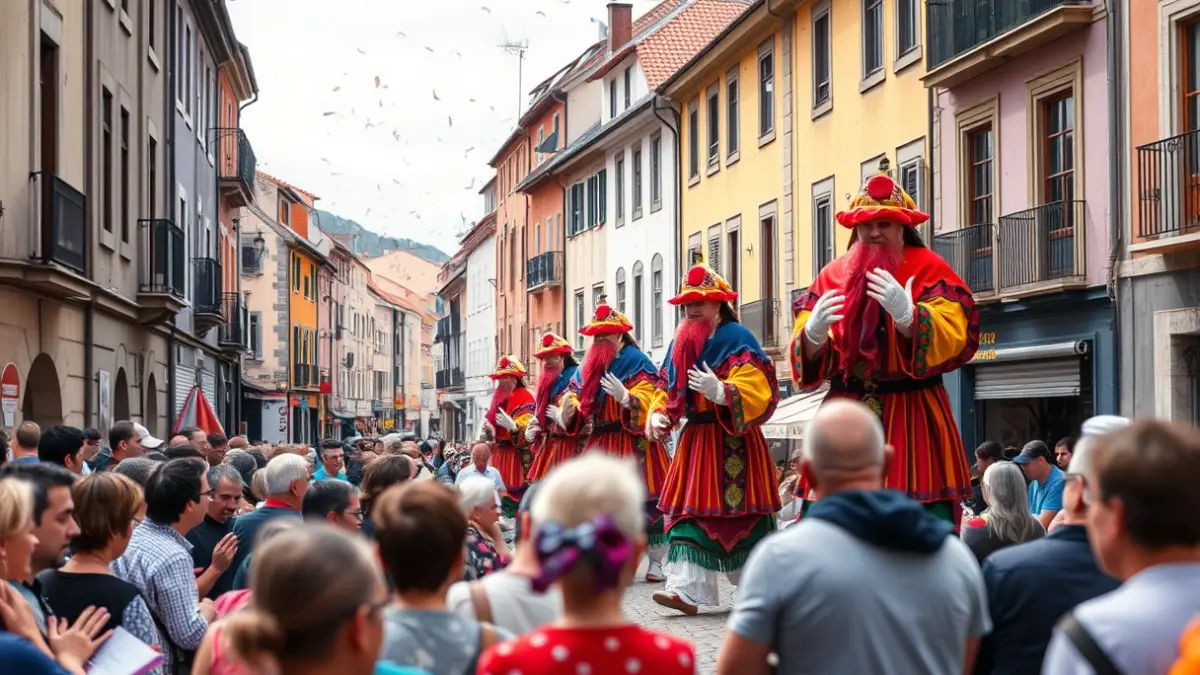
The day commenced in the Bagatza neighborhood, the birthplace of the Ibarra-Kaldu group in 1966. There, the castellers began forming their human towers while municipal giants danced around the square, preceding a 'kalejira' procession towards Barakaldo's city center. The event aimed to bring culture directly to the public.
“"We like to bring culture to the streets so that anyone can encounter it directly."
Currently, the Ibarra-Kaldu group comprises between 100 and 120 'dantzaris', along with musicians and families, many of whom have grown up within the organization. The municipal giants, Pauli and Joxe, symbolize the region's agricultural and industrial past, while Arnabal and Maialen represent its mining history. These four accompanied the castellers throughout the morning until the rain forced them to seek shelter.
The Catalan 'colla' Marrecs de Salt arrived in Barakaldo with 127 participants, including castellers, musicians, and families, ranging from four-year-old children to members over 70. Group members expressed pride in showcasing their culture, noting their trip to India last year to perform their human towers.
“"There is a place for everyone here."
The final performance was moved to the Lasesarre fronton after the rain necessitated a change of plans. Despite the venue alteration, the space was packed with spectators, first hosting the giants of Ibarra-Kaldu, followed by the castellers and the Euskal Herriko Casteller Taldea. The scene depicted two distinct traditions sharing space, music, and audience. A child presented a drawing of the municipal giants to the Ibarra-Kaldu members, a gesture deeply appreciated by the organizers.