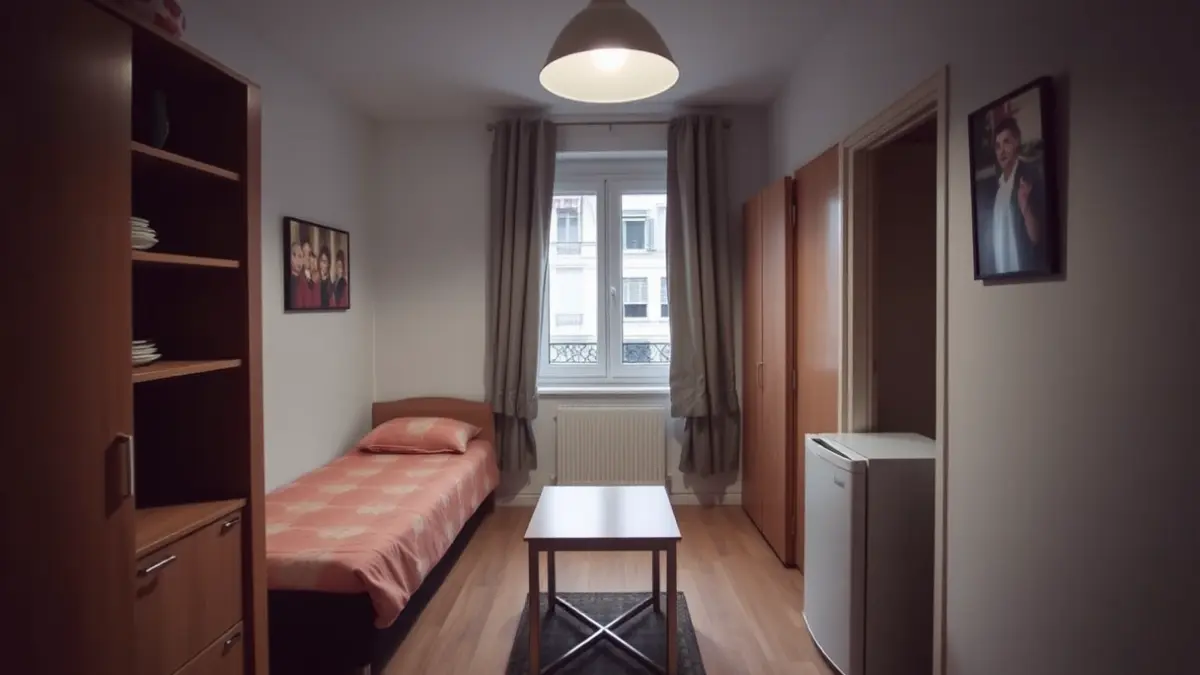
The rental market in Bilbao is increasingly featuring small living spaces at high prices. For instance, a 17-square-meter studio in the Casco Viejo is advertised for 700 euros for temporary stays. According to the listing, the kitchen and bathroom are separate from the main room, with independent access from the landing. These spaces are designed for independence and practicality, suitable for short stays for work or study.
Other similar offers are available in the city. Also in the Casco Viejo, a 25-square-meter studio is offered for 750 euros for short stays. In San Francisco, another 25-square-meter rental is available for 800 euros plus 200 euros in expenses for a single person, and 850 euros for couples. Additionally, applicants are required to have an income of 2,400 euros and pay a 200-euro fee for “welcome and entry coordination.”
Room rentals also command high prices. In Campo Volantín, a room is available from September to April for 800 euros per month. Another on Doctor Areiza street is rented for 750 euros, aimed at “students or workers up to 50 years old.” On Autonomía street, the price for a bedroom rental is even higher, with the owner asking 1,000 euros per month for a room with a double bed, television, wardrobe, and work desk.
The housing need in Bilbao is pressing, with 32,097 people awaiting social housing. Statistics from the Idealista portal reveal that the percentage of flats rented in less than a day continues to grow in the Biscayan capital. In the fourth quarter of last year, 23% of homes were rented in just 24 hours, compared to only 7% in the second quarter. This growth is due to the imbalance between soaring demand and scarce supply. Of the 447 flats available last week in Bilbao, only 124 were for long-term stays, with the cheapest at 819 euros.
The rental housing stock in Euskadi has decreased for the first time since records began in 2018. According to data released last week by the Basque Government, for the third quarter of 2025, there were 85,068 active rental contracts, 668 fewer than the previous quarter. This decline follows the implementation of policies to protect tenants against price escalation, measures included in the Housing Law approved in May 2023, which involve declaring stressed areas and limiting prices.
The territory where active contracts have fallen the most is Gipuzkoa, the first to implement stressed areas. In San Sebastián alone, the most expensive city in Euskadi, active contracts dropped from 9,766 to 9,539 in three months. A decrease is also observed in Bizkaia, though less pronounced. Bilbao, declared a stressed area last October, now has 15,919 short-term rental properties, fifty fewer than in June.
Industry professionals attribute the decline in the rental stock to free market regulation policies approved three years ago. The Basque Government itself has admitted that these measures, aimed at strengthening tenant protection, have indirectly led to increased reluctance among many owners to put their homes on the rental market, thereby reducing supply. Consequently, the department's new strategy is to introduce public insurance to provide security to owners, covering non-payment or utility costs in stressed areas from the moment an eviction lawsuit is admitted for processing.
The first municipality declared a stressed area in Euskadi was Rentería in January 2025, followed by Barakaldo, San Sebastián, and Bilbao. A president of the API in Bizkaia, states that since 2022, with the draft Housing Law, owners became wary, and agencies began to notice a drop of up to 40% in their portfolio of short-term rental properties.
“"The administration must step up. If owners lack security to rent, the government needs to balance the scales between tenants and owners and guarantee that if a tenant cannot pay the rent, the administration will take care of it, not the owner."
The sector agrees that price limitation is not the biggest barrier, but rather “fear”—the fear of not knowing when they will recover their property in case of non-payment. Many small owners rent to supplement their pension or pay their mortgage, and non-payment causes them significant harm. Therefore, the sector calls for a change in the law and the annulment of “vulnerability,” guaranteeing owners that they will recover their property within a maximum of two months to encourage them to rent.