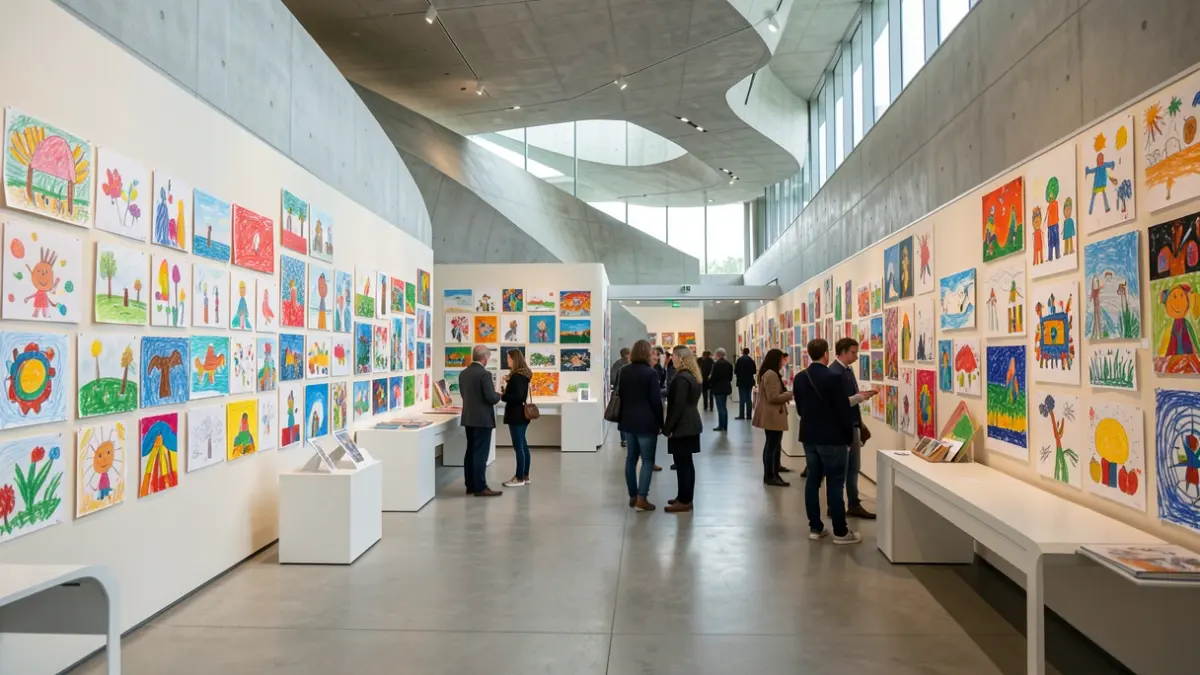
The Guggenheim Museum Bilbao has inaugurated the 'Learning Through Art' exhibition in its Educational Space, strengthening an educational program with 28 years of trajectory. Developed in collaboration with the Basque Government's Department of Education, this initiative has enabled 4,112 schoolchildren over nearly three decades to experience art not as an academic subject, but as a tool for critical thinking.
This year's edition features the creations of 127 students aged 6 to 12, from six schools in Araba, Bizkaia, and Gipuzkoa. Guided by local contemporary artists, the students have explored photography, collage, plaster modeling, and frottage. The result is a map of childhood concerns, ranging from the memory of towns and care for nature to unique communication codes and cultural diversity.
During the presentation, the Museum's Director General, Miren Arzalluz, emphasized the "collective effort" and described the program as "ambitious and inspiring," inviting the public to enjoy the exhibition for free throughout the summer.
Representing the participating creators, artist Nerea Lekuona advocated for the active role of children in contemporary society, stressing that classrooms should be spaces of absolute expressive freedom where students lose the fear of asking for permission.
This philosophy is reflected in projects such as that of the Colegio Zorrotza Fray Juan de Bilbao, where students explored the identity of "Generation Alpha" by reinterpreting portraits of their musical and sports idols. Meanwhile, students from San Vicente de Paúl in Barakaldo addressed themes of welcome and diversity through a textile world map translated into languages like Punjabi, Amazigh, or Wolof.
Local roots and history are central to the proposals from schools in Elciego and Ispaster. The former revisited municipal archive images to dialogue with recycled sculptures, while students from Ispaster intervened in local heraldry and paid homage to their elders with hand-stamped scarves.
Scientific imagination and learning through error complete the exhibition. The Colegio Barrundia de Ozaeta designed a science fiction ecosystem, and the Colegio Plaentxi in Soraluze transformed creative mistakes into opportunities to build a three-dimensional papier-mâché solar system.
This learning methodology originates from 1970s New York, where patron Natalie K. Lieberman initiated the original program at the Solomon R. Guggenheim Museum. Twenty-eight years after its arrival in Bilbao, the initiative continues to demonstrate that artistic creativity is not a mere supplement but a transversal engine for understanding the world.