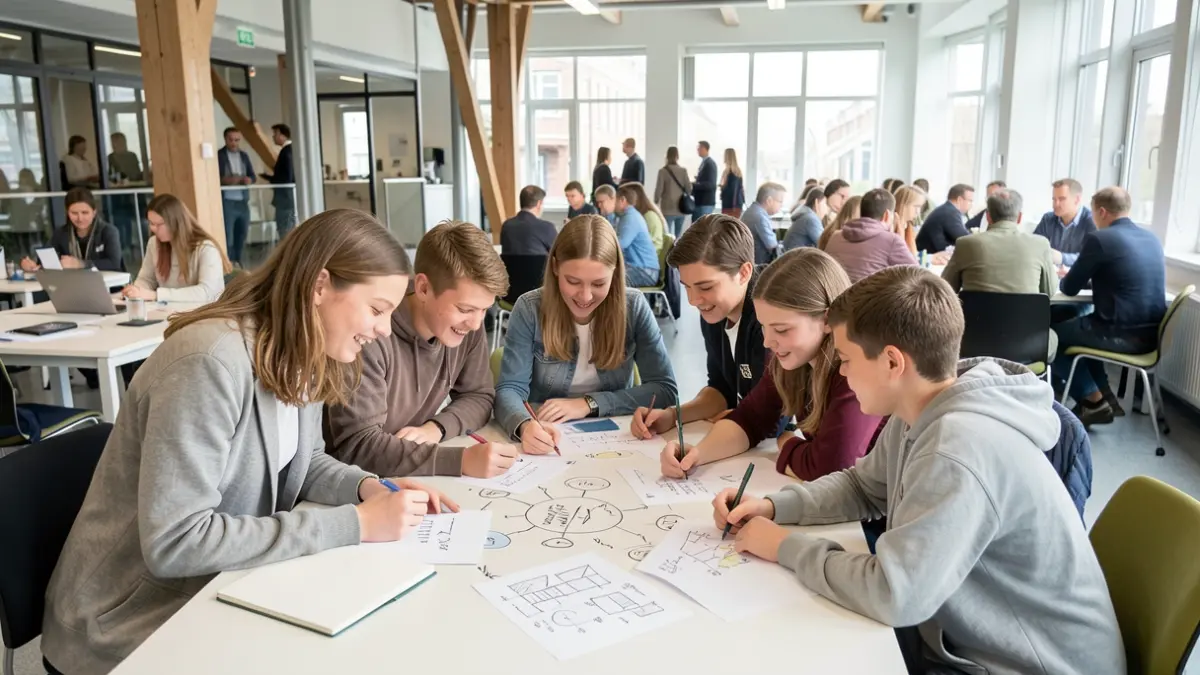

The program's objective is to promote awareness, practical training, and good practices in the responsible use of artificial intelligence (AI) among young people. This way, students will acquire criteria and tools to interact with AI critically, safely, and responsibly in their daily lives, understanding its opportunities, risks, and limitations, and strengthening their autonomy, critical thinking, and digital well-being.
In a one-hour in-person session, the training focused on reflection and critical thinking regarding artificial intelligence, helping students identify its presence in their daily lives and reflect on its implications. Aspects such as privacy, personal data, disinformation, manipulated images, biases, and the misuse of digital content were also addressed.
Furthermore, responsible and critical use was discussed, covering issues like dependency, uncritical use of AI responses, or substituting personal effort and reasoning. To enhance students' autonomy and critical thinking, the training focused on their ability to cross-reference information, formulate their own conclusions, make decisions, solve problems, develop creativity, and detect AI errors.
Finally, digital well-being and coexistence were addressed, exploring AI's limitations concerning emotional and mental health issues, and identifying when it is necessary to seek help from an adult or professional. The program also differentiates between using AI as a learning support and delegating reasoning, comprehension, or task completion to it.