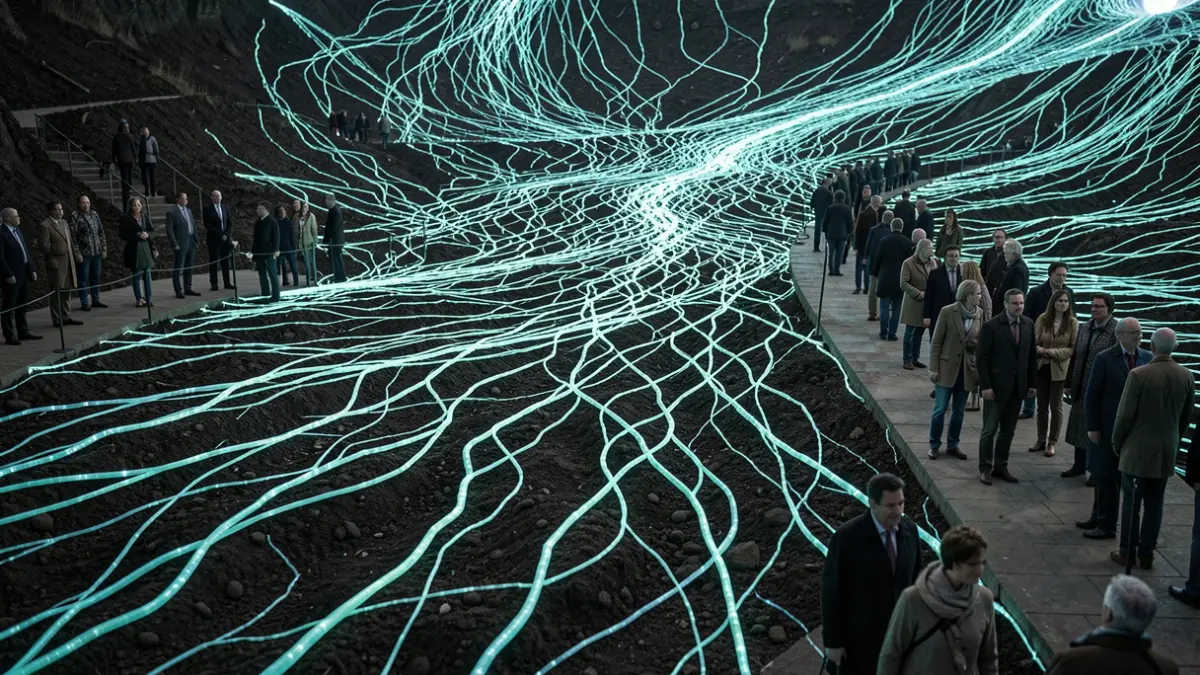
The planetary scale of the hidden world of fungal networks beneath the Earth's surface has been revealed in a new study published in a scientific journal. This first global map, compiled by an international research team, shows that the total length of these networks would allow for millions of round trips between the Earth and the Sun.
Arbuscular mycorrhizal fungi (AM) form symbiotic relationships with approximately 70% of terrestrial plant species. These networks act as the Earth's «circulatory system», transporting carbon, nutrients, and water between plants and soil. Plants fix carbon from the atmosphere through photosynthesis and send it to the fungi as sugars and fats; in return, the fungi help plants acquire essential nutrients like phosphorus, nitrogen, and water.
This new study, published in the journal Science, demonstrates the true impact of this underground fungal network, accompanied by an interactive map. The researchers hope this tool will be useful for both scientists and policymakers in identifying the main threats facing fungal systems and better directing conservation efforts.
Based on over 16,000 soil samples collected worldwide, scientists have used machine learning models to elucidate the density of these networks in undisturbed ecosystems. They have calculated that these arbuscular mycorrhizal fungal networks have a total length of about 110 trillion kilometers and a mass of 300 megatons of carbon, more than 50% of the mass of all living organisms.
As ecosystem engineers, these networks play a vital role in climate regulation, fixing the equivalent of 4 billion tons of CO₂ annually in the soil. According to Toby Kiers, director of SPUN, «although for too long fungi have not been given the importance they deserve regarding climate change and conservation, now is the time to change that situation».
The maps have shown that grassland ecosystems store about 40% of the world's mycorrhizal biomass but are among the least protected and are rapidly being converted into agricultural land. This reduces network density and weakens the soil's capacity for carbon storage and nutrient recycling.
The organization SPUN has launched the digital tool Underground Atlas to protect these ecosystems. Research reveals that over 90% of critical mycorrhizal fungal biodiversity hotspots are located outside protected areas. The new studies offer opportunities to better understand the functioning of these systems and address challenges ranging from food security to climate change.