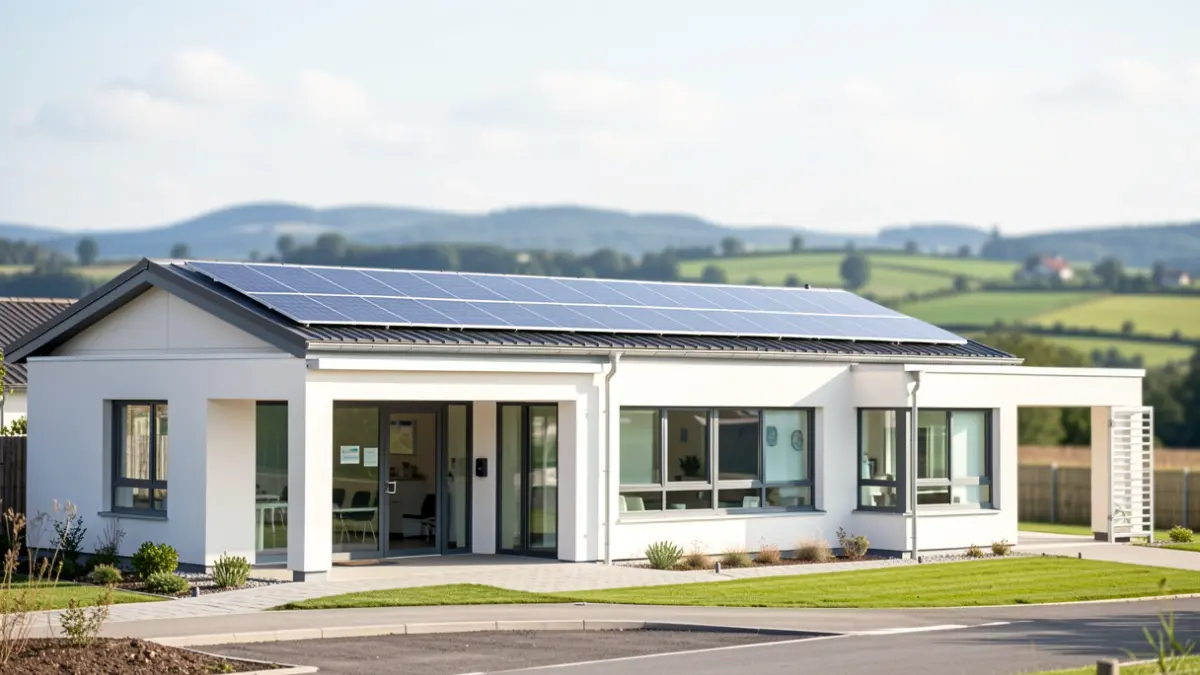
Osakidetza has completed the renovation and improvement works on the energy infrastructure at the Zaballa Health Center. This intervention has equipped the building of the Barakaldo-Sestao OSI with an Energy Efficiency Certificate of level A, the most demanding and highest standard.
The project's main action focused on replacing the old gas boiler system with a biomass boiler. Adopting biomass represents a step forward in sustainability, as it uses organic matter (pellets) instead of fossil fuels, and its CO₂ emission balance is neutral. This means it does not add new CO₂ to the atmosphere, because burning a pellet releases the exact same amount of carbon that the plant naturally absorbed during its growth.
Added to this action are improvements to the domestic hot water production system, the incorporation of more efficient pumping equipment, and the implementation of control and monitoring systems that optimize energy consumption. All these actions significantly reduce the building's carbon dioxide emissions into the atmosphere, consolidating the achievement of the highest energy rating.
With an investment of approximately 500,000 euros, the implementation of this facility is part of an action plan to comply with energy sustainability criteria in Osakidetza's centers. It is an initiative aimed at reducing energy consumption and increasing renewable generation within Osakidetza, thereby advancing towards a more sustainable model. This corporate project seeks to partially self-supply the electricity demand of the centers and reduce CO₂ emissions.