The Bilbao Izan program, as every year, offers the opportunity to explore the neighborhoods that shape the identity of the Bizkaia capital on foot. This May, Arabella takes center stage, before Santutxu follows in June and the commented routes conclude in July in Abando. The main novelty this year is the first-time inclusion of Arabella in this municipal project. In total, 40 visits will be organized during May, both in Basque and Spanish.
The neighborhood's location, just “400 meters in a straight line from Begoña,” places these lands as part of the former municipality of Begoña. Until the mid-1950s, there were hardly any constructions on the slopes of Arabella, but the housing needs for the thousands of people who arrived in Bizkaia and Bilbao to work in industry transformed this area into a place to provide residence for these new inhabitants.
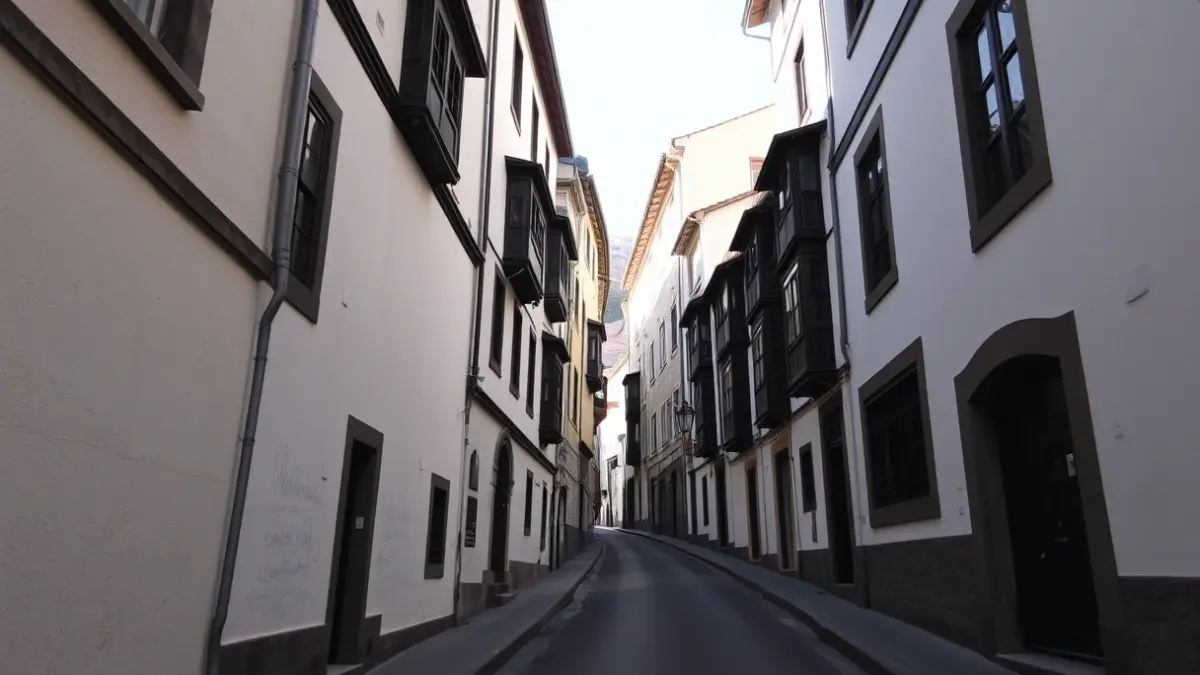
One of the neighborhood's hallmarks is that it is also crossed by Zabalbide street, “the longest in Bilbao.” A guide for the tours noted that “its name has been registered for over 500 years.” The slopes of Mount Artxanda host the buildings of Arabella and give personality to streets with steep inclines. But in this area, if there is one characteristic that stands out, it is the way the buildings are constructed: in groups. “Here there are no streets as such. Everything is Sarrikue group, Arabella group, Remar group…,” the guide points out.
All these constructions that dominate the neighborhood are called “cheap houses,” and the guide explains that this type of housing was built “all over the periphery of Bilbao,” as “the land was cheaper” than in the city center. Shortly after starting the tour, the first stop is reached: the Arabella group. “The City Council began constructing these homes in the 1950s for the less privileged working classes,” the guide recounts. The way to bring this neighborhood to life was created through an aesthetic, an image that has been maintained even though the buildings have been renovated.
A decade later, the neighborhood continued to grow, and the “openness” experienced in society was reflected in new constructions. “In these groups like Sarrikue or Remar, it is the City Council that promotes the land and a company that builds the homes.” Going up the hill and leaving the Arabella group on the left, the houses of the Arabella cooperative begin to appear, and visitors return to the early 20th century. Their white facades and green decorative elements form a complex with “a small front garden and another rear garden,” which, according to the guide, are based on the “Neo-Basque” style. These constructions were made “in mirror form to save on design.” This development, which laid its first bricks in 1925 but whose residents did not move in until 1927, had the characteristic of being the first in the neighborhood where a cooperative was formed.
The first round of visits for this neighborhood is practically sold out, with few spots remaining for Thursday, May 14, at 6:30 PM in Basque. Free reservations will reopen on Monday, May 18, at 9 AM, to choose dates until the end of the month on the bilbaoizan.eus website.