The School of Engineering of Bilbao (EHU) and The Pink Force Foundation have joined forces to present the innovative 'The Pink Force Factory' project. This initiative combines university training, robotics, and emotional support for hospitalized children with cancer, through the construction of replicas of the R2-KT robot, inspired by R2-D2 from Star Wars. Engineering School students will participate in the development of these robots, which will be destined for Basurto University Hospital.
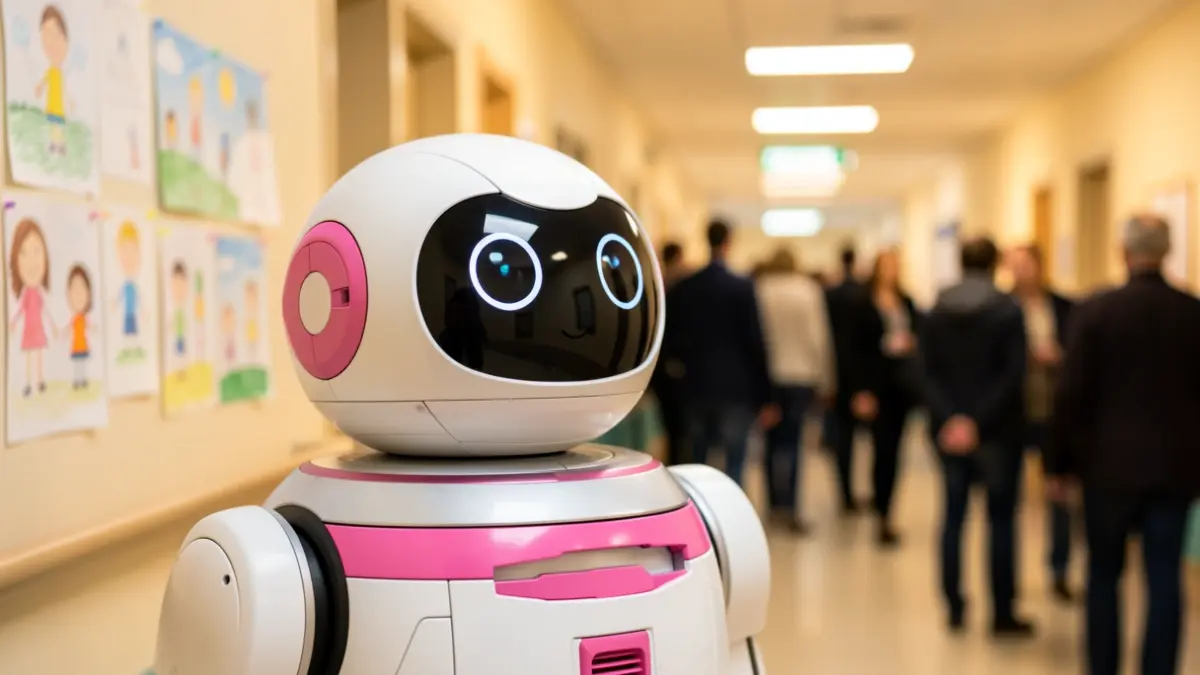
The project is part of the RBVM 2026 congress (Robotics, Bioengineering, Computer Vision, and Marine Automation) and proposes two creation formats: smaller units, which will be delivered to minors and associations, and full-scale robots, intended for hospital visits.
“"Katie Johnson was a child whose father was a personal friend of George Lucas. The child is diagnosed with an inoperable brain tumor, which is the worst news that can be given to a family."
Andoni Serrano, president of The Pink Force Foundation, explained the project's origin stemming from a personal story linked to Star Wars and a girl named Katie Johnson. Serrano recounted that, based on that situation, fans and robotics experts decided to build a robot inspired by R2-D2. The original color was changed to pink, the girl's favorite, giving rise to R2-KT. 'Ultimately, Katie passed away, but her parents decided to continue visiting children in hospitals and bringing toys. Thus, the first R2-KT was born,' he added.
Serrano emphasized that the project has evolved into an international network of hospital support. 'To date, this is the second functional unit in the world, and there are already 46 operational units in 20 countries, always created by volunteers,' he explained.
The robot is currently operated manually using a PlayStation controller, a system that the foundation acknowledges as 'artisanal' but effective in its primary goal: generating emotional impact on hospitalized minors. 'The magic happens when it appears down a hospital corridor and the children start to hear the sounds, the music… that's when we see the magic,' Serrano stated.
The project, which has grown voluntarily and unstructured until now, is now entering a new phase of collaboration with the university sector. According to the foundation, the aim is to imbue it with greater technological rigor and expand its reach. 'We are seeking the help of the university world. We need support so that the robot can incorporate artificial intelligence, facial and voice recognition, and cease to depend solely on manual interaction,' Serrano explained.
Charles Pinto, director of the Bilbao School of Engineering, highlighted the project's educational value and its impact on training future engineers. 'We visit over 62 centers annually seeking volunteers. This project is a springboard for STEAM (Science, Technology, Engineering, Arts, and Mathematics) vocations and can help us balance access to technical careers,' he affirmed. Pinto also emphasized the social dimension of engineering: 'We don't create devices for their own sake. Engineering is a response to society's demands. If we can also bring a smile to a child in need, the project already makes sense'.
Itziar Cabanes, a robotics professor, detailed the technological aspects of the project, which will include vision systems, artificial intelligence, and advanced recognition. The educational model is currently in its consolidation phase 1 in Spain, based on university alliances. Subsequently, the plan includes phase 2 for expansion across Europe and phase 3 for internationalization towards the United States and Asia. The project also foresees the development of a smaller version of the robot, about 30 centimeters, intended as a STEAM educational tool for schools, aiming to bring robotics closer to children.